
Bespoke Log Cabins, Made to Measure
Eurodita designs and manufactures bespoke log cabins to measure in its own factory in Lithuania, where it has made timber buildings since 1994. Send a sketch, an architect's plans or a written idea: we draw and estimate the project in our own design and estimation system, and the quotation package for a bespoke building includes 2D drawings and 3D renders. Walls are solid log, twin skin or glulam, which we glue, profile and machine ourselves.
We make garden rooms, annexes, holiday lodges and larger homes for homeowners, architects, developers, holiday parks and dealers. Larger residential homes can be quoted directly to private clients (see homes for private clients); for smaller garden buildings the supply route is confirmed project by project.
What makes a log cabin bespoke?
A bespoke log cabin starts from your brief rather than an unchanged catalogue model. We review the footprint, layout, wall system, roof, openings, materials, finish and where the building will stand, then agree a specification that can be manufactured. A sketch is enough to start the conversation; production starts only from approved drawings.
- Footprint, layout and dimensions
- Roof form and pitch
- Window and door positions
- Solid-log, glulam or twin-skin wall system
- Finish requirements
- Packing, marking and documentation scope
- Intended use, destination and local project requirements
Need technical reference material before a brief? Review selected technical project examples. Records may include drawings or 3D visualisations and should not be read as evidence of a completed installation unless that status is confirmed for the record.
What to send for a quote
A useful brief gives the building dimensions, what it will be used for, where it will stand, the preferred wall system, roof, windows and doors, finish, quantity and target date. Floor plans and elevations help, but an early sketch is enough to start: we tell you what is missing before the specification and quotation are confirmed.
01
Use and location
What the building is for, where it will stand and any local planning or building requirements you already know. If you buy for a business, add the company name.
02
Drawings and specification
Provide dimensions, floor plans, elevations, wall and roof preferences, openings, finish and any component schedule.
03
Quantity, timing and delivery
How many buildings, your preferred timing, and the delivery address or the transport route you prefer.
From your brief to factory release
1. Brief review
Eurodita checks the intended use, destination, dimensions, available drawings and missing project information.
2. Specification development
Wall, roof, openings, materials, finish, quantity and factory scope are developed for review.
3. Drawings and quotation
The quotation package may include drawings or 3D material where required for the project and confirmed in the scope.
4. Your approval
You approve the drawings, specification, quotation and written terms, including any branding scope on trade orders.
5. Manufacturing and factory checks
Eurodita manufactures the approved specification and completes the checks defined for the factory scope.
6. Packing and release
Components are packed, marked and released under EXW terms unless a different written route is agreed for the order.
Wall profiles, corner systems and how a route is chosen
| Profile | How this profile is used |
|---|---|
| 19 × 100 mm | Current production class, used primarily for standard and small shed-type production. Bespoke or custom 19 mm is not a normal one-off route; custom 19 mm may be accepted for mass-production programmes only. |
| 28 × 100 mm | Standard, configurable and bespoke work, depending on product family, project economics and technical brief. |
| 34 × 100 mm | Standard, configurable and bespoke work, depending on product family, project economics and technical brief. |
| 44 × 130 mm | Standard, configurable and bespoke work, depending on product family, project economics and technical brief. |
| 58 × 130 mm | Standard, configurable and bespoke work, depending on product family, project economics and technical brief. |
| 70 × 130 mm | Standard, configurable and bespoke work, depending on product family, project economics and technical brief. |
| Profile | Dovetail corner system |
|---|---|
| 70 × 130 mm | Excluded from the Dovetail offering |
| 88 × 260 mm | Available |
| 135 × 260 mm | Available |
| 180 × 260 mm | Available |
| 220 × 260 mm | Available |
| Build-up | Cavity | Total wall thickness |
|---|---|---|
| 44-50-44 mm | 50 mm | 138 mm |
| 44-100-44 mm | 100 mm | 188 mm |
| 58-50-58 mm | 50 mm | 166 mm |
| 58-100-58 mm | 100 mm | 216 mm |


Twin-skin is a double-wall route: two solid timber skins with a cavity between them. Both skins are equal in every current build-up, and they are the 44 × 130 and 58 × 130 solid profiles from the table above rather than a separate kind of timber.
The cavity is the space the insulation occupies, which is the reason to choose the route and also the reason to be precise about scope: Eurodita supplies the structure prepared for insulation and does not normally supply the insulation material itself. A cavity dimension is not an insulation specification, and the total wall thickness is not a thermal performance figure. As with the solid and glulam families, these dimensions define current build-up families and do not on their own establish thermal, fire, structural or certification performance.
The Dovetail corner is a corner joint system, not a separate wall profile, and it is not restricted to 220 × 260 mm. It runs across four of the five glulam profile families. For one-off bespoke work the solid range starts at 28 mm.
The design and estimation system supports wall-thickness selection from 28 to 220 mm. That is a system capability rather than the complete factory product list, and 19 mm production sits outside the main bespoke estimator wall-range workflow. Profile availability and suitability are confirmed for the individual project. These dimensions define current profile families; they do not on their own establish thermal, fire, structural, certification or universal project-suitability performance, and the buyer and its appointed advisers must review the proposed system against the intended use, destination and local requirements before approval.
How the structure is prepared for insulation, and who supplies the material
Eurodita supplies the timber building structure prepared and configured for insulation in walls, floors and roofs where the project requires it. Eurodita does not normally supply the insulation materials themselves.
That split is deliberate. Insulation materials and final insulation systems are normally selected and provided locally, because national requirements and local partner practice differ. A buyer in a cold climate works to a national requirement, a locally available product range and an installer who already knows both.
The design and estimation system can calculate and design insulation thicknesses as part of the project, so that work can be done here, against your figures, before anything is quoted. Estimator support for insulation thickness is not evidence that Eurodita supplies the insulation material. Where a specific written project scope says otherwise, the scope governs.
One related boundary, because it is the next question a technical buyer asks: Eurodita does not publish thermal performance figures for a wall profile. Profile dimensions do not on their own establish thermal, fire or structural performance, and a build-up that performs in one market will not automatically satisfy another. The performance case is assembled at project level, with your insulation specification and your local requirement in it.
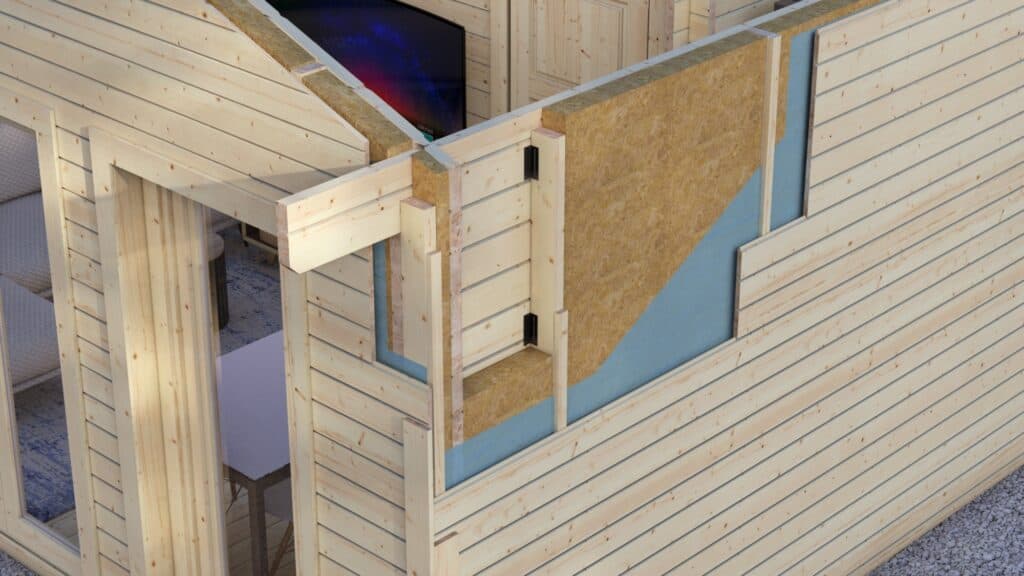
Timber, joinery, roof and floor
Species, region and the production moisture target
Eurodita uses both spruce and pine, sourced as Nordic and Northern European timber. Species for a given product or order is confirmed in the specification; the range is not spruce-only.
The current manufacturing moisture target for wall timber is approximately 12-14%. That is the working production range, not an unconditional per-piece warranty and not a regulatory claim. Drying is done in-house, in Nardi drying kilns, on the same site as the machining.
Windows and doors: what Eurodita makes, and what it buys in
Eurodita manufactures its own timber windows and doors in the current IV system families (IV45, IV68 and IV92 triple-glazed standard), and its own timber sliding and bifold door systems. Aluminium sliding systems are different: those are sourced from a specialist supplier and supplied as part of the project. Insulated glass units, hardware and fittings are also purchased and integrated into the finished joinery.
The distinction matters for what a bespoke project can actually do. Where the joinery is Eurodita-made, the opening schedule is a manufacturing variable rather than a catalogue lookup: sizes and positions are developed with the building, and the window and door schedule comes out of the same design and estimation pass as the drawings, the 3D and the price. Where it is bought in, that flexibility follows the supplier's range. Eurodita does not generically promise arbitrary customer-selected third-party window and door systems; a named third-party system is reviewed for the project rather than assumed.
Roof geometry, floor build and factory finishing
Roof. Current recurring geometries include apex, pent, hip and pyramidal or multi-slope. Custom roof geometries can be designed for a project-specific building. Roof geometry is generally configurable and technical feasibility is assessed per project, which is a different statement from “any roof you can draw”, and deliberately so.
Floor. Standard floorboard thickness is 28 mm and floor bearers are impregnated as standard. Floor construction detail beyond the standard floorboard is configurable and project-specific. 19 mm floorboards may be technically possible as an economy option, but they are not part of the normal offer and are not promoted as a standard specification.
Finishing. Default wall-log supply is untreated. Factory painting and finishing can be offered as an extra service on glulam; that is a glulam-scope service and does not mean other wall systems arrive factory-painted or treated.
Inside the Eurodita factory, and what is checked before dispatch
Manufacturing is based at one main production location in Lithuania with several workshops and production halls, approximately 5,000 m² of covered production space. One site, not a network of plants.
Carried out in-house: solid-timber wall profiling and machining, timber-building kit production, bespoke timber-house component production and timber joinery manufacturing. Glulam is produced here too: we glue the lamellae with Dynea Prefere 6151 and hardener Prefere 6651, a two-component EPI adhesive for load-bearing timber that the supplier classifies as Type I under EN 16254 (the supplier describes Prefere 6151 as formaldehyde-free), then we profile and machine the glulam on the same site. This describes the adhesive, not a certification of the finished glulam. Machining uses Hundegger CNC; drying is in-house, in Nardi kilns.
Annual averages, for the volume context a distributor needs: approximately 150,000 m³ of timber processed per year; approximately 12,000 standard catalogue timber buildings per year; approximately 1,800-2,000 non-standard and bespoke timber structures per year, excluding glulam; and approximately 50 glulam homes over 100 m² per year, which is a separate figure and is not inside the 1,800-2,000. These are averages, not capacity maxima and not guaranteed future output.
The recurring quality checks
- Incoming timber inspection
- Moisture checks
- Dimensional checks
- CNC and profiling accuracy checks
- Joint and fit checks
- Window and door checks
- Completeness checks
- Packaging checks
- Final pre-dispatch inspection
That is an operational quality-control description. It is not an ISO 9001 or FPC certification.
One fact worth knowing before you plan the assembly: kits are flat-packed. Joint and fit, completeness and packing are covered by the checks listed above. Production operates on working days, and orders are dispatched from the factory on working days under the confirmed order and logistics terms.
The design and estimation system behind your quote
Eurodita designs, prices and visualises bespoke projects on its own software, built for this workflow rather than bought off the shelf, and in daily use on real commercial enquiries. An operator configures the building; the system calculates the estimate from the project geometry, the component logic and Eurodita maintained pricing database. Human project input, engineering review and commercial judgement still apply, and timing is confirmed for each enquiry.
In one integrated workflow
- Interactive 2D CAD floor-plan design
- 3D visualisation and rendering
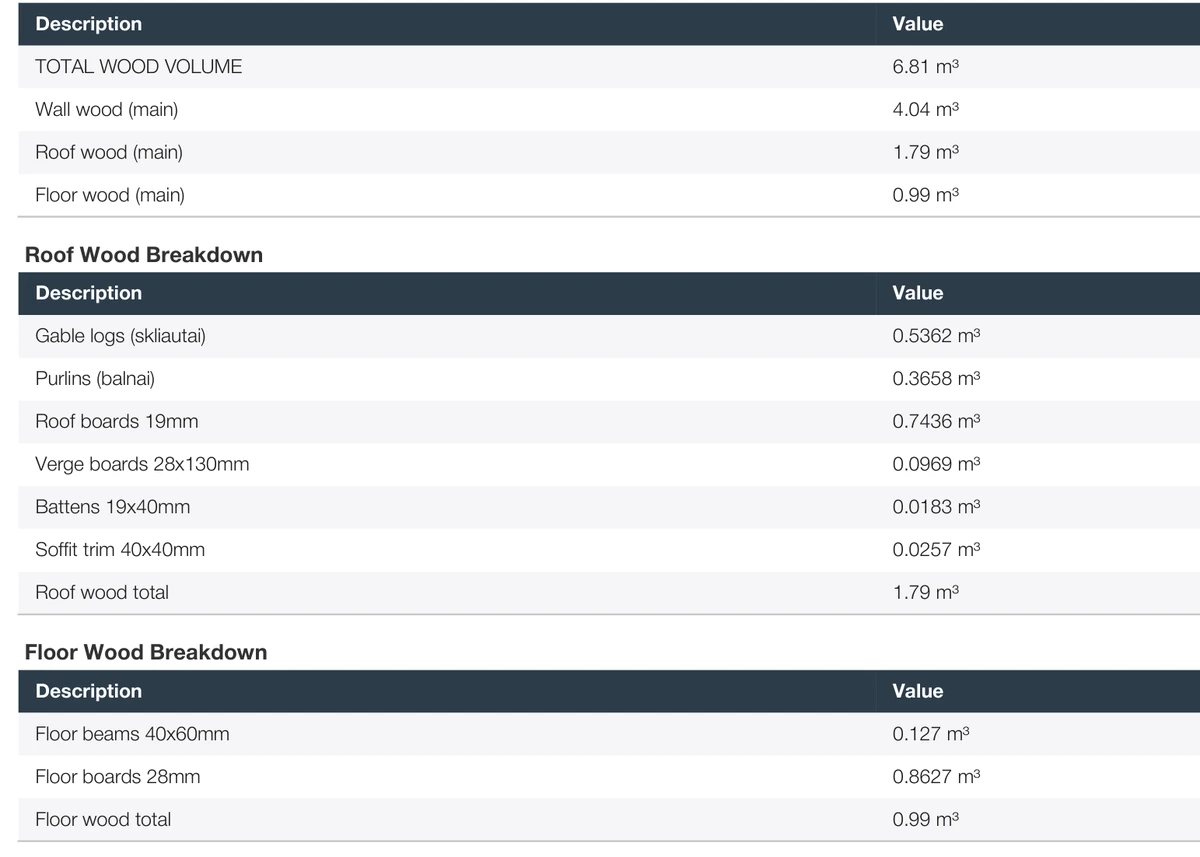
- Automated material and timber-volume calculation
- Automated cost estimation from the maintained pricing database
- Branded PDF output
What comes back on a bespoke project
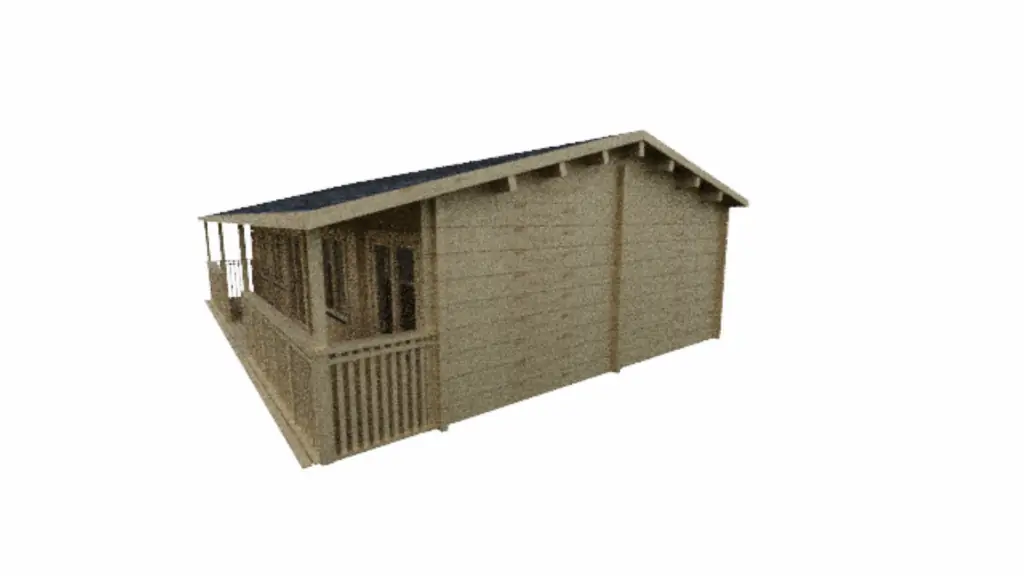
- 3D visual renders
- 2D CAD floor-plan drawings
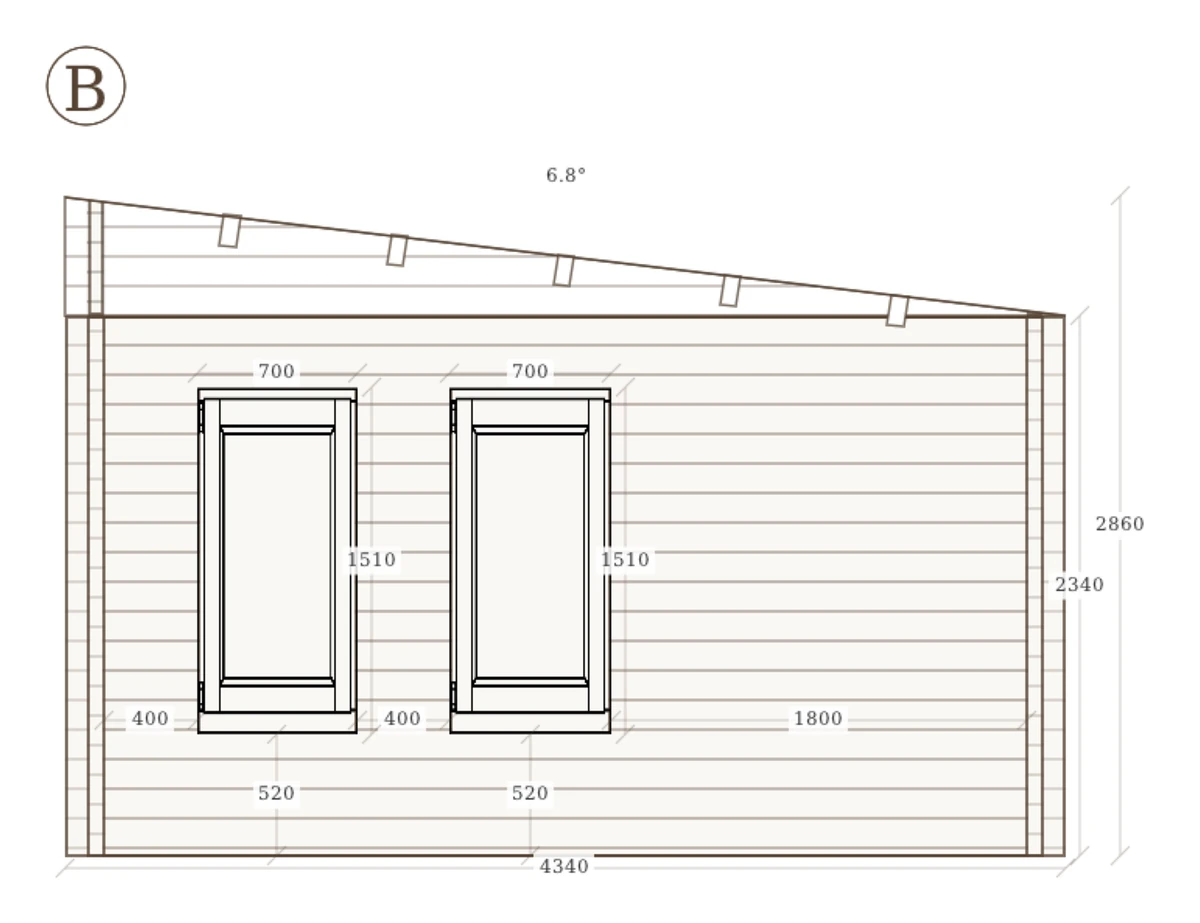
- Side and elevation drawings with dimensions
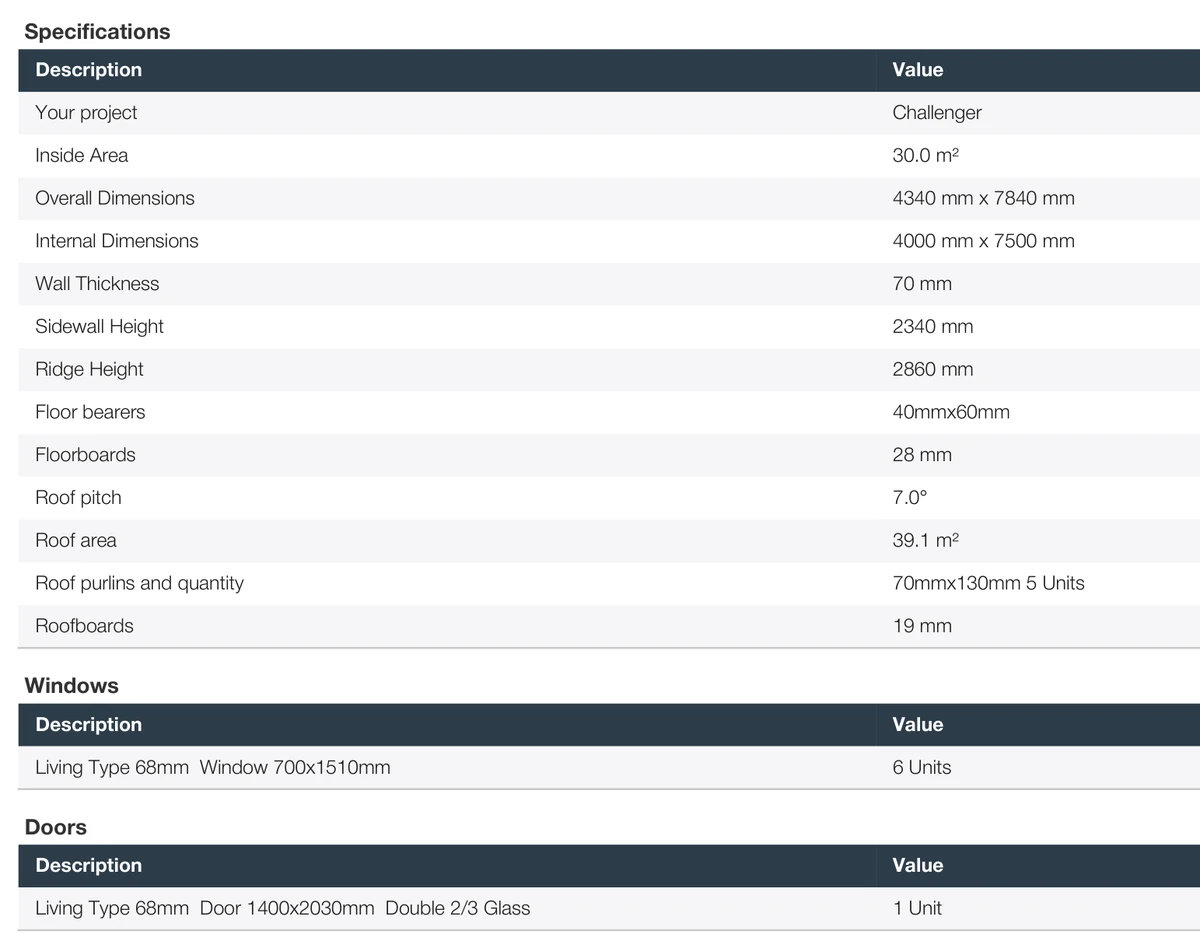
- Technical project specification
- Window and door schedule
- Commercial quotation
- The package as a branded PDF
For dealers and architects: your brand, not ours. Client-facing quotation material can carry your company identity and logo instead of the Eurodita brand. Your customer sees your name on the renders, the drawings and the quotation. That is what the private-label route is for.
Send a concept, a sketch, a drawing or a written requirement. Eurodita converts it into a manufacturable proposal with visual and technical documentation and a price, subject to technical and commercial review.
What the system produces for one bespoke project
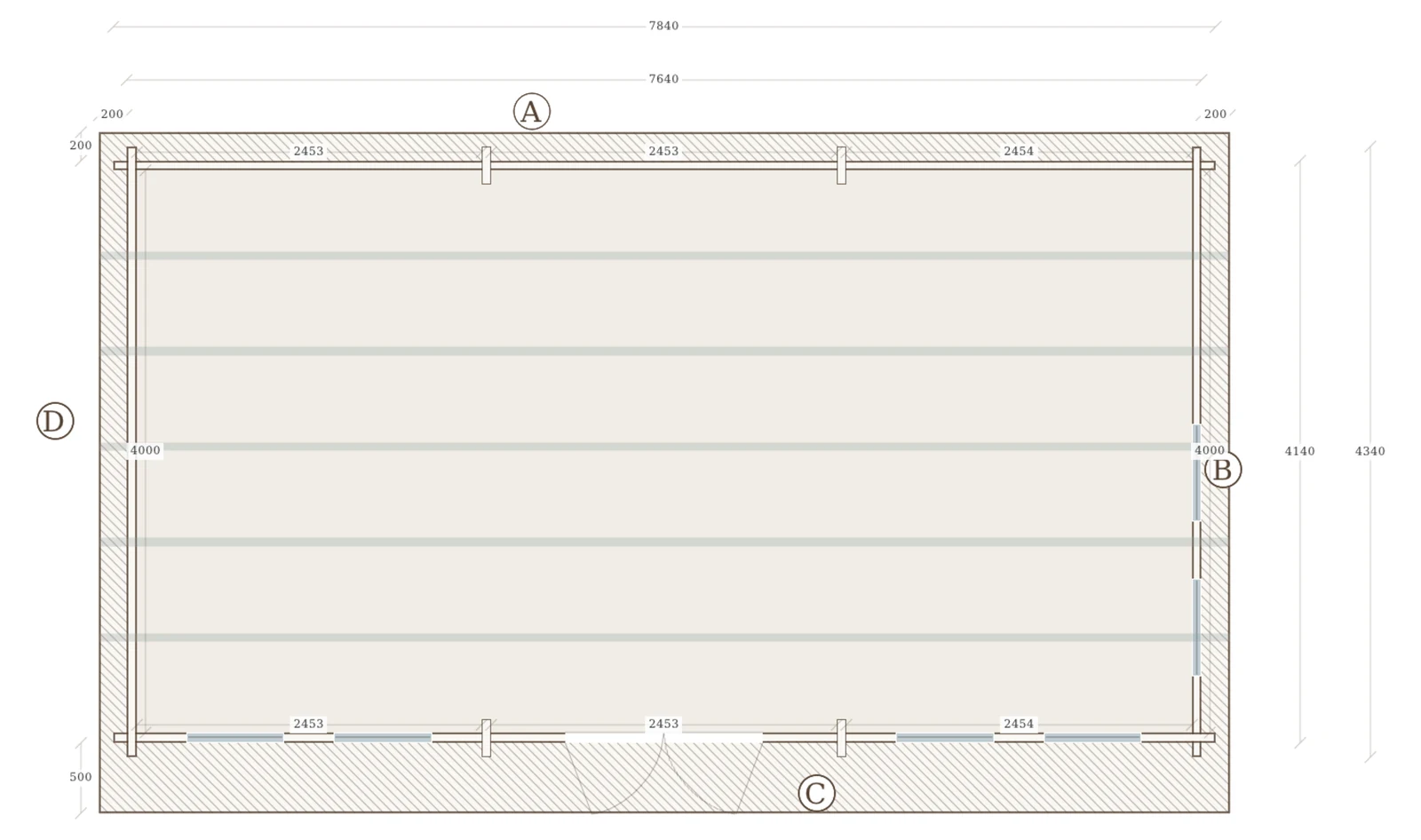
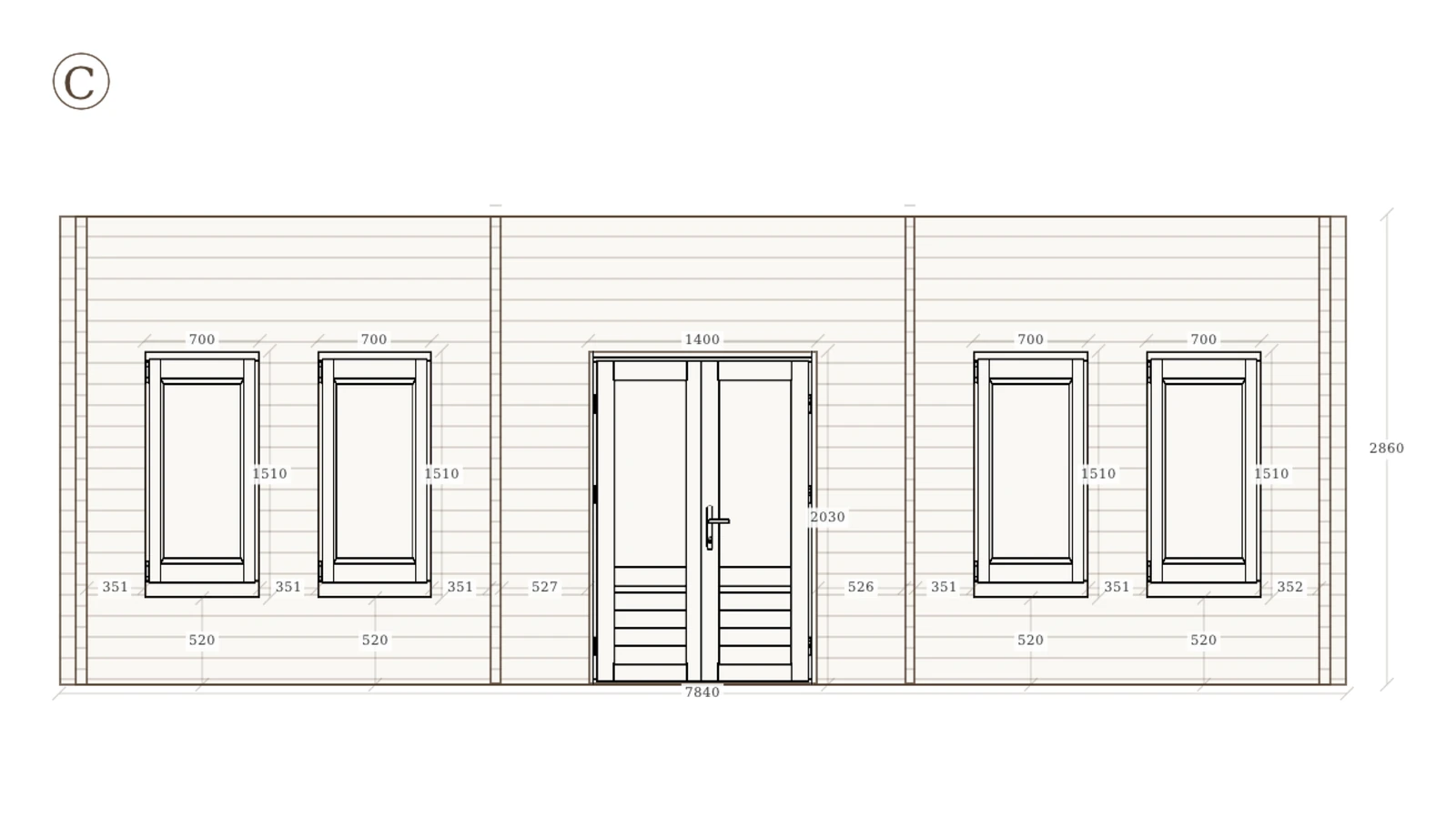
These are real outputs of our design and estimation system for one bespoke garden building, 7.84 x 4.34 m external with 70 mm walls: the 3D render, the drawings, the specification and the timber volumes calculated from the model. Prices are not shown. For a trade partner, the same package can carry the partner's brand instead of ours.
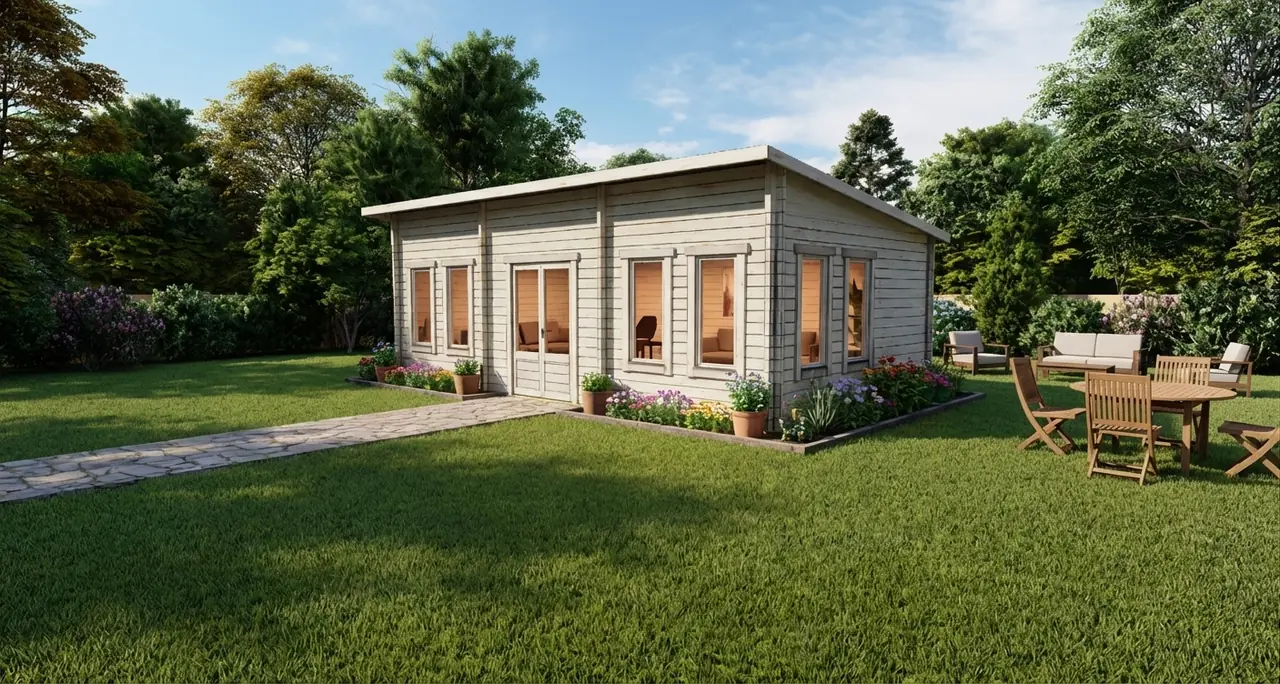
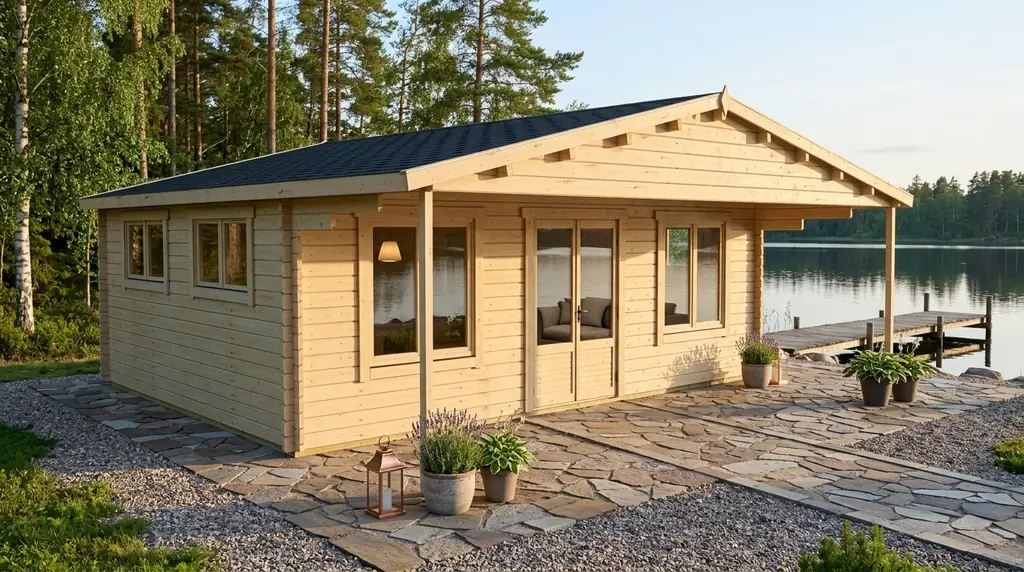
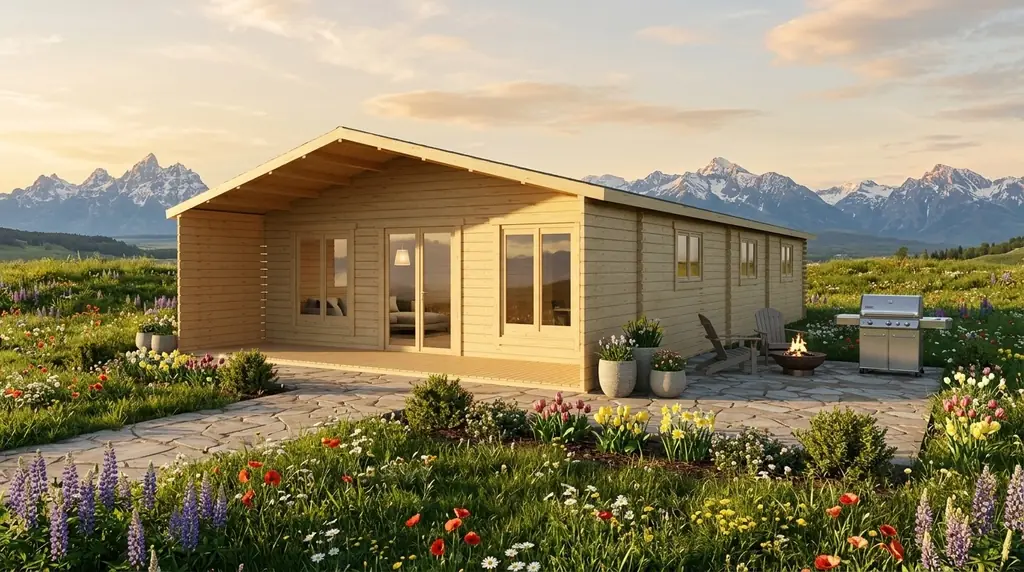
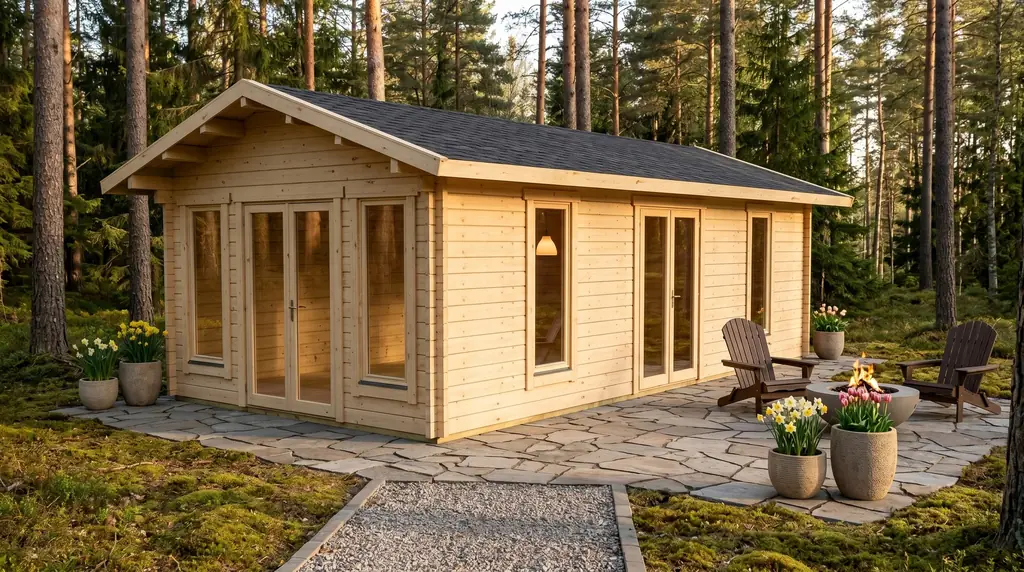
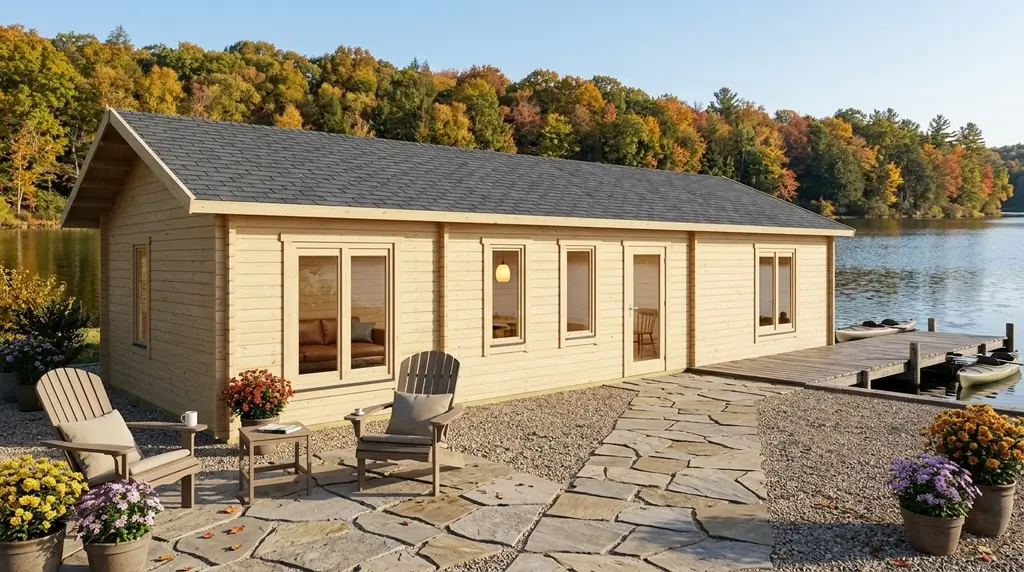
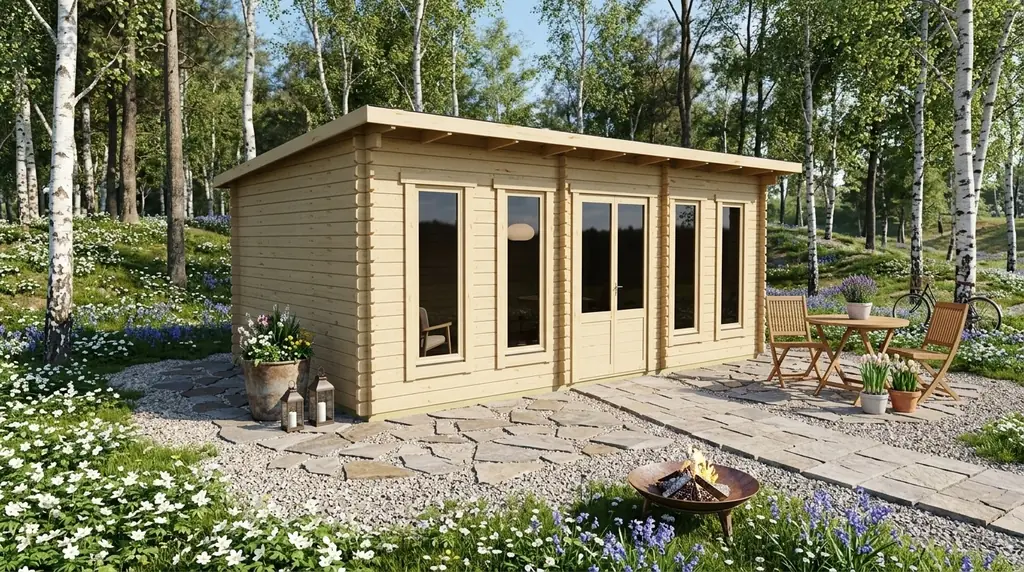
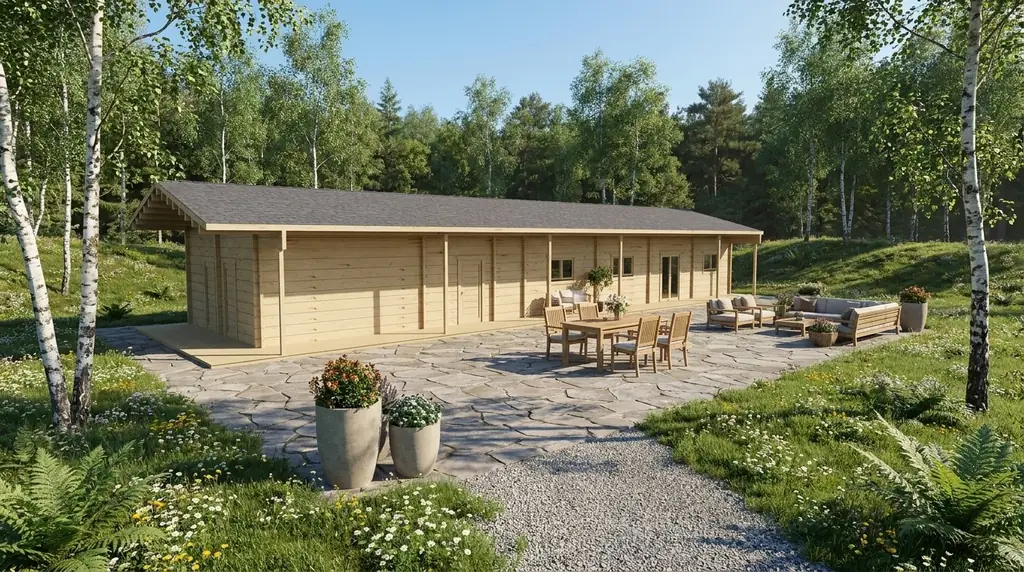
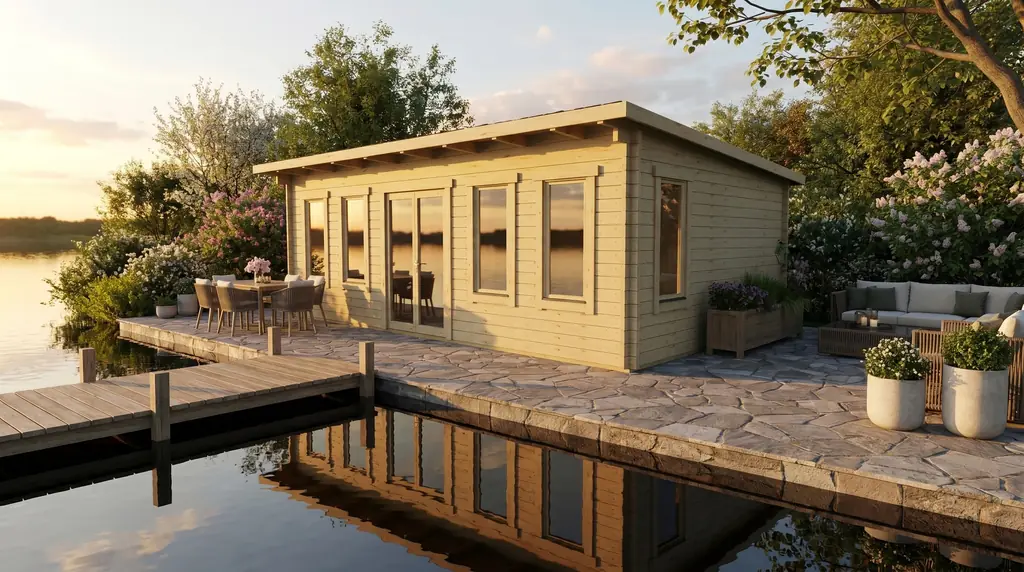
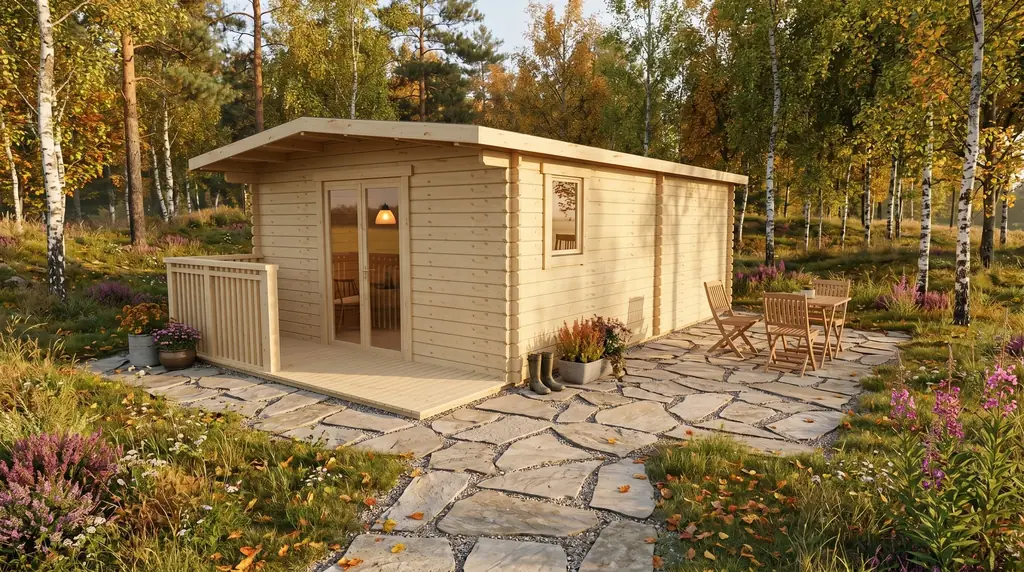
3D visualisations from other bespoke enquiries
Prepared in the same system for different briefs. They are design visualisations, not photographs of completed buildings, and the settings around the buildings are illustrative.
Private-label project documents and branding
Customer-facing renders, drawings, assembly information, packaging labels and other project documents can use partner branding where agreed. Legal, manufacturing and compliance documents retain required information. The exact branding and documentation scope is confirmed before production.
Who is responsible for what?
Eurodita factory scope
- Review the supplied brief and identify the information needed for quotation.
- Prepare the quotation and agreed production information.
- Manufacture the approved specification.
- Complete factory checks defined for the order.
- Pack, mark and document the supplied kit as agreed.
- Release the order under the confirmed Incoterm.
Buyer and appointed project parties
- Provide accurate project and destination requirements.
- Approve the drawings, specification, quotation and written terms.
- Manage local approvals, foundations, site services and construction conditions.
- Arrange on-site assembly, unless it is agreed with Eurodita for the project, and, on trade orders, the end-customer relationship.
- Manage transport, import and unloading responsibilities assigned under the Incoterm.
Bespoke production planning
Eurodita manufactures approximately 1,800-2,000 bespoke timber structures yearly, excluding glulam. Approximately 50 large glulam homes over 100 m² are manufactured in addition to that total. Bespoke and glulam timing is confirmed in the written quotation and order after Eurodita reviews the specification, engineering scope, quantity, production planning and agreed factory scope.
What is not in the default factory scope
Scope clarity matters more than a long capability list, so here is where the line sits.
- Insulation materials. The structure is supplied prepared for insulation where the project requires it. The insulation material itself is normally selected and provided locally.
- Electrical, plumbing and gas systems. Eurodita supplies the timber building and wooden construction scope. Building services are not part of the default manufacturing scope.
- Local approvals. Eurodita can provide drawings, CAD, specifications and the available technical data. Local architect approval, structural approval, building control or local-authority acceptance and site-specific regulatory approval are the responsibility of the customer, dealer or project team, unless a separate written project scope expressly assigns otherwise.
- Structural calculations. Where project-specific structural calculations and engineering are required, they are performed by external structural and engineering specialists.
- Transport. Eurodita does not operate its own transport fleet; freight is arranged through third-party carrier and forwarder partners. Unloading at destination is the buyer's or site's responsibility unless a written order or transport arrangement says otherwise.
- Installation and site works. On-site assembly is agreed per project. Foundations, utilities, permitting, building-control approval and turnkey delivery are agreed according to the market and the project.
- Blanket certification. Eurodita does not make blanket public claims that its complete product range is CE-marked, UKCA-marked, BS 3632 certified, BS EN 1647 certified, FSC Chain-of-Custody certified, ISO 9001 certified, compliant with all local building regulations, or covered by one universal numeric warranty. Where a destination market or project requires compliance, certification, structural review, local approval or documentation, the applicable route is confirmed for that specific product, project, destination and order. Warranty terms, where applicable, come from the confirmed product and order documentation.
- Timber sourcing documentation. Eurodita purchases certified timber and material from suppliers but does not hold its own FSC Chain-of-Custody certificate. Sourcing documentation is discussed from the actual supplier and order documentation for a specific project.
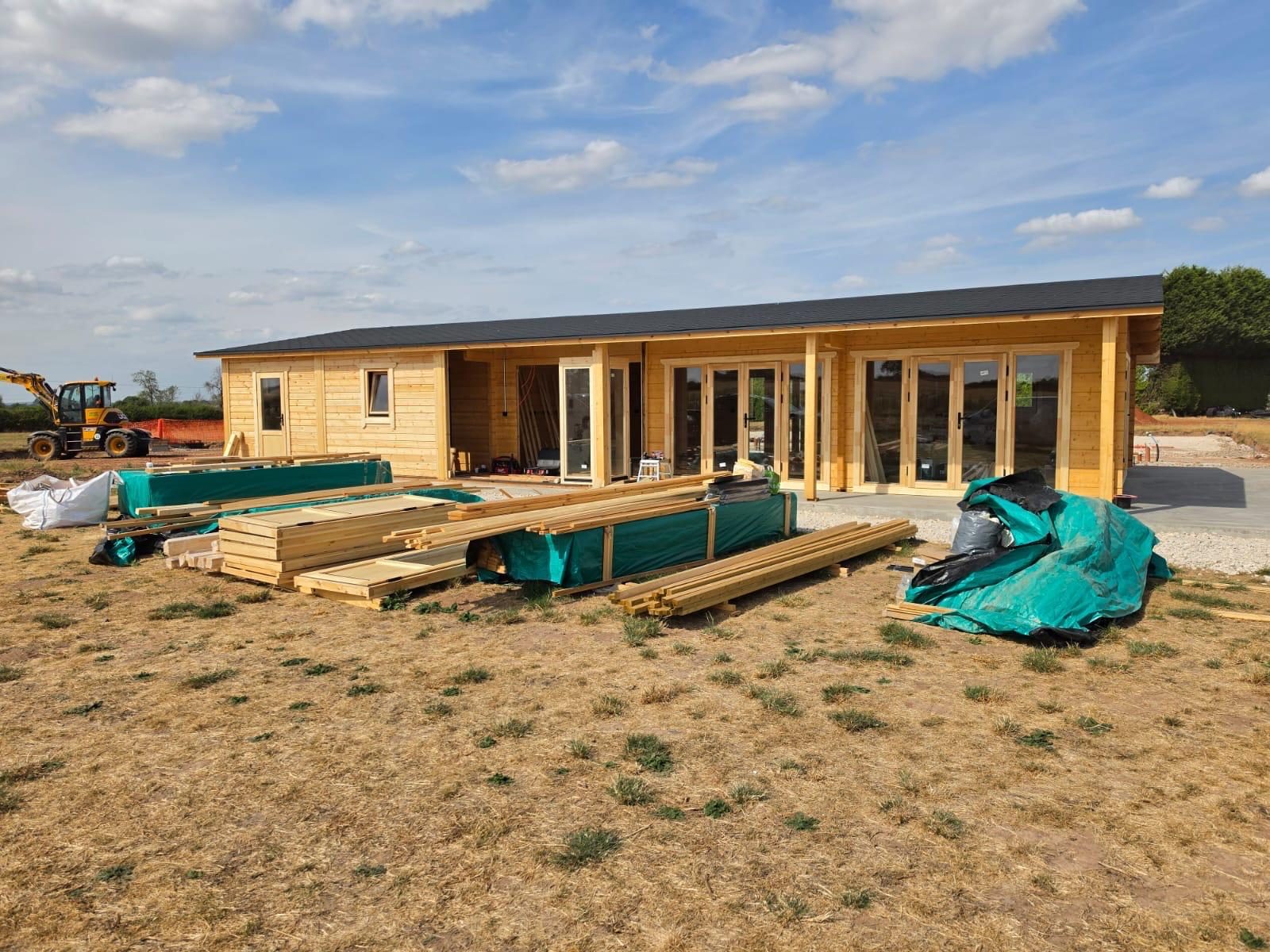
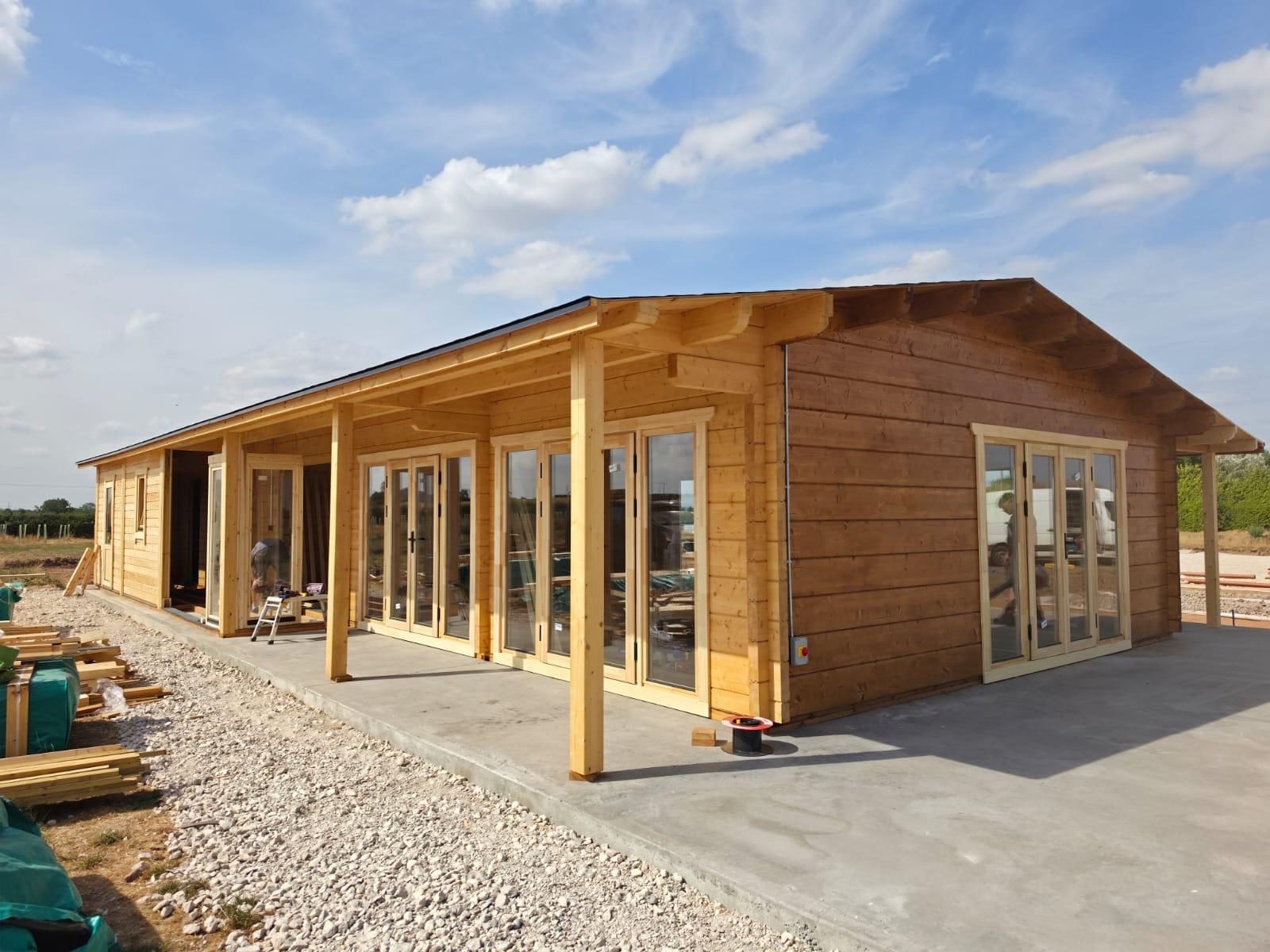
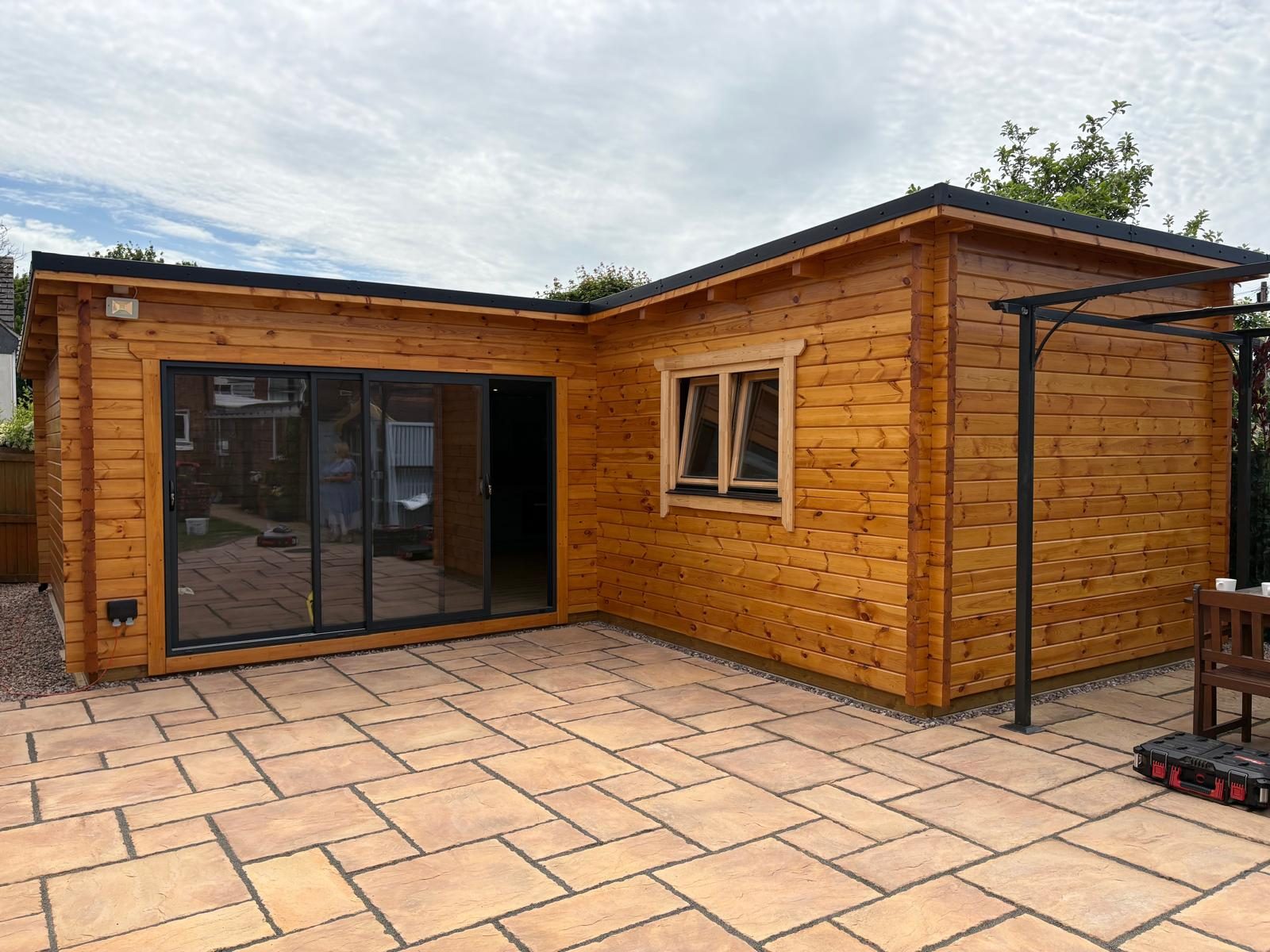
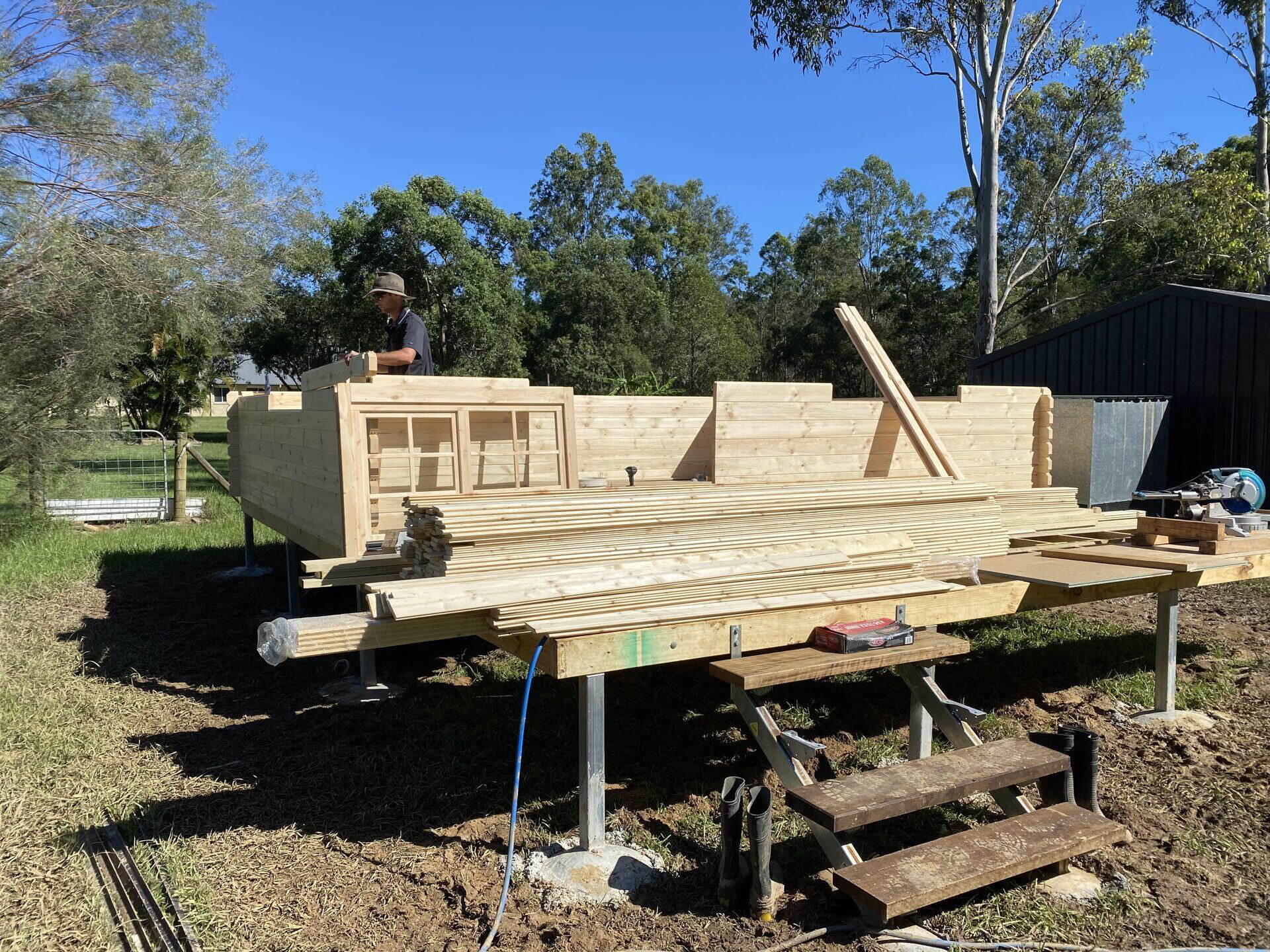
Photographs from delivered orders
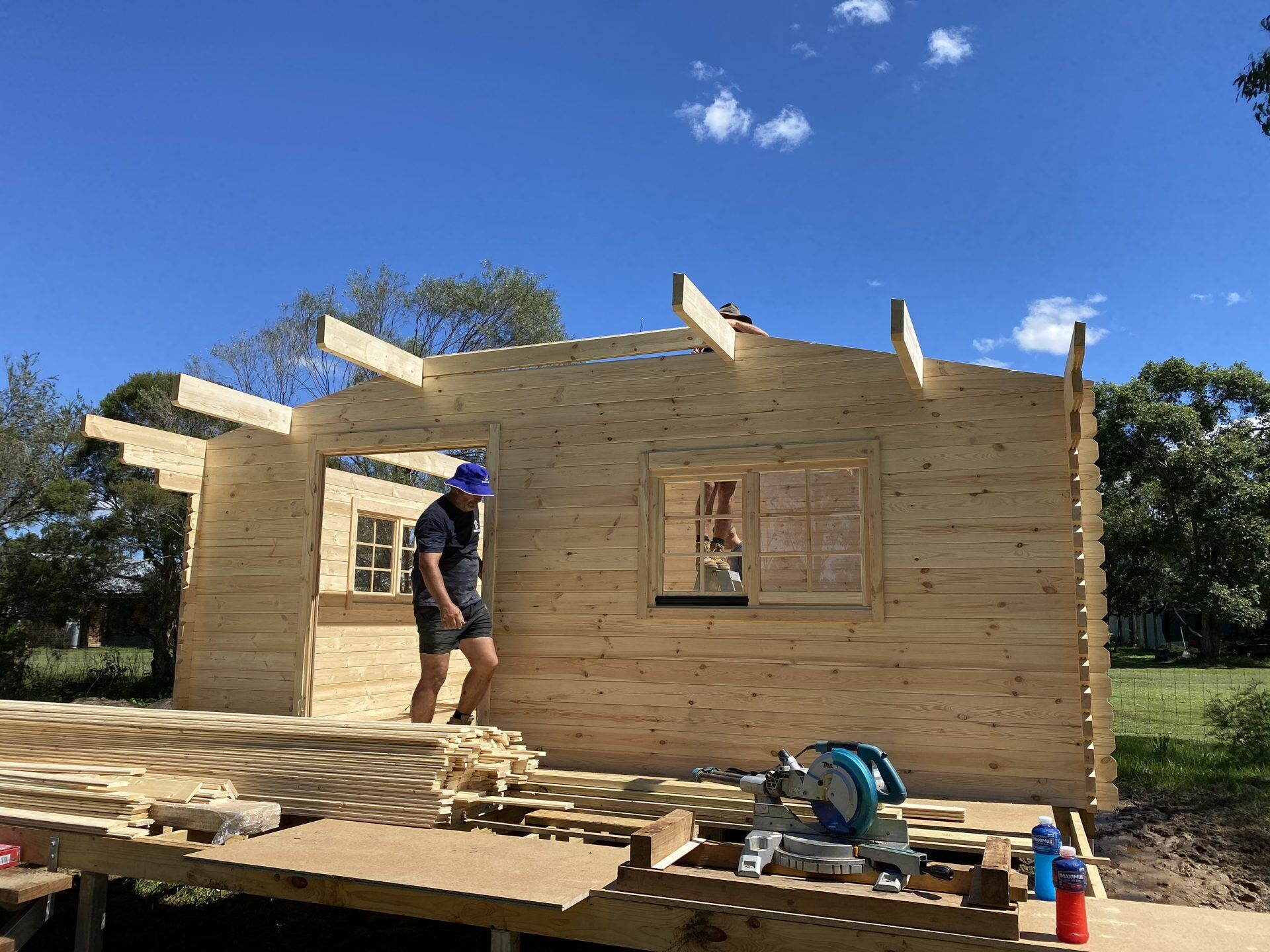
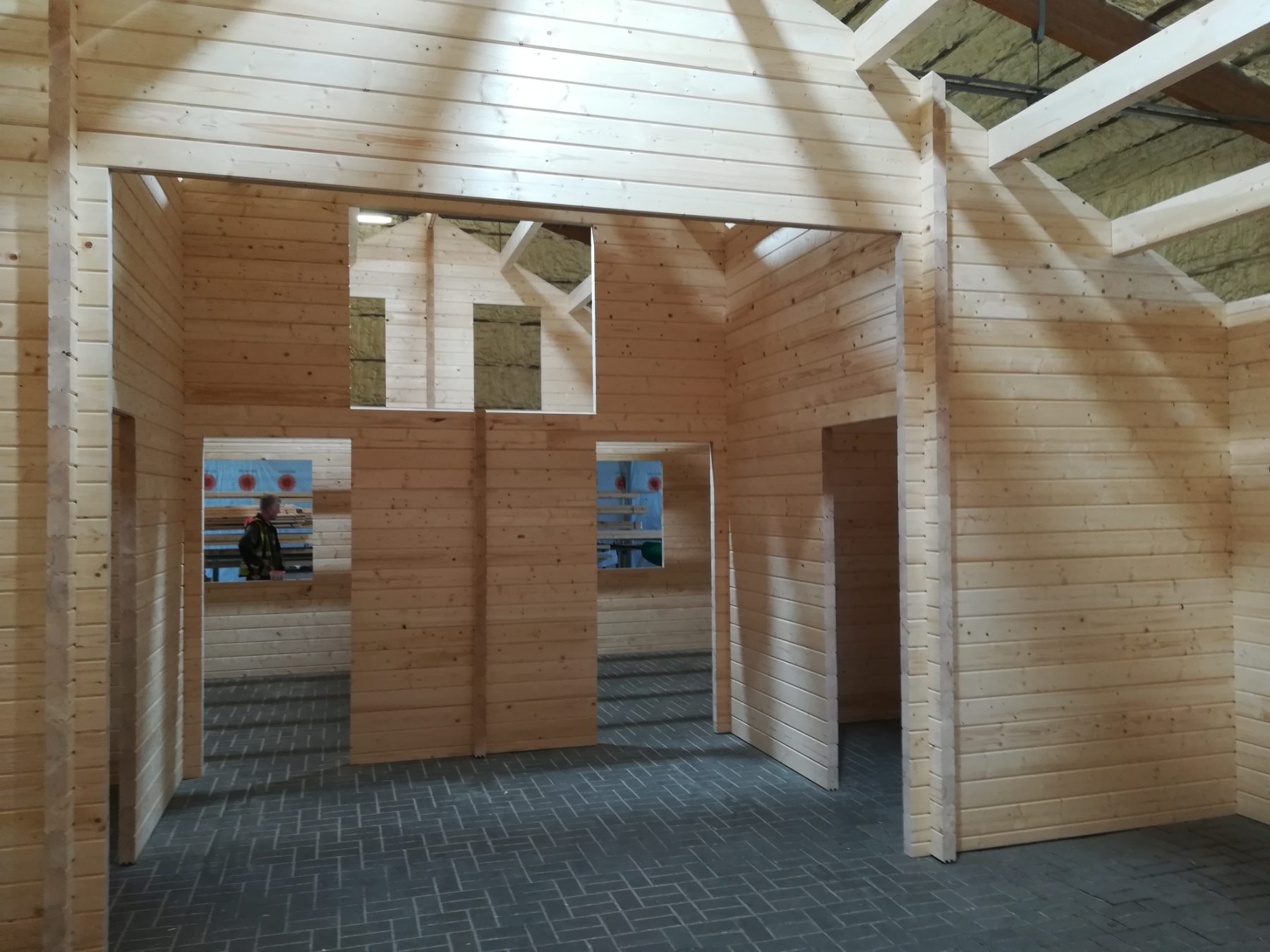
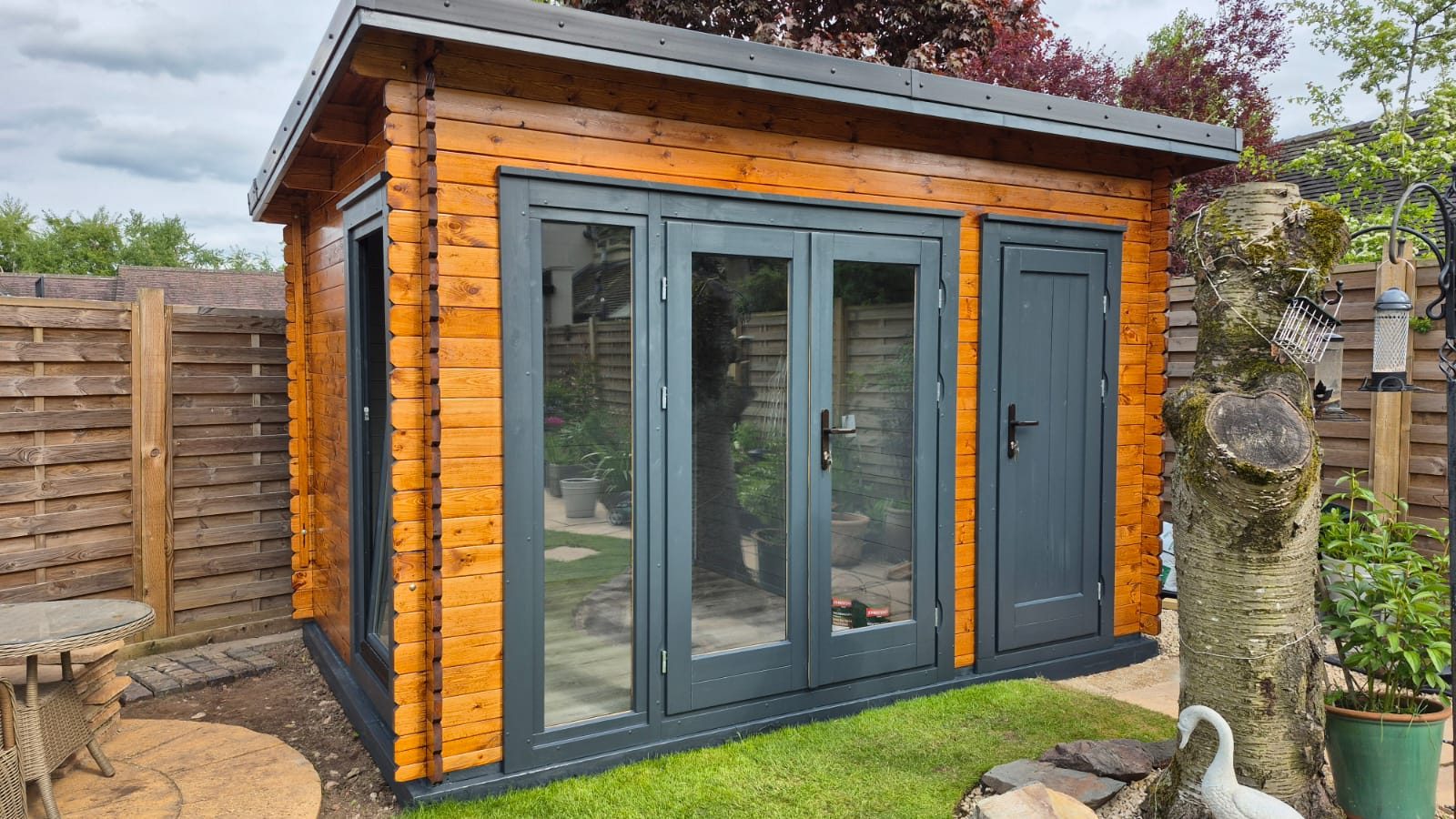
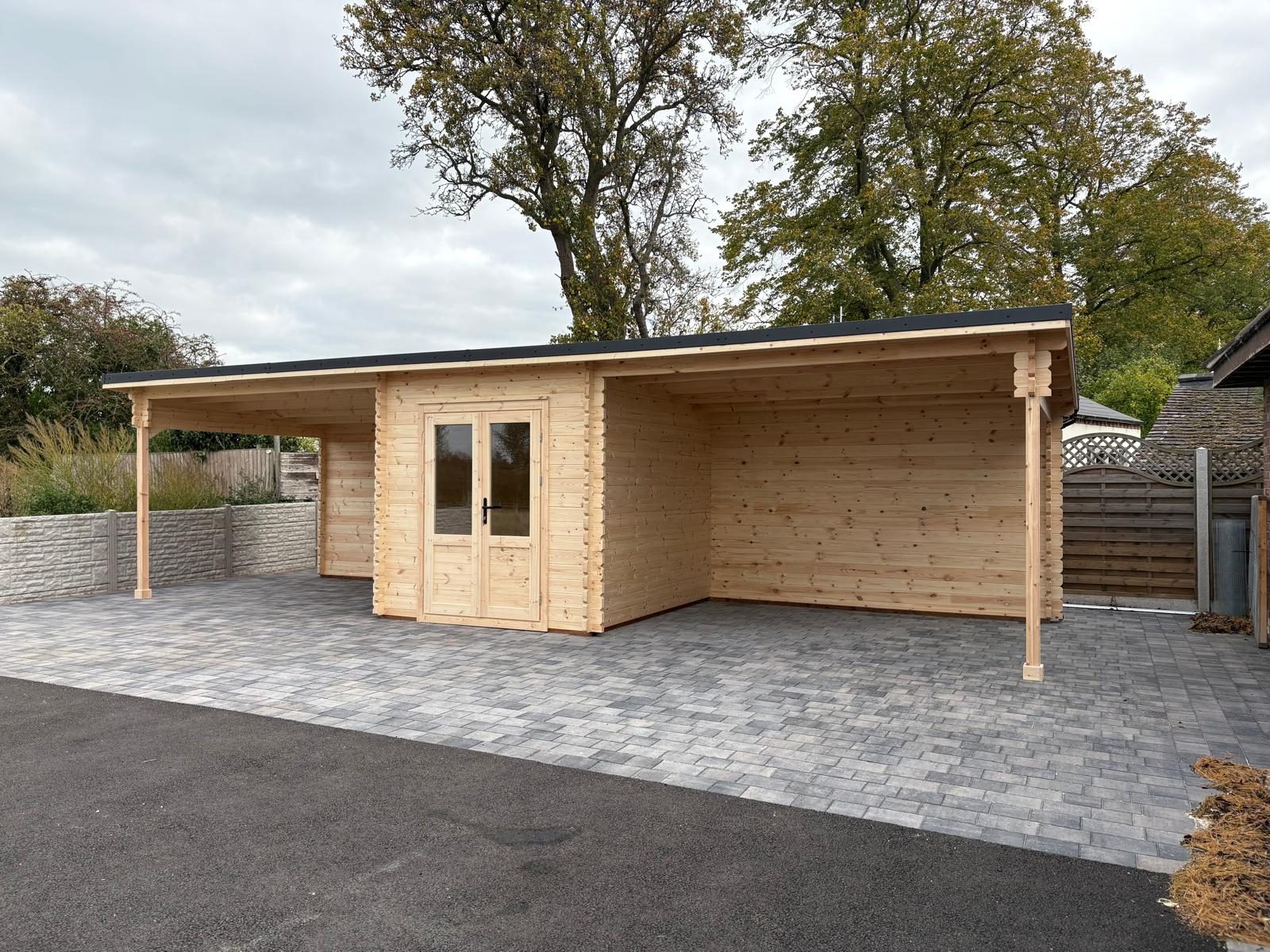
These photographs were taken on delivered orders by the partners and buyers who assembled them. They are shown as visual references only: no customer, project name or location is given, and painting, decking, bases and interior fit-out seen in them are site works done on the buyer's side.
Selected bespoke project specifications
Published specification records:
Order-specific design evidence
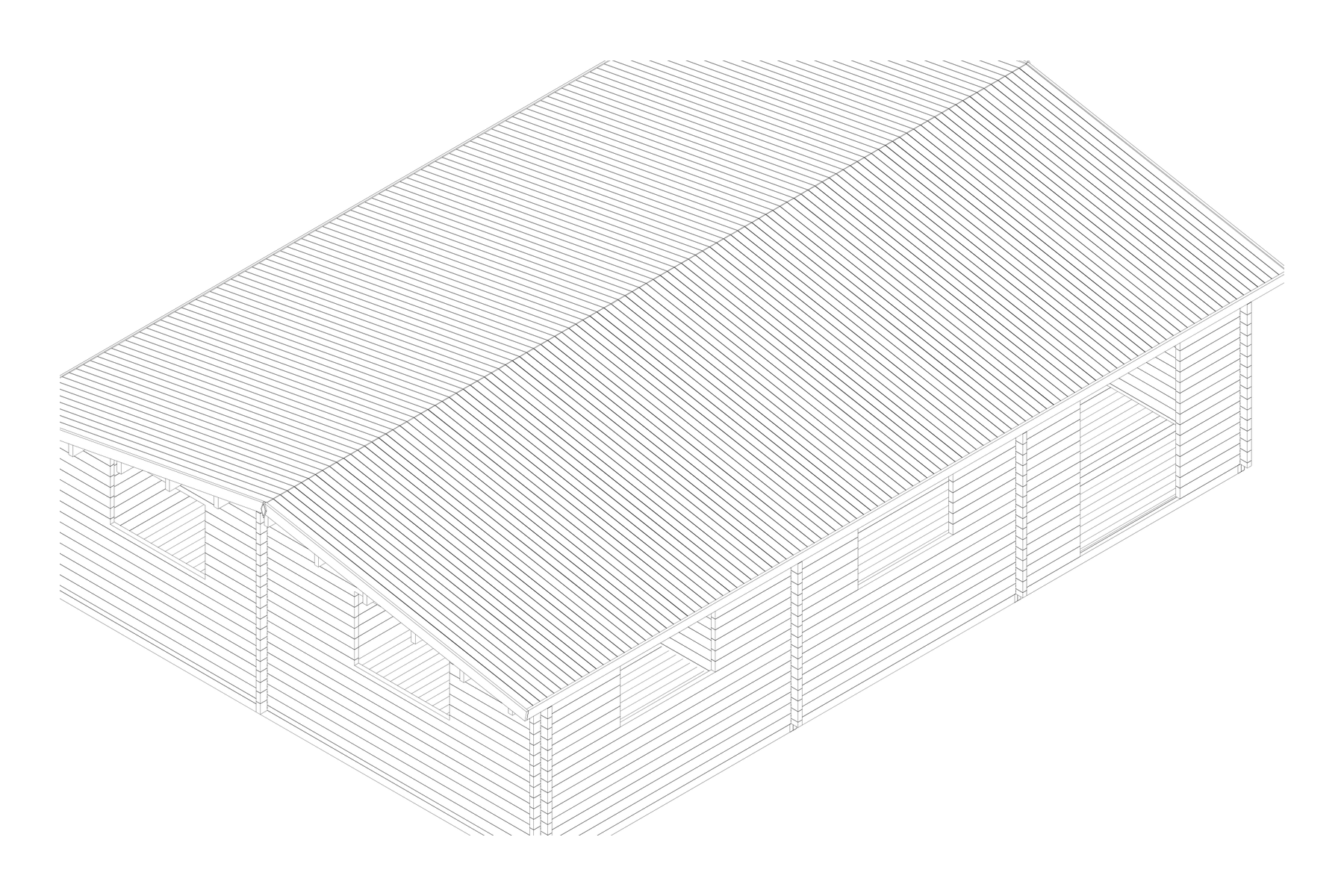
A bespoke brief becomes a controlled drawing set
For a bespoke timber building, the reference is the approved drawing package for that order, not a generic catalogue layout. This illustrative 58 mm project excerpt shows the level of geometry developed before factory release.
We use the same discipline to qualify intended use, site, layout, openings and the documentation needed for the project route.
Common questions about bespoke projects
What makes a log cabin bespoke?
A log cabin is bespoke when it is developed from your brief rather than supplied as an unchanged catalogue model. The final scope is defined by the approved drawings, specification, quantity, quotation and written terms.
What do you need from me for a bespoke quotation?
Provide the intended use and destination, building dimensions, available plans or elevations, preferred wall and roof systems, window and door requirements, finish, quantity, target timing and the expected logistics route. Complete information reduces uncertainty before specification and quotation.
How much does a bespoke log cabin cost?
Eurodita does not publish a price list for bespoke buildings. The price depends on the external dimensions, the wall system and profile, the roof, windows and doors and the finish. We calculate it in our own design and estimation system, which also produces the 2D drawings and 3D renders, and send a written quotation in EUR, EXW from the Eurodita factory, excluding VAT and transport. When the brief is complete, the quotation is usually prepared quickly.
Can a private buyer order a bespoke log cabin?
Yes, for larger residential homes: Eurodita quotes these directly to private clients. For smaller garden buildings, such as garden rooms, offices and annexes, the supply route, direct or through a trade partner, is confirmed project by project. Send your sketch or drawings with the enquiry form and we will tell you how you can buy.
Can you start from a sketch or early floor plan?
Yes. Eurodita can use a sketch or early floor plan to begin a project review and identify missing information. Manufacturing does not begin until the drawings, specification, quotation and buyer approvals required for the order are complete.
Which wall systems are available for bespoke projects?
Solid timber profiles are 19 × 100, 28 × 100, 34 × 100, 44 × 130, 58 × 130 and 70 × 130 mm. For bespoke one-off work the solid range starts at 28 mm: 19 mm is used primarily for standard and small shed-type production, and custom 19 mm is accepted for mass-production programmes only. Glulam profiles are 70 × 130, 88 × 260, 135 × 260, 180 × 260 and 220 × 260 mm, and the Dovetail corner system is available across the glulam profiles other than 70 × 130. Twin-skin build-ups are 44-50-44, 44-100-44, 58-50-58 and 58-100-58 mm, giving total wall thicknesses of 138, 188, 166 and 216 mm; the cavity is prepared for insulation, which is normally supplied locally rather than by Eurodita. Timber is spruce and pine, Nordic and Northern European. Availability and suitability are confirmed for the individual project and destination; the dimensions define profile and build-up families and do not on their own establish thermal, fire, structural or certification performance.
Can bespoke project documents use our company branding?
Customer-facing renders, drawings, assembly information, packaging labels and other project documents can use partner branding where agreed. Legal, manufacturing and compliance documents retain any information that must remain visible. The exact branding scope is confirmed before production.
How long does bespoke manufacturing take?
Bespoke and glulam timing is confirmed in the written quotation and order after Eurodita reviews the specification, engineering scope, quantity, production planning and agreed factory scope. Freight and final delivery timing are separate and follow the confirmed route.
Is there a fixed minimum order quantity for bespoke projects?
There is no universal numeric minimum order quantity. Order viability is assessed by product class, quantity, manufacturing economics, transport and logistics, and project context. For bespoke work, glulam and 58-70 mm solid profiles, a one-unit order can be commercially normal and is evaluated on its merits; a quantity of one is not a reason for rejection on its own. The picture differs at the other end of the range: 19 mm and standard 28-44 mm products are volume-driven, and isolated one-unit orders in those classes are generally not the target production model.
Who handles local approvals and installation?
Local approvals, foundations and site services are arranged by the buyer and the buyer's project team. On-site assembly is agreed per project, so say in your enquiry whether you need it. Our responsibility is the scope defined in the written quotation and confirmed order documents.
How are bespoke orders released from the factory?
Eurodita standard terms are EXW from the Eurodita factory. Delivered options, including DAP or DDP, can be arranged for selected markets and projects only when agreed in writing. Transport, import, unloading and other responsibilities follow the Incoterm and terms confirmed for the order.
Who supplies the insulation, and who installs it?
Eurodita supplies the timber building structure prepared and configured for insulation in walls, floors and roofs where the project requires it, and does not normally supply the insulation materials. Insulation materials and final insulation systems are normally selected and provided locally, because national requirements and local partner practice differ. The design and estimation system can calculate and design insulation thicknesses as part of the project, but that does not mean the material is supplied from the factory. Fitting the insulation is part of the local site works, together with approvals, foundations and site services.
Is there a maximum building size?
Eurodita does not publish a universal maximum building size. Bespoke dimensions and technical feasibility are assessed project by project, against the brief, the profile and the engineering scope. Two-storey and other multi-storey timber buildings are manufactured as bespoke, project-engineered work rather than as standard catalogue specifications, and local structural, building-permit and regulatory approvals remain project- and market-specific.
Is the range CE-marked, UKCA-marked or ISO 9001 certified?
Eurodita does not make blanket claims that its complete product range is CE-marked, UKCA-marked, BS 3632 or BS EN 1647 certified, FSC Chain-of-Custody certified or ISO 9001 certified. Where a destination market or project requires compliance, certification, structural review, local approval or documentation, the applicable route is confirmed for that specific product, project, destination and order. Eurodita can design and manufacture to a specified brief; final certification, legal classification and site acceptance remain project-specific. Recurring factory quality control covers incoming timber, moisture, dimensional, CNC and profiling accuracy, joint and fit, window and door, completeness, packing and pre-dispatch checks. It is an operational quality-control practice, not a certification.