
European Timber Construction Market 2026: Data, Trends and B2B Opportunities
- Home
- European Timber Construction Market 2026: Primary-Source B2B Review
Executive Summary
The European timber construction sector is undergoing a structural transformation. What was once a niche building method concentrated in the Nordic countries has evolved into a mainstream construction approach driven by regulatory mandates, carbon reduction targets and economic efficiency. This report provides a comprehensive analysis of the European timber construction market in 2026, with specific focus on prefabricated housing, cross-laminated timber (CLT), glulam structures and the B2B supply chain opportunities that accompany this growth.
Eurodita does not publish a European timber construction market size or growth forecast, and no figure on this page is an aggregate of our own construction. The nearest published total is a commercial research estimate of the European prefabricated buildings market, which is a wider market than prefabricated housing and is quoted in US dollars, not euro. A dealer who needs a market total should buy it from the firm that publishes it and read its market definition first. What this page offers instead is the public evidence a buyer can check, and what it does and does not support.
Key regulatory drivers include the EU Energy Performance of Buildings Directive (EPBD), France’s RE2020 lifecycle carbon accounting regulation, Germany’s Energiewende energy transition policy and the UK’s Modern Methods of Construction (MMC) strategy. These policy instruments collectively create a regulatory environment that favours timber over conventional materials in an increasing number of building categories. For B2B dealers, distributors and construction partners, the data presented in this report outlines a clear market entry framework, identifies high-growth country segments and quantifies the product categories where demand is strongest.
Market Overview and Size
The European timber construction market encompasses several distinct but interconnected segments: prefabricated housing, commercial and public timber buildings, engineered wood products (CLT, glulam, LVL) and ancillary timber structures such as garden offices, garages and carports. Understanding the relative size and growth trajectory of each segment is essential for B2B partners evaluating market entry or expansion strategies.
Prefabricated Housing Market
Prefabricated housing is the largest addressable segment for timber construction manufacturers. Three forces sit behind demand for it: regulatory pressure on embodied carbon, a shortage of skilled site labour in conventional construction, and public demand for housing that can be produced repeatably. None of those three is a growth rate, and none of them tells a dealer what any particular country will absorb next year, which is why the country evidence below matters more than any headline total.
Germany is the largest single European market for factory-built housing by volume, and it is the market with the most complete public statistics: the German federal statistics office reports prefabrication share of completed residential buildings every year. The Nordic countries build a far higher proportion of their housing in timber than the European average, but they also have deep domestic supply chains, which changes what an importing supplier can realistically win there.
Country by country, what is actually documented
| Country | What is publicly documented | What a dealer should check |
|---|---|---|
| Germany | Destatis publishes prefabrication share of completed residential buildings annually, and reports 22.2 percent of residential buildings completed in 2024 were factory prefabricated (press release N039, 28 July 2025). Note that this counts prefabrication, not timber. | Whether the buyer needs the RAL quality mark route, and which German-language documents a regional dealer expects with a delivery. |
| France | RE2020 has applied embodied-carbon limits to new residential building since 2022, and the thresholds tighten on a published schedule. | Whether the project is inside the RE2020 scope at all, and who in the project team owns the carbon calculation. |
| United Kingdom | Modern Methods of Construction is a stated government procurement preference, and permitted development rights for ancillary garden buildings are a separate and stable demand driver. | Which MMC category the product falls into, and whether the end use is ancillary or a dwelling, because the approval route differs. |
| Sweden, Norway, Finland | Long-established timber building tradition and domestic mass-timber manufacturing capacity. | Whether an imported product competes on anything other than price against a domestic supply chain. Usually it competes on bespoke or specialist work. |
| Austria | A concentration of European engineered-timber manufacturing. | The same question as the Nordics: what an import offers that local production does not. |
| Spain, Italy | Building-code changes have removed barriers to timber construction, from a low base of use. | Whether a dealer or distribution network exists at all, or whether the route is direct engagement with construction firms and architects. |
Engineered Wood Products: CLT and Glulam
Cross-laminated timber has moved timber into building categories that were previously concrete and steel, including mid-rise residential and commercial office work. Austria, Germany and Sweden hold most of the European manufacturing base. Published CLT market sizings differ so widely between research firms, on forecast horizon and on what counts as CLT, that quoting one of them here would mislead more than it informs. The storey limit for a timber building is not a European constant either: it is set by the destination building code and confirmed by the project team, not by the material.
Glulam (glue-laminated timber) represents the more established engineered wood segment, with applications ranging from residential structural beams to large-span commercial and agricultural structures. Glulam demand is driven by residential structural work and by the increasing use of glulam in hybrid timber-steel and timber-concrete systems. For manufacturers such as UAB Eurodita, which produces glulam houses in the approved glulam series of 70x130, 88x260, 135x260, 180x260 and 220x260 mm, that demand shows up as orders for engineered timber sections rather than for sawn profiles.
Engineered wood products serve construction, industrial, agricultural and infrastructure end uses. Eurostat, FAO, UNECE and ITTO collect production and trade data for the primary wood products behind all of them, including sawnwood, wood-based panels and glulam, through the Joint Forest Sector Questionnaire. That is the place to check a specific material or trade question, and it is a different thing from a market value.
H1 2026 Market Developments
The public indicators for the year to June 2026 do not show acceleration. They show a broadly flat construction aggregate with a falling buildings component, which is a different market to sell into than the one described in earlier editions of this page. The figures below are taken directly from the Eurostat datasets named against each one.
Global Market Size Update
Eurostat, dataset sts_copr_m, extracted 10 September 2026: EU construction production in June 2026 was 0.2 percent above June 2025, calendar adjusted. Construction of buildings, the component that matters most to a housing supplier, was 4.9 percent below June 2025, and was below the prior year in ten of the twelve months to June 2026. The total is being held up by civil engineering and specialised activity, not by buildings.
Eurostat, dataset sts_cobp_a, extracted 10 September 2026: dwellings permitted in one-dwelling buildings across the EU fell from 773,500 in 2021 to 500,400 in 2024, then rose to 539,400 in 2025. Useful floor area permitted in residential buildings followed the same path, from 235.6 million square metres in 2021 to 163.1 million in 2024 and 170.7 million in 2025. Permits lead completions, so 2025 is the first genuinely positive signal in the series since the 2021 peak, and it is still about thirty percent below that peak.
EU Taxonomy and Green Investment Flows
The EU Taxonomy for Sustainable Finance sets out when an economic activity counts as environmentally sustainable, and construction and real estate are within its scope. What it does not do is certify a product or a supplier. Whether a particular building qualifies is assessed against the technical screening criteria for that activity, by the parties financing and delivering the project.
For a dealer, the practical consequence is a documentation question rather than a financing promise. Where a client is pursuing Taxonomy-aligned finance, that client will ask the supply chain for material and environmental information about what it is buying. Knowing which of those questions a manufacturer can answer, and which belong to the project team, is worth more at the tender stage than any claim about preferential rates.
Labour Shortage Accelerating Prefab Adoption
The European construction sector has a workforce problem that recruitment alone has not solved, and it is one of the reasons factory-based production keeps gaining ground: a controlled indoor environment with higher automation competes for labour on different terms than a site does. Eurostat, news release of 21 March 2024, reported 3.6 million people working in EU forestry and wood-based industries in 2022, an increase of 1.4 percent on 2012 against 8.4 percent growth in total EU employment over the same decade. That is the wider forest-based economy rather than the timber-building trade, and it is a slow-growing labour pool, not a count of buyers.
Factory production changes where labour and waste occur rather than eliminating them: cutting and fitting move indoors, off the critical path of the site, and offcuts are handled at one location instead of many. Those are real operational differences and they are worth discussing against a specific project. They are not a fixed percentage, and any supplier quoting one to you should be asked which building, which site and which comparison produced it.
German Timber Frame Growth Trajectory
Germany is the one large European market where prefabrication share is published as an official statistic. Destatis, press release N039 of 28 July 2025, reported that around 16,900 residential buildings were completed in prefabricated construction in 2024, 15.5 percent fewer than in 2023, while conventional new residential building fell further, by 23.0 percent to 59,200. More than one in five completed residential buildings in 2024, 22.2 percent, was factory prefabricated. The share rose because conventional building fell faster, not because prefabrication grew.
Two features of the German market matter more to a supplier than any share number. First, prefabricated housing there is overwhelmingly a private-client purchase: Destatis reports that in 2024, 90.9 percent of prefabricated residential building clients were private households, 7.9 percent were companies and 1.1 percent were public bodies. That shapes who a dealer sells to and what the end customer expects to see. Second, southern states have a longer timber building tradition than northern ones, so regional demand is uneven in a way a national figure hides.
Nordic Leadership and Innovation
The Nordic countries build a far higher proportion of their houses in timber than the rest of Europe, and they have done so long enough that it is a building tradition rather than a trend. Norway has applied municipal timber requirements to some public building projects. Sweden and Norway have both delivered tall timber buildings that changed what regulators elsewhere consider possible. For an importing supplier the relevant consequence is uncomfortable: these are the markets with the deepest domestic supply chains, so they are the hardest to enter with a standard product and the most open to specialist or bespoke work.
Finland’s contribution centres on mass timber research and CLT manufacturing innovation, with VTT Technical Research Centre driving advances in fire performance, acoustic isolation and hybrid timber structural systems that are being adopted across European markets.
UK Modern Methods of Construction Targets
The UK route is shaped by Modern Methods of Construction being a stated preference in public housing funding, and by Scotland having a longer timber-frame tradition than England and Wales. A second, separate driver matters more to most Eurodita partners: permitted development rights for ancillary garden buildings mean a garden office or workshop can often proceed where a permanent dwelling could not. Those are two different demand pipelines with two different approval routes, and a dealer should know which one a given enquiry sits in before quoting.
Modular Construction Segment Acceleration
Volumetric modular units, fitted out in the factory with services, finishes and fixtures, have moved into segments that once refused off-site construction. That shift is real and observable in what gets tendered. Its size is not something this page can state, because the published modular sizings disagree with each other by a wide margin and none of them was reproducible against a named source.
Key adoption sectors include social and affordable housing (where speed and cost predictability are paramount), hospitality (hotel modules with consistent room quality), healthcare (clinic and ward modules for rapid capacity expansion) and education (classroom modules addressing demographic-driven demand fluctuations). For B2B partners, the modular segment offers higher per-unit values and longer-term supply contracts than component-based prefabrication, though it requires greater manufacturing coordination and logistics capability.

Key Growth Drivers
The expansion of timber construction across Europe is not driven by a single factor but by the convergence of regulatory, economic and environmental forces. Understanding these drivers is essential for B2B partners seeking to align their market strategies with the underlying demand trajectory.
Regulatory and Policy Drivers
The EU Energy Performance of Buildings Directive (EPBD) represents the most significant regulatory catalyst for timber construction. The revised EPBD, adopted in 2024, requires all new buildings to be zero-emission by 2030 and mandates whole-life carbon assessments that account for embodied carbon in building materials. Timber stores carbon in the building rather than emitting it during manufacture, which is why it appears favourably in whole-life carbon assessments. How much is stored in a specific building depends on the species, the volume and the calculation method used, so it is established by the project carbon assessment and not by a rule of thumb.
At the national level, France’s RE2020 regulation (implemented in 2022) was the first European building code to impose binding limits on embodied carbon in new construction. The regulation uses a dynamic carbon threshold that becomes progressively more stringent through 2031, effectively requiring an increasing proportion of timber or bio-based materials in new builds. Germany’s Energiewende policy framework, while primarily focused on operational energy, has catalysed demand for prefabricated timber buildings through KfW efficiency standards that favour high-performance envelopes.
Carbon Footprint Advantages
The carbon case for timber construction is real but it is calculated per building, not quoted per material. A whole-life assessment compares a specific design against a specific alternative, using the assessment method the destination requires. Public procurement, ESG reporting and green building rating schemes all increasingly ask for that calculation, which means the useful question for a supplier is which inputs the assessor will ask for, not what the headline saving is said to be.
Construction Speed and Labour Efficiency
Factory production and site preparation can run in parallel, because the structure is being cut indoors while the ground is being prepared. Precision cutting also reduces the amount of fitting and adjustment done on site. Those are structural differences in how the work is sequenced, and they are what a labour-constrained market is responding to. Eurodita does not publish a programme comparison, because the outcome depends on the site, the design and the parties doing the work, none of which the manufacturer controls.
Affordable Housing Crisis
Affordable housing supply is under pressure across much of Europe, and public and social housing bodies are increasingly willing to specify factory-built structures because a repeatable product is easier to procure and inspect than a series of one-off site builds. Eurodita takes no position on relative construction cost, because a dealer sets the end price and the site works are outside our scope. Public housing agencies and social housing developers are increasingly specifying timber prefab in their procurement frameworks.
Insurance and Financing Parity
A significant historical barrier to timber construction, higher insurance premiums and restrictive lending criteria, has largely been resolved across Northern and Central Europe. Insurance underwriters now rate modern engineered timber buildings at parity with conventional construction in most product categories, reflecting improved fire performance data, updated building codes that recognise timber’s charring behaviour and decades of performance evidence from the Nordic markets.
Country-by-Country Analysis
Germany: The Largest European Market
Germany is the single largest addressable market for timber construction in Europe, and the one with the most complete public record. Destatis, press release N039 of 28 July 2025, reports that 22.2 percent of residential buildings completed in Germany in 2024 were factory prefabricated: around 16,900 prefabricated buildings against 59,200 conventional ones. Within the prefabricated segment, 14,300 were single-family houses, the lowest single-family prefab figure since 2014, and conventional single-family completions fell further still, to around 40,100 from 53,000 in 2023.
Regional variation within Germany is significant, with the southern states having a longer timber building tradition than the northern ones. The market has strong consumer acceptance of prefabricated timber, an established dealer and distribution network, and a recognised quality mark route (RAL) that buyers may expect a supplier to have addressed. Destatis reports that 90.9 percent of prefabricated residential building clients in 2024 were private households, so the end customer is usually a family, not an institution.
For B2B partners, Germany offers the highest-volume opportunity but also the most competitive landscape. Market entry typically requires RAL certification or equivalent, German-language technical documentation and compliance with DIN standards. Partners who can offer private-label manufacturing with German-market compliance gain significant competitive advantage, as many regional dealers prefer to sell under their own brand while sourcing structures from specialist manufacturers.
France: Regulatory-Driven Acceleration
France’s RE2020 regulation has fundamentally altered the construction material landscape. By mandating lifecycle carbon accounting for all new residential buildings from 2022, with progressively tightening thresholds through 2031, the regulation creates a structural advantage for timber and bio-based construction methods. France does not publish a timber-frame share on the same basis as Germany, so a supplier evaluating France should treat any single adoption percentage they are shown as an estimate from whoever produced it, and ask on what basis it was calculated.
The French market presents several distinctive characteristics for B2B partners. Public procurement mandates at the municipal and departmental level increasingly specify timber or bio-based materials for public buildings, creating a stable demand baseline. The market also features strong regional variation, with Brittany, Normandy and the Auvergne-Rhone-Alpes region showing the highest timber construction adoption rates. French construction culture historically favoured masonry, meaning that the growth trajectory is steeper than in Northern European markets and the competitive landscape is less consolidated.
Key opportunities for B2B suppliers in France include partnership with local construction firms transitioning from masonry to timber methods, supply agreements with social housing developers (HLM organisations) and participation in the growing garden office and ancillary structure segment, which operates under simplified planning permissions.
United Kingdom: Modern Methods of Construction
The UK timber construction market is shaped by the government’s Modern Methods of Construction (MMC) strategy, which identifies off-site manufactured timber buildings as a priority pathway for addressing the national housing shortage. The Homes England framework, the primary funding mechanism for affordable housing, increasingly requires or incentivises MMC approaches, with timber-framed systems accounting for the majority of approved MMC Category 2 (panelised) solutions.
Scotland has a longer timber-frame tradition than England and Wales, and Scottish Building Standards have historically been more accommodating of timber construction. Northern Ireland also has an established timber-frame tradition and several regional manufacturers. England and Wales carry the larger absolute volume, so they are where growth in unit terms would come from, but they are also where a supplier meets the most competition from existing systems.
The UK market is particularly relevant for log cabin manufacturers and suppliers of garden offices, as the combination of restrictive planning policies for permanent structures and generous permitted development rights for ancillary garden buildings creates sustained demand for high-quality timber outbuildings. The normalisation of hybrid working has established garden offices as a permanent product category rather than a temporary trend, and dealer reorder patterns rather than any published market figure are the practical way to judge how deep that demand runs in a given territory.
For suppliers of mobile and transportable homes, the UK holiday park sector represents a significant and growing market segment. The Caravan Act framework governs the placement of transportable residential units, and the sector has seen substantial investment in premium timber-clad units that deliver residential-grade living quality within the regulatory framework for non-permanent structures.
Nordic Countries: Mature Markets with Innovation Leadership
The Nordic region, Sweden, Norway, Finland and Denmark, represents the most mature timber construction market globally. Sweden builds the large majority of its single-family houses in timber, reflecting decades of building tradition, building-code support and vertically integrated supply chains. While growth rates in absolute terms are moderate (reflecting market maturity rather than stagnation), the Nordics continue to drive innovation in engineered timber products, multi-storey timber construction and hybrid building systems.
Norway has implemented municipal timber mandates in several cities, including Bergen and Trondheim, requiring timber or bio-based primary structural materials in public building projects above specified thresholds. Finland’s timber construction sector is distinguished by its CLT manufacturing capacity and its leadership in mass timber research through institutions such as VTT Technical Research Centre. Denmark, while historically less timber-oriented than its Nordic neighbours, has seen rapid growth in prefab timber residential construction since 2020, driven by Copenhagen’s carbon-neutral city targets.
For B2B partners, the Nordic markets are significant primarily as reference markets and innovation partners rather than as primary growth targets. The established domestic supply chains and high domestic manufacturing capacity limit import opportunities for standard products, but the region generates demand for specialist and bespoke timber structures, particularly in the premium residential and commercial segments.
Southern Europe: Emerging Markets with High Growth Potential
Southern European markets, Spain, Italy, Portugal and Greece, represent the highest percentage growth rates in European timber construction, albeit from relatively low base levels. Spain’s updated Codigo Tecnico de la Edificacion (Technical Building Code, revised 2021) removed several regulatory barriers to timber construction, enabling timber-framed buildings up to four storeys and facilitating the use of CLT in residential applications. Spanish demand is being supported by regional policy, including sustainability building requirements in Barcelona and a timber construction promotion programme in the Basque Country, from a small base.
Italy’s timber construction growth is uniquely driven by seismic performance requirements following the L’Aquila earthquake (2009) and subsequent regulatory updates that recognise timber’s favourable strength-to-weight ratio in seismic design. The Trentino-Alto Adige region, with its Alpine building tradition and strong forestry sector, serves as Italy’s timber construction hub, but adoption is spreading to Lombardy, Veneto and Emilia-Romagna as awareness of seismic and environmental benefits increases.
For B2B partners evaluating Southern European market entry, the key consideration is the early-stage nature of dealer and distribution networks. Unlike Germany or the UK, where established dealer networks provide immediate market access, Southern European markets often require direct engagement with construction firms and architects. This represents both a challenge, in higher market development effort, and an opportunity, in less established competition. Eurodita makes no blanket territory or exclusivity promise, so any such arrangement would be a matter for a specific commercial agreement rather than a feature of the market.
Product Segment Analysis
Standard Log Cabins
Standard log cabins remain the highest-volume product segment in the European timber structure market. The primary demand drivers are the garden and leisure market (particularly strong in the UK, Benelux and Germany), the holiday accommodation sector and the light commercial segment (farm shops, retail kiosks, site offices). Eurodita produces solid wall profiles in an approved series of 19x100, 28x100, 34x100, 44x130, 58x130 and 70x130 mm, and the specification for any order is confirmed in the quotation.
Market demand for standard log cabins has evolved significantly since 2020. The garden improvement surge of 2021 and 2022 receded, but it did not return the category to where it started: garden buildings are now a normal part of the residential offer rather than a seasonal extra. How far above the old baseline a particular territory has settled is something a dealer can read from their own reorder pattern, and it is not something a published European figure can tell them.
Glulam Houses
The glulam house segment represents the premium end of the timber residential market. Built from the approved glulam series of 70x130, 88x260, 135x260, 180x260 and 220x260 mm, glulam structures are specified where a residential-grade envelope is wanted, and they compete with masonry and concrete on that basis. Thermal and structural performance is established for the specific design by the appointed professionals, not inferred from the profile. Glulam houses sit in a different buying process from garden buildings, with longer technical evaluation and a specification conversation before any order, as set out in our analysis of glulam compared to CLT and solid timber construction methods.
For B2B dealers and distributors, glulam houses require greater technical knowledge and more comprehensive after-sales support than standard log cabins. Eurodita retailers set their own prices, so what a glulam house is worth to a dealer is a matter for that dealer to determine. The private-label model is particularly effective in this segment, as end customers associate residential-grade structures with established local brands rather than manufacturing source.
Mobile and Transportable Homes
The mobile home and transportable structure segment serves two distinct markets: the holiday park and leisure sector, and the emergency and transitional housing sector. In the UK, compliance with the Caravan Act defines the regulatory framework, establishing maximum dimensions and transportability requirements that distinguish mobile homes from permanent dwellings. Across Europe, the distinction between mobile homes and static cabins is increasingly relevant as planning authorities tighten enforcement of permanent structure regulations.
Demand in this segment is driven by holiday park operators investing in premium accommodation units, local authorities procuring transitional housing solutions and private landowners seeking habitable structures that do not require full planning consent. The segment offers B2B partners a repeat-purchase relationship, because holiday park operators refresh accommodation stock on a rolling basis rather than buying once, and it is less seasonal than residential construction.
Garden Offices
The garden office market has matured from a pandemic-driven phenomenon into an established product category with predictable demand patterns. The UK, the Netherlands, Germany and Scandinavia are the largest national markets for garden offices. The segment suits dealer distribution because the product is relatively standardised: a small footprint, prepared for insulation and for electrical first fix, sold on a short specification rather than a design process. Eurodita supplies the structure prepared for insulation and is not an insulation supplier, so the habitable specification is completed by the buyer or their installer.
Garages and Carports
Timber garages and carports represent an ancillary structure segment that is often undervalued in market analysis but delivers significant B2B volume. These structures serve as natural upsell products for dealers already serving the residential timber market, with relatively simple construction requirements and high customer willingness to match the aesthetic of their primary dwelling. Timber garages and carports are supported by the broader move toward timber materiality in residential properties, and by carports being a convenient place to put electric vehicle charging. Both are observable trends. Neither has a European growth rate that this page can source.
B2B Opportunity Assessment
The evidence on this page does not describe a market growing across all segments. It describes a construction aggregate that is broadly flat, a buildings component that has been falling year on year, a permit series that bottomed in 2024 and turned up modestly in 2025, and a set of building-policy milestones that will change what buyers have to document. That is a harder picture than a growth story, and it is a more useful one, because it says the opportunity has to be found segment by segment rather than assumed.
Market Entry Timing by Country
The optimal market entry strategy varies by country maturity. In established markets (Germany, UK, Nordics), the priority is partnership integration, securing supply agreements with existing dealer networks, achieving necessary certifications and demonstrating product-market fit through reference projects. In markets where timber construction is still growing from a low base, such as Spain, Italy and southern France, the work is building architect and specifier relationships and creating reference installations that show the product suits local climate and regulatory conditions. Distribution terms, including any territorial arrangement, are settled case by case in a commercial agreement and are not offered as a market entry package.
Order Scope and Scaling
Most partnerships start small and grow, and the practical questions are the same at every stage: can the manufacturer produce a first sample order without disruption, can it repeat that specification consistently when reorders follow, and can it move from mixed sample loads to full container loads without renegotiating the product. Each order is quoted individually, with order scope and commercial terms set in the written quotation, because the right scope depends on the product family and the destination. Standard 19-44 mm ranges are planned in volume, while 58-70 mm cabins, bespoke structures and glulam homes can make sense as a single project.
Private-Label Advantages
In fragmented European markets, private-label manufacturing delivers measurable competitive advantage. End customers in the residential and garden structure markets overwhelmingly purchase from local, trusted brands. B2B partners who source structures from specialist manufacturers such as UAB Eurodita and sell under their own brand benefit from manufacturing economies of scale, consistent quality control and the ability to focus commercial resources on marketing, sales and customer relationships rather than production infrastructure. For the structure of the B2B relationship itself, see our dealer and business model resource.
Partner Onboarding and Support
Successful market entry in timber construction B2B requires more than product supply. Eurodita supports partners with assembly documentation and product information for the ranges they sell, and any joint marketing is agreed in the specific commercial agreement. The partner onboarding guide outlines the typical stages of B2B partnership development, from initial product evaluation through to established ongoing supply relationships.
Evaluate the Opportunity
UAB Eurodita has been manufacturing timber buildings in Lithuania since 1994. On an annual average, Eurodita manufactures approximately 12,000 standard catalogue timber buildings and 1,800 to 2,000 bespoke buildings, and processes approximately 150,000 cubic metres of timber, in approximately 5,000 square metres of covered production space, using Hundegger CNC cutting and Nardi kiln drying of Northern European spruce and pine. Eurodita manufactures for trade partners who sell under their own brand. To discuss a product route, private-label manufacturing or a market-specific specification, contact the Eurodita sales team.
Technology and Innovation Trends
CNC Precision Manufacturing
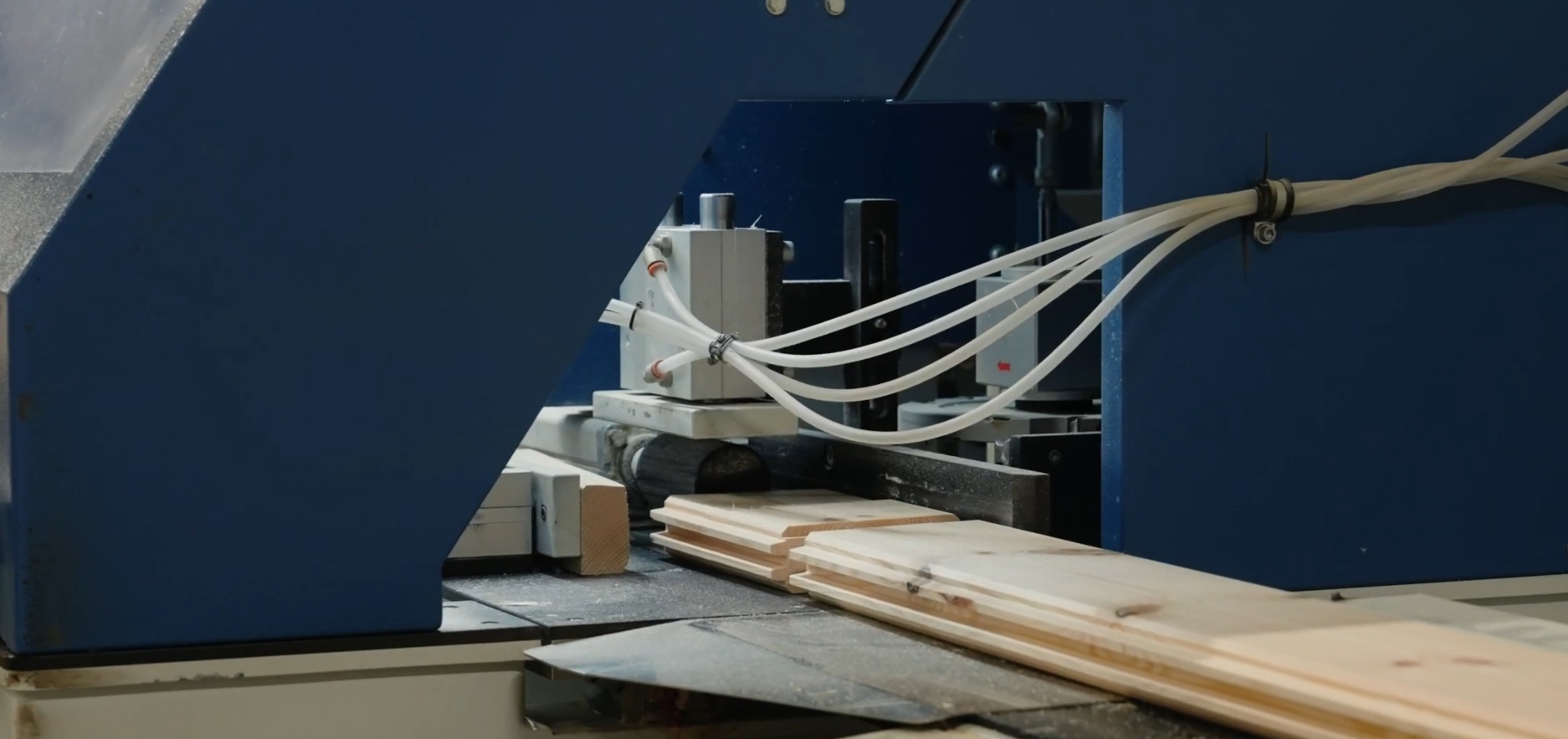
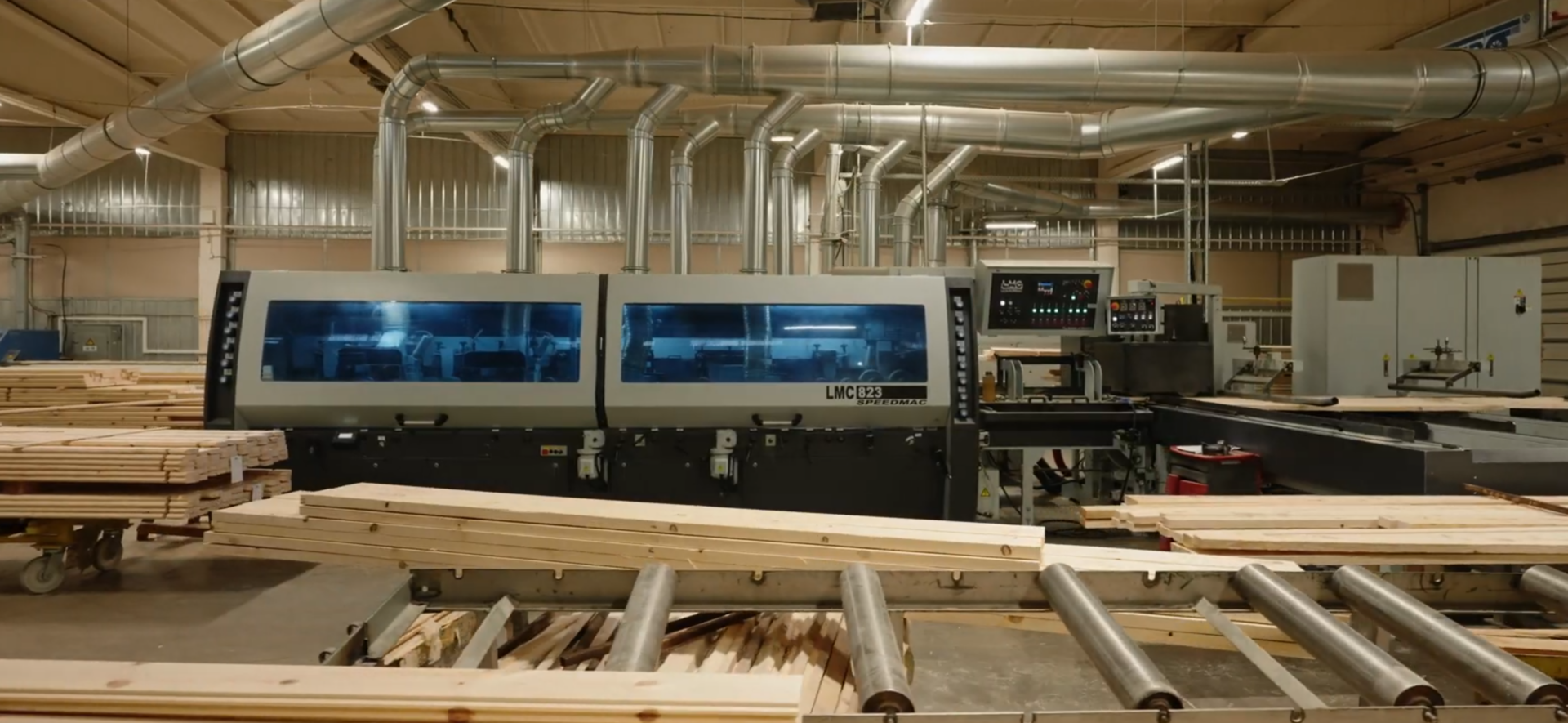
Computer numerical control (CNC) technology has transformed timber construction manufacturing from a craft-based process into a precision engineering discipline. Modern CNC systems such as the Hundegger range cut to a repeatable tolerance set by the machine and the programme, so components arrive dimensioned to the drawing rather than fitted on site. The tolerance that applies to a given order is a specification question, confirmed against the drawing set. This precision eliminates the historical quality variability associated with timber construction and enables complex architectural geometries that were previously impractical or cost-prohibitive. For B2B partners, CNC precision translates into reduced on-site assembly time, lower waste rates and consistent product quality across production runs.
BIM Integration
Building Information Modelling (BIM) is increasingly mandated for public-sector construction projects across Europe, with the UK, Germany, France and the Nordic countries all implementing BIM requirements at various project value thresholds. Timber construction manufacturers that can deliver BIM-compatible design files and integrate with architects’ digital workflows gain significant competitive advantage in the specification process. The integration of BIM with CNC manufacturing systems enables a seamless digital chain from architectural design through to factory production, reducing errors, accelerating timelines and improving cost certainty.
Hybrid Construction Systems
The boundary between timber construction and conventional methods is increasingly blurred by hybrid structural systems. Timber-concrete composite (TCC) floors, timber-steel connection systems and CLT core-with-glulam-frame structures enable designers to optimise material selection by structural function rather than defaulting to a single construction method. These hybrid approaches matter most in mid-rise construction, where a wholly timber solution may meet regulatory or structural limits that a timber-dominant hybrid does not. Where those limits fall is set by the destination building code and confirmed by the project team.
Prefab Modularisation and Digital Twins
The evolution from panelised prefabrication to volumetric modular construction represents the next efficiency frontier for timber buildings. Fully fitted volumetric modules, complete with internal finishes, services and fixtures, can reduce on-site construction time to days rather than weeks. Digital twin technology, which creates a real-time virtual replica of the physical manufacturing and assembly process, is enabling manufacturers to optimise production scheduling, predict and prevent quality issues and provide clients with real-time project visibility.
3D Visualisation and Configuration Tools
B2B sales processes for timber structures are increasingly supported by 3D visualisation and online configuration tools. These platforms enable dealers and their customers to explore product options, visualise structures in context and generate accurate specification documents without requiring specialist architectural knowledge. For B2B dealers operating in the garden office, log cabin and ancillary structure segments, configuration tools reduce the sales cycle, improve conversion rates and minimise specification errors.
Sustainability and ESG Considerations
Environmental, Social and Governance (ESG) reporting requirements are reshaping construction material procurement across Europe. The EU Corporate Sustainability Reporting Directive (CSRD) requires in-scope companies to disclose supply chain environmental impacts, including emissions associated with purchased construction materials. Which companies are in scope, and from when, has been amended since the directive was adopted and should be checked against the current legal text for the buyer concerned. Timber construction’s favourable carbon profile makes it an ESG-aligned procurement choice, reducing reported embodied carbon and supporting corporate sustainability targets.
For B2B partners, the ESG dimension adds a strategic rationale to timber construction beyond direct cost and performance comparisons. Construction firms that can demonstrate low-carbon supply chains through timber procurement gain competitive advantage in ESG-sensitive tenders, attract sustainability-focused investors and align with the broader decarbonisation trajectory that European regulation is mandating across all economic sectors.
Buyers pursuing environmental reporting objectives will ask about the origin and documentation of the timber in a product. Which documentation accompanies a given order is confirmed in that order documentation, per shipment and per destination, and is not a standing property of the product range.
To explore B2B manufacturing partnership opportunities, contact UAB Eurodita.
Eurodita Manufacturing
Frequently Asked Questions
What is the size of the European timber construction market?
Eurodita does not publish one. Market totals for this sector are produced by commercial research firms, each on its own definition of what the market includes, and the published totals differ from one another by more than the growth they forecast. What can be checked is the official activity data: Eurostat dataset sts_copr_m, extracted 10 September 2026, shows EU construction production in June 2026 at 0.2 percent above June 2025, with construction of buildings 4.9 percent below.
Which European country uses the most timber in construction?
Sweden builds the large majority of its single-family houses in timber. In absolute volume, Germany is the largest European market, and it is the one with published official statistics: Destatis reported that 22.2 percent of residential buildings completed in Germany in 2024 were factory prefabricated (press release N039, 28 July 2025). That statistic counts prefabrication rather than timber specifically.
What is driving growth in timber construction?
The primary growth drivers are regulatory (EU EPBD, France RE2020, Germany Energiewende), environmental (carbon storage advantages, ESG requirements), economic (factory production runs in parallel with site preparation, and reduces on-site fitting) and demographic (affordable housing crisis across Europe requiring scalable construction methods).
How fast is the CLT market growing?
Published CLT market forecasts differ so widely between research firms, both on the size of the market today and on the growth rate, that quoting a single one of them would give a false impression of precision. What is not in dispute is that Austria, Germany and Sweden hold most of the European manufacturing base, and that CLT has opened building categories that were previously concrete and steel.
Is timber construction more cost-effective than concrete?
Direct material cost comparisons vary by project type and location. However, the comparison has to be made on a specific project, because foundation requirements, site labour and the sequence of work all change the answer. Eurodita supplies the building structure on a defined scope and does not price the project around it, so a total cost comparison is something the buyer and their project team assemble.
What regulations are driving timber adoption in Europe?
Key regulations include the EU Energy Performance of Buildings Directive (EPBD) mandating zero-emission buildings by 2030, France’s RE2020 imposing embodied carbon limits, Germany’s KfW-40 efficiency standards, the UK’s MMC strategy and Homes England framework, and municipal timber mandates in Norwegian cities including Bergen and Trondheim. The EU Taxonomy for Sustainable Finance also classifies sustainable timber construction as an eligible green activity.
What is the prefab housing market forecast?
This page does not publish a forecast. The forward-looking things that can be stated are policy milestones rather than market values: Directive (EU) 2024/1275 requires new buildings owned by public bodies to be zero-emission from 1 January 2028 and all new buildings from 1 January 2030, and requires life-cycle global warming potential to be calculated and disclosed for new buildings over 1,000 square metres from 2028 and for all new buildings from 2030, subject to national implementation.
How can B2B dealers enter the timber construction market?
B2B market entry typically follows a staged approach: initial product evaluation and sample orders, establishment of a reference project portfolio, development of a local dealer or distribution network and scaling to regular volume shipments. Key success factors include partnering with an established manufacturer who offers private-label capability, obtaining relevant national certifications and developing local technical and after-sales support capacity.
What are the main timber construction product segments?
The European timber construction market comprises five main B2B product segments: standard log cabins (garden, leisure and light commercial), glulam houses (residential-grade engineered timber), mobile and transportable homes (holiday parks, transitional housing), garden offices (home working, ancillary structures) and garages and carports (ancillary residential structures). Each segment has distinct demand drivers, buying processes and distribution channel requirements.
Is timber construction growing in Southern Europe?
Southern European markets show the highest percentage growth rates in European timber construction. Spain relaxed regulatory barriers to timber construction in a 2021 building code update. Italian interest in timber is linked to seismic performance following post-earthquake regulatory reform. Both markets start from a low base of timber use, and neither publishes an adoption rate on a basis this page can cite. Both markets are at an early adoption stage, offering significant first-mover advantages for B2B partners establishing distribution networks.
What is driving prefab timber growth in 2026?
The durable drivers are regulatory and structural rather than numerical: embodied-carbon requirements tightening under the revised EPBD and national policies such as RE2020, a construction labour market that has not been solved by recruitment, and public buyers who find a repeatable factory product easier to procure and inspect than a series of one-off site builds. Against that, EU construction of buildings has been running below the prior year for most of the past twelve months (Eurostat sts_copr_m, extracted 10 September 2026), so these drivers are shaping demand rather than lifting it.
How is the EU Taxonomy affecting timber construction investment?
The EU Taxonomy sets criteria for when an economic activity counts as environmentally sustainable, and construction and real estate fall within its scope. Whether a specific project qualifies is assessed against the technical screening criteria for that activity by the parties financing and delivering it. For a supplier, the practical effect is that clients pursuing Taxonomy-aligned finance pass documentation requests down the supply chain. For B2B partners and their clients, Taxonomy alignment increasingly differentiates competitive tenders and procurement decisions.
Which European market has the highest timber frame adoption rate?
Sweden has the highest timber adoption in Europe, building the large majority of its single-family houses in timber. Germany is the largest single market in absolute volume, and the only large one publishing an official prefabrication share: Destatis reports 22.2 percent of residential buildings completed in 2024 were factory prefabricated (press release N039, 28 July 2025). Within Germany, the southern states have a longer timber building tradition than the northern ones.
What is the projected value of the modular construction market by 2032?
This page does not publish one. Published European modular sizings differ from one another by a wide margin and none could be traced to a source that states the pairing quoted here. The observable part is where volumetric modular is being adopted: social and affordable housing, hospitality, healthcare and education, all of them buyers who value a repeatable unit and a procurable specification. Volumetric modular units, fully fitted in factory conditions, are achieving acceptance in market segments that previously relied exclusively on site-built conventional construction methods.
Position your business in the European timber market
Partner with a manufacturer that delivers approximately 12,000 structures annually to multiple markets.
Is this a European timber-construction market-size forecast?
No. It is a dated primary-source review. The cited construction indicators, wood-product datasets and policy milestones are not combined into an invented market value or growth forecast.
What did the cited EU construction data show?
That figure was a first estimate and it has since been revised. As published on 21 August 2025, Eurostat reported EU construction production for June 2025 at 1.9% above June 2024 and 0.5% below May 2025, with construction of buildings 3.9% above June 2024 and 1.6% below May 2025. The current Eurostat series (dataset sts_copr_m, extracted 10 September 2026) puts the same June 2025 comparisons at 2.3% and 1.9% respectively. The more recent reading matters more: in June 2026, EU construction production was 0.2% above June 2025 while construction of buildings was 4.9% below.
Which European building-policy milestones affect future briefs?
Directive (EU) 2024/1275 sets zero-emission milestones for new public-body buildings from 2028 and all new buildings from 2030. It also introduces life-cycle global-warming-potential disclosure milestones. National implementation and project requirements must still be checked locally.
Does the policy prove that a timber building is compliant?
No. The policy does not certify a Eurodita product or replace destination-specific planning, building-control, structural, energy, fire, installation or documentation review.
How should a dealer qualify a market opportunity?
Confirm a defined buyer segment, intended use, selected product route, local approval and service responsibilities, competitive context and at least one current commercial signal such as a qualified enquiry, tender or named project.