
Mobile log homes for parks and dealers
A park dealer who compares a timber mobile home with a static caravan is comparing two products that can fall into the same legal category. Which rules apply depends less on the material than on whether the unit is a building or a caravan in law. This guide separates the two questions: what a caravan is in law in England, and what a Eurodita mobile log home is as a product.
Eurodita is a timber building manufacturer in Lithuania, manufacturing timber buildings since 1994. This guide states nothing about the running costs, lifespan or resale value of either product; it sets out what can be confirmed in writing for the timber product.
At a glance
The caravan definition in law
Under section 29 of the Caravan Sites and Control of Development Act 1960 a caravan is any structure designed or adapted for human habitation which is capable of being moved from one place to another, excluding tents. Section 13 of the Caravan Sites Act 1968 extends this to a twin-unit structure of not more than two sections, assembled on site, provided it is physically capable of being moved by road when assembled and does not exceed 20 m in length, 6.8 m in width and 3.05 m in internal height.
A structure outside that envelope falls outside the caravan route and is checked as a building-route project with the local planning authority and a building control adviser. Land on which a caravan is stationed for human habitation is a caravan site, and its site licence needs planning permission first. The position in England is set out with sources on planning permission for holiday log cabins; it is a summary, not legal advice.
What a Eurodita mobile log home is
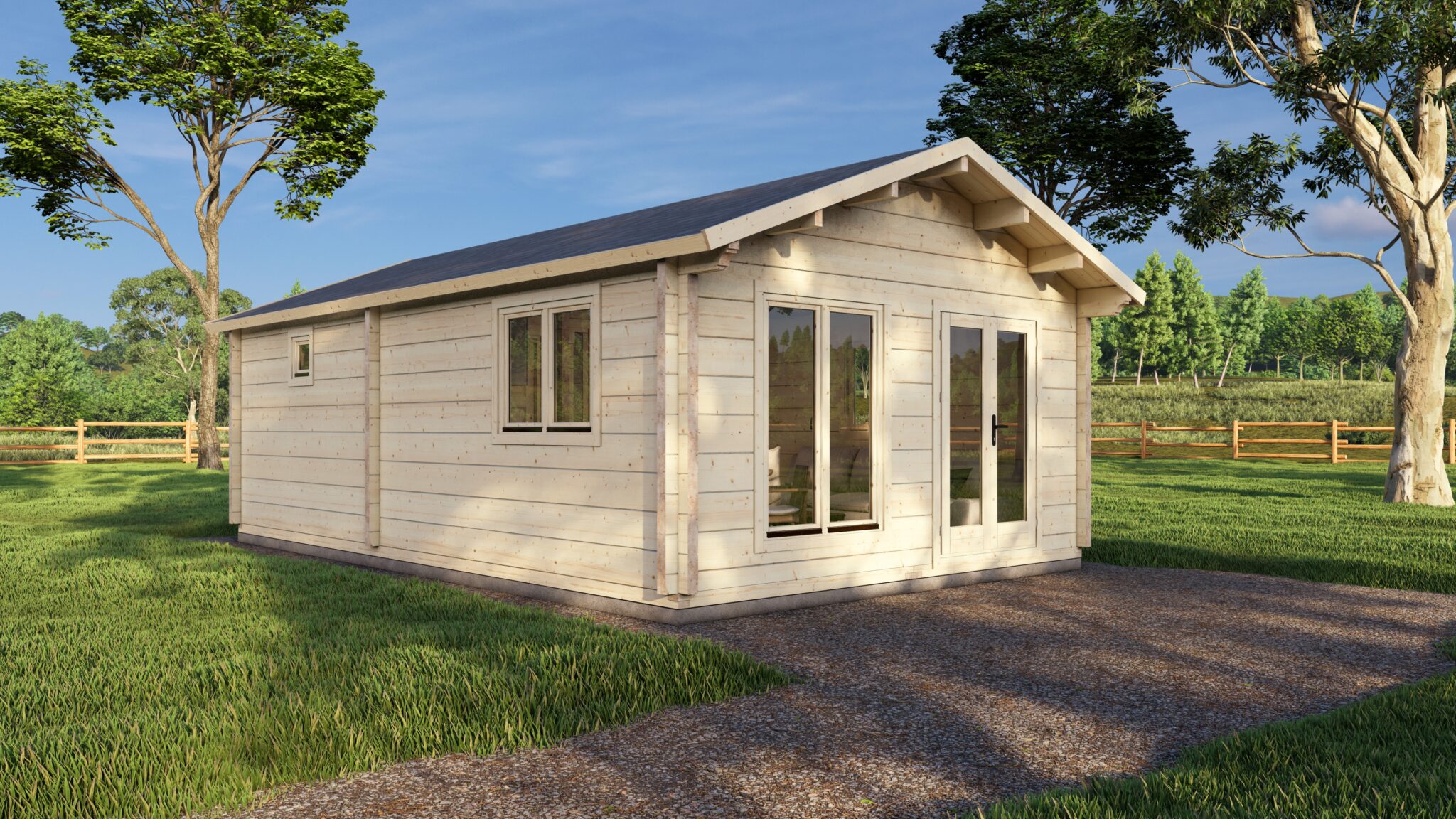
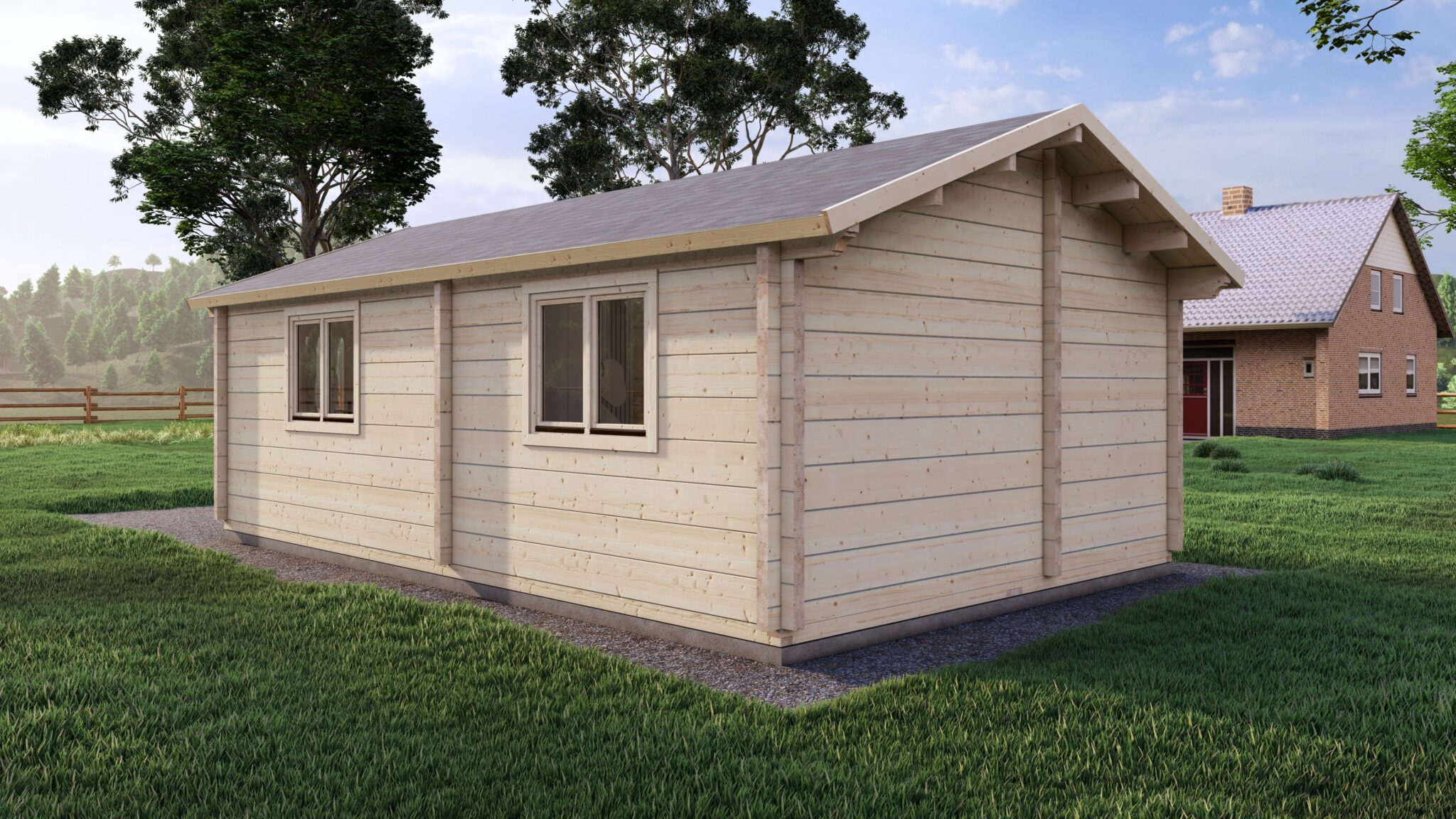
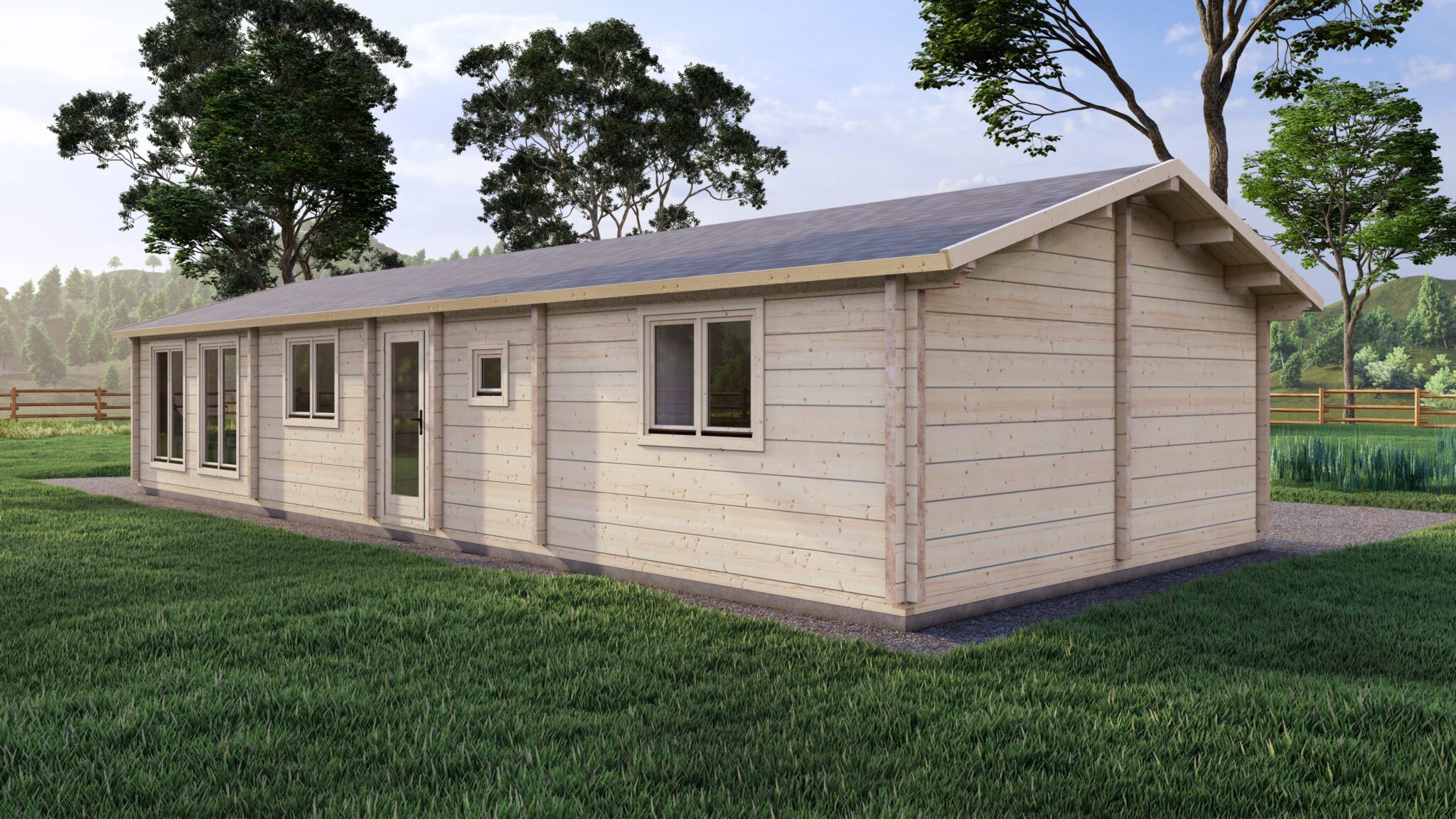
A mobile log home is a timber building from the Eurodita mobile log home family, ordered for holiday parks, resorts and similar sites. The walls are glulam; the catalogue lists models with 1 to 4 bedrooms. A mobile log home can be supplied as a factory-assembled transportable module where the project allows, otherwise as a flat-packed kit; that is confirmed per project and never promised generically.
What Eurodita confirms in writing for an order:
- Walls: glulam profile and corner type; the glulam profiles are 70x130, 88x260, 135x260, 180x260 and 220x260 mm.
- Dimensions: external footprint and heights; dimensions designed around the caravan framework where the operator specifies them.
- Joinery: own timber windows and doors in IV45, IV68 and triple-glazed IV92.
- Insulation: structure prepared for insulation where required; the material is bought locally.
- Finish: untreated by default; factory painting is an option with limited capacity.
- Documents: 2D CAD drawings, elevations, 3D visual, specification and joinery schedule for the order.
Glulam walls do settle, but only minimally: in use the settlement is neither felt nor seen.
What a dealer compares
For either product the dealer puts the same questions to the supplier and compares the written answers:
- the specification the unit is designed to, and the documents supplied with it;
- the external dimensions, and whether they sit inside the caravan envelope the park relies on;
- the form of supply: assembled unit, transportable module or kit, and who assembles;
- what is included and what is excluded: insulation, finish, interiors, services;
- the price basis: currency, VAT, Incoterm and freight;
- unloading and siting requirements on the park.
Eurodita publishes no comparison of heating costs, lifespan or letting income between timber units and static caravans, because it holds no sourced figures for them.
What stays with the park and the dealer
Eurodita makes no blanket CE or UKCA claim and does not claim blanket BS 3632 or BS EN 1647 certification for its mobile and residential products. Legal classification, site acceptance, planning permission and the site licence are the park's route and are not promised by Eurodita. Bases, utilities and site works are provided locally. Installation is agreed per project, and turnkey delivery is not part of the standard supply.
Frequently asked questions
Is a timber mobile home a caravan in law?
In England a twin-unit structure of not more than two sections that can be moved by road when assembled and does not exceed 20 m in length, 6.8 m in width and 3.05 m in internal height is a caravan in law (Caravan Sites Act 1968, section 13). A structure outside that envelope is checked as a building-route project with the local planning authority and a building control adviser.
What is a Eurodita mobile log home made of?
The walls are glulam, in the profiles 70x130, 88x260, 135x260, 180x260 and 220x260 mm, with Eurodita timber windows and doors. The catalogue lists models with 1 to 4 bedrooms.
Are mobile log homes delivered assembled?
A mobile log home can be supplied as a factory-assembled transportable module where the project allows, otherwise as a flat-packed kit. That is confirmed per project.
Are Eurodita mobile log homes certified to BS 3632?
Eurodita does not claim blanket BS 3632 or BS EN 1647 certification. The specification of each project is agreed in the written quotation; classification and site acceptance remain the park's route.
How to prepare an enquiry
Send the number of units, the bedroom count or the catalogue models under consideration, the classification route the park relies on, the delivery country and site address, and the delivery basis to be priced. Say whether the units should be quoted as kits or, where the project allows, as transportable modules.
Eurodita replies with a written assessment and, where the project fits, a written quotation with drawings, in EUR, excluding VAT and delivery, EXW Eurodita factory by default. The procurement side is covered on the holiday park lodge procurement guide.