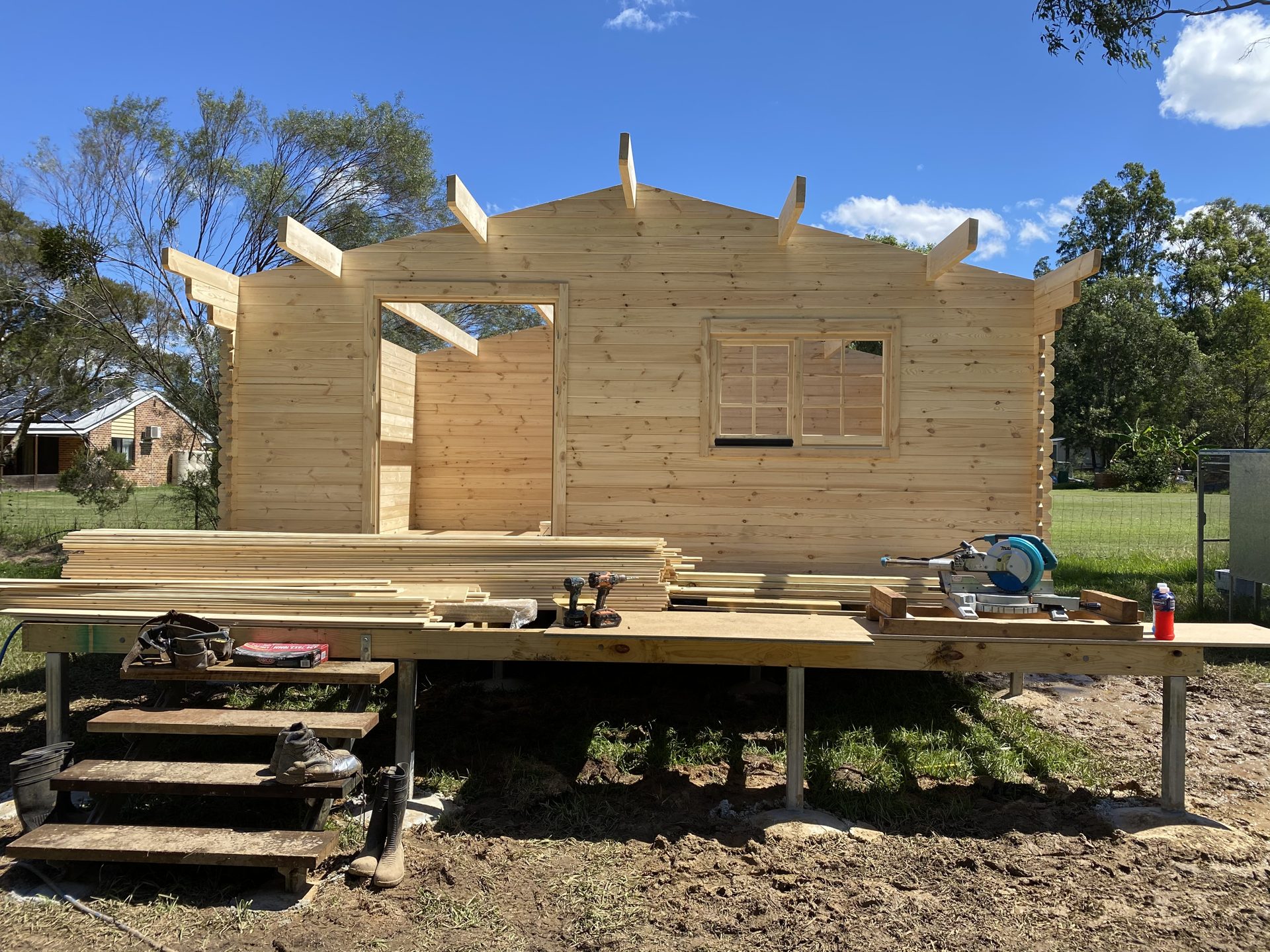
Roof Design Determines Cabin Character and Performance
The roof is the largest single element of a log cabin, typically representing 25-35% of material cost. Roof type affects visual appeal, internal volume, drainage performance, snow loading capacity, and planning considerations. For B2B dealers, understanding roof options enables accurate specification and confident customer guidance.
Eurodita manufactures cabins with four primary roof configurations: apex (gable), pent (mono-pitch), flat (low-pitch membrane), and hip. Each serves different market segments and aesthetic preferences.
Apex (Gable) Roof
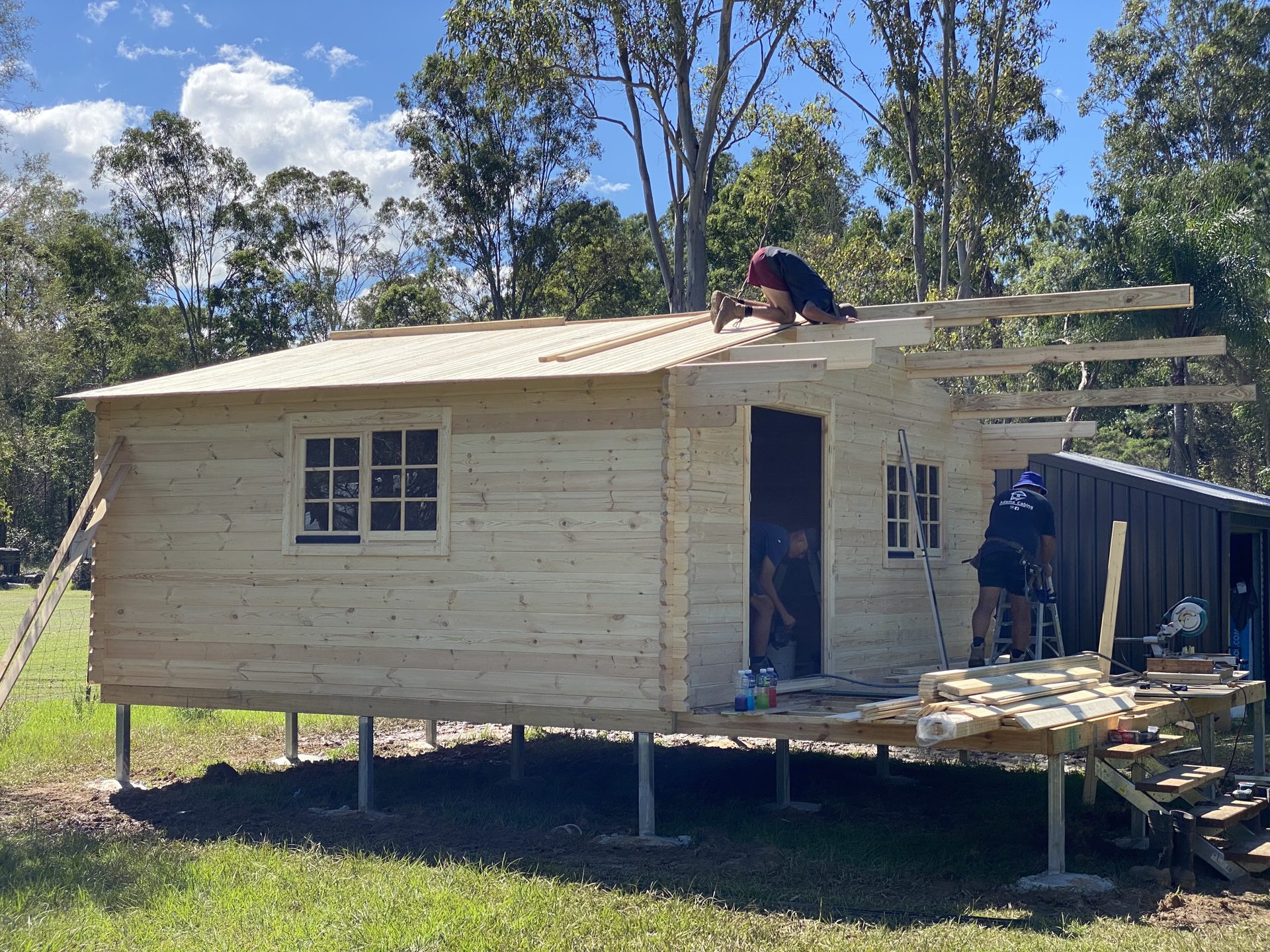
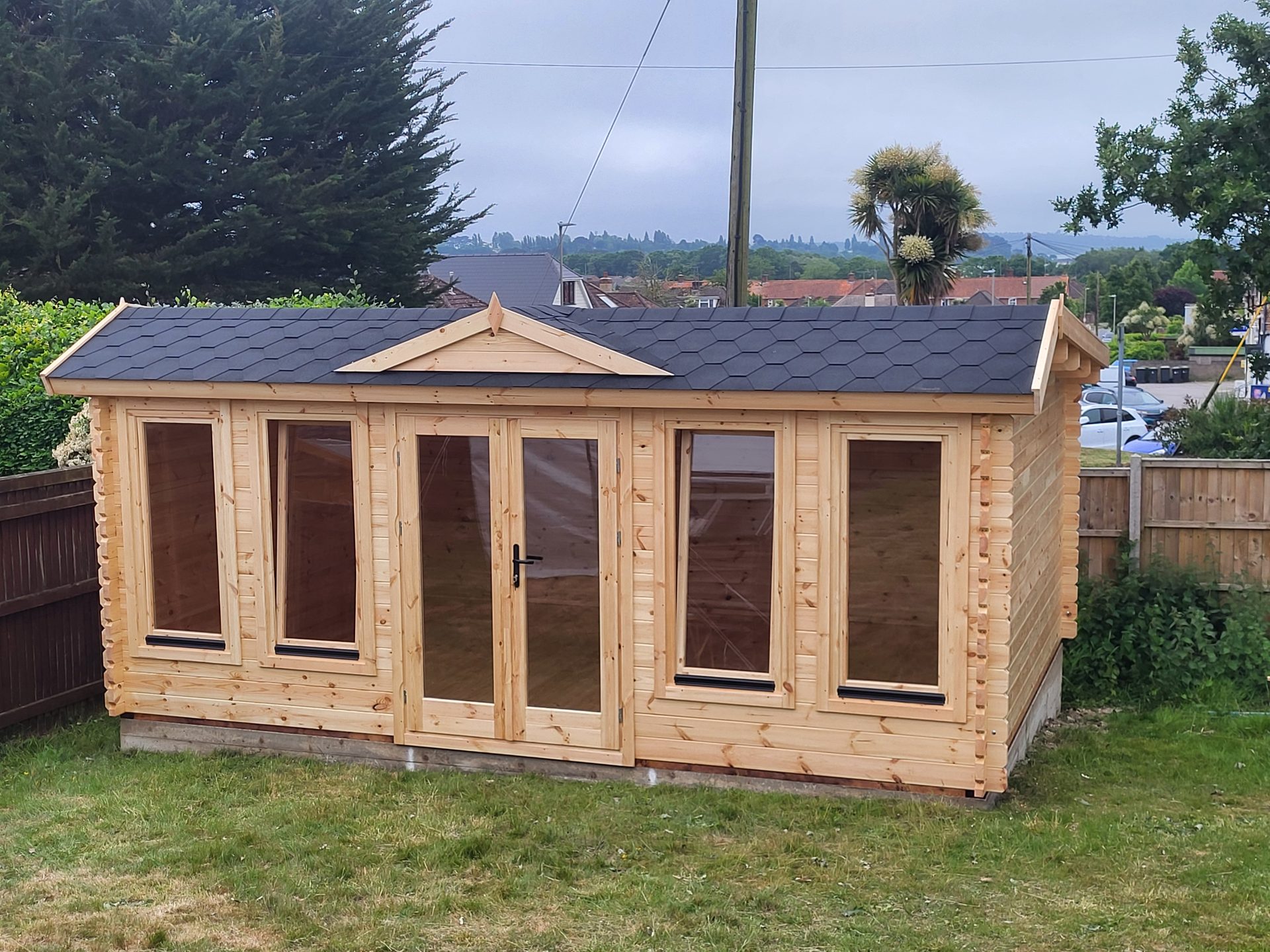
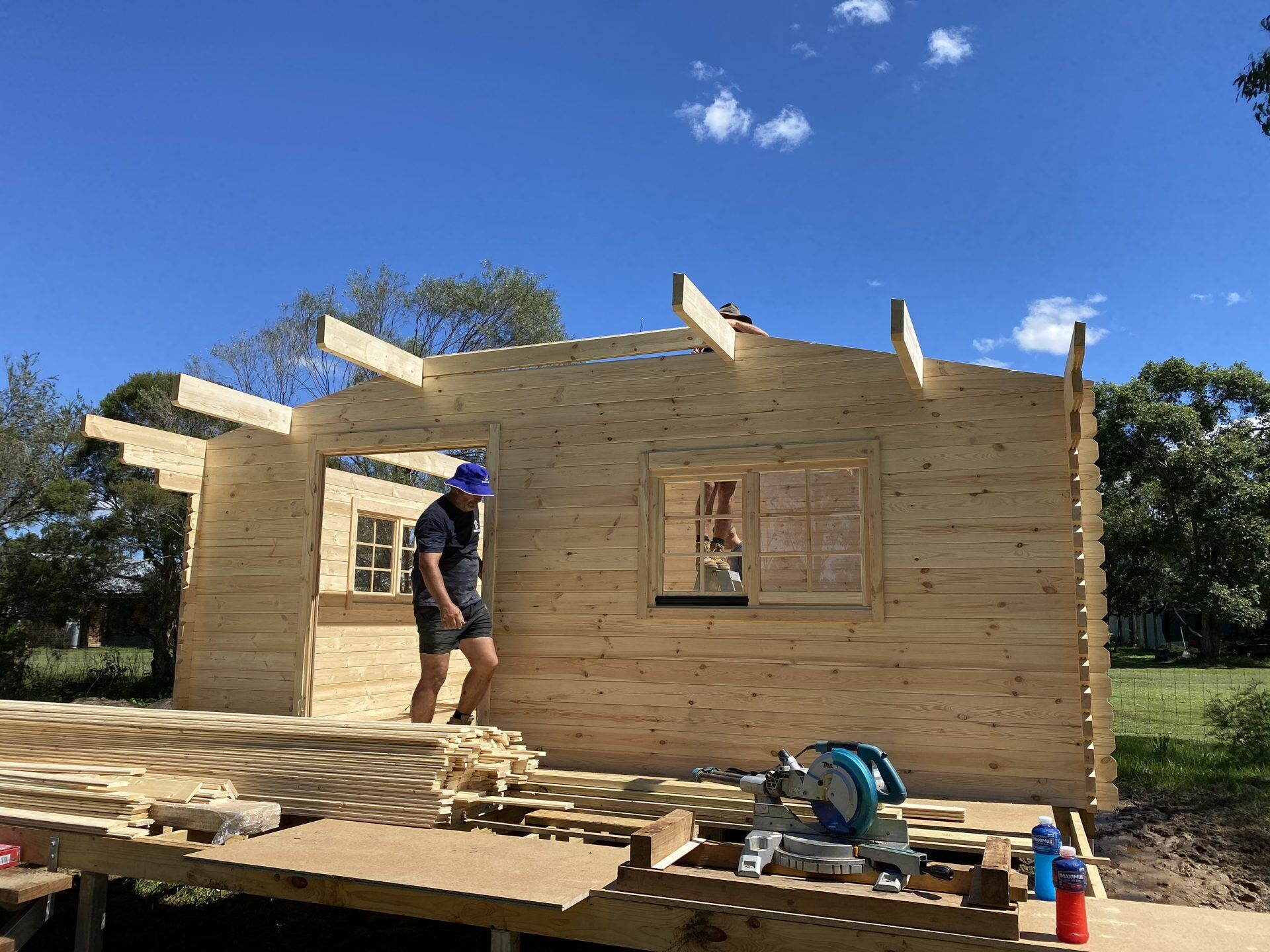
The apex roof is the traditional log cabin profile. Two sloping surfaces meet at a central ridge, creating a symmetrical triangular profile. Standard pitch ranges from 15 to 30 degrees, with steeper pitches providing better water shedding and increased internal volume.
Applications: The apex roof suits garden cabins, residential log houses, workshops, and traditional-style garden offices. It is the most popular configuration across European markets, accounting for the majority of Eurodita production.
Technical considerations: Apex roofs handle snow loading efficiently due to the pitched surfaces. Felt, shingles, or metal sheet roofing materials are all suitable. The roof void provides space for insulation and, in taller structures, potential storage or mezzanine use. Eaves overhang protects wall timbers from direct rainfall.
Planning: Ridge height is the critical planning dimension. Where maximum height restrictions apply, pitch angle may need reduction, which affects internal headroom and drainage performance.
Pent (Mono-Pitch) Roof
A pent roof slopes in a single direction from a higher front wall to a lower rear wall. This creates a contemporary profile while maintaining adequate drainage. Typical pitch is 5-15 degrees.
Applications: Modern garden offices, contemporary cabins, and structures positioned against boundaries where a low rear profile reduces visual impact. Increasingly popular for the garden office market where modern aesthetics are preferred.
Technical considerations: The single slope simplifies gutter and drainage installation. The higher wall typically faces the approach side, maximising internal headroom where it matters most. Pent roofs require careful sealing at the junction with the higher wall to prevent water ingress during wind-driven rain.
Planning advantages: The lower overall height compared to an equivalent apex roof may assist where maximum building height is restricted. The contemporary profile suits modern architectural contexts.
Flat (Low-Pitch Membrane) Roof
Modern flat-roof cabins use a minimal pitch (typically 1.5-3 degrees) with EPDM rubber membrane or similar waterproofing. Despite the name, all flat roofs incorporate some fall for drainage.
Applications: Contemporary garden offices, modern summer houses, and structures where a minimalist aesthetic is required. Flat-roof cabins with aluminium-framed sliding doors represent a growing market segment that Eurodita serves through the modern aluminium-clad range.
Technical considerations: EPDM membrane provides 25-30 year life expectancy when correctly installed. Parapet edges require careful detailing to prevent water pooling. Insulation is typically installed above the timber deck (warm roof construction) to maintain consistent performance. Drainage outlets must be positioned at the lowest points with adequate fall maintained.
Planning advantages: Lowest possible building height, making flat-roof designs suitable for restricted sites. The clean profile integrates well with contemporary architecture and landscaping.
Hip Roof
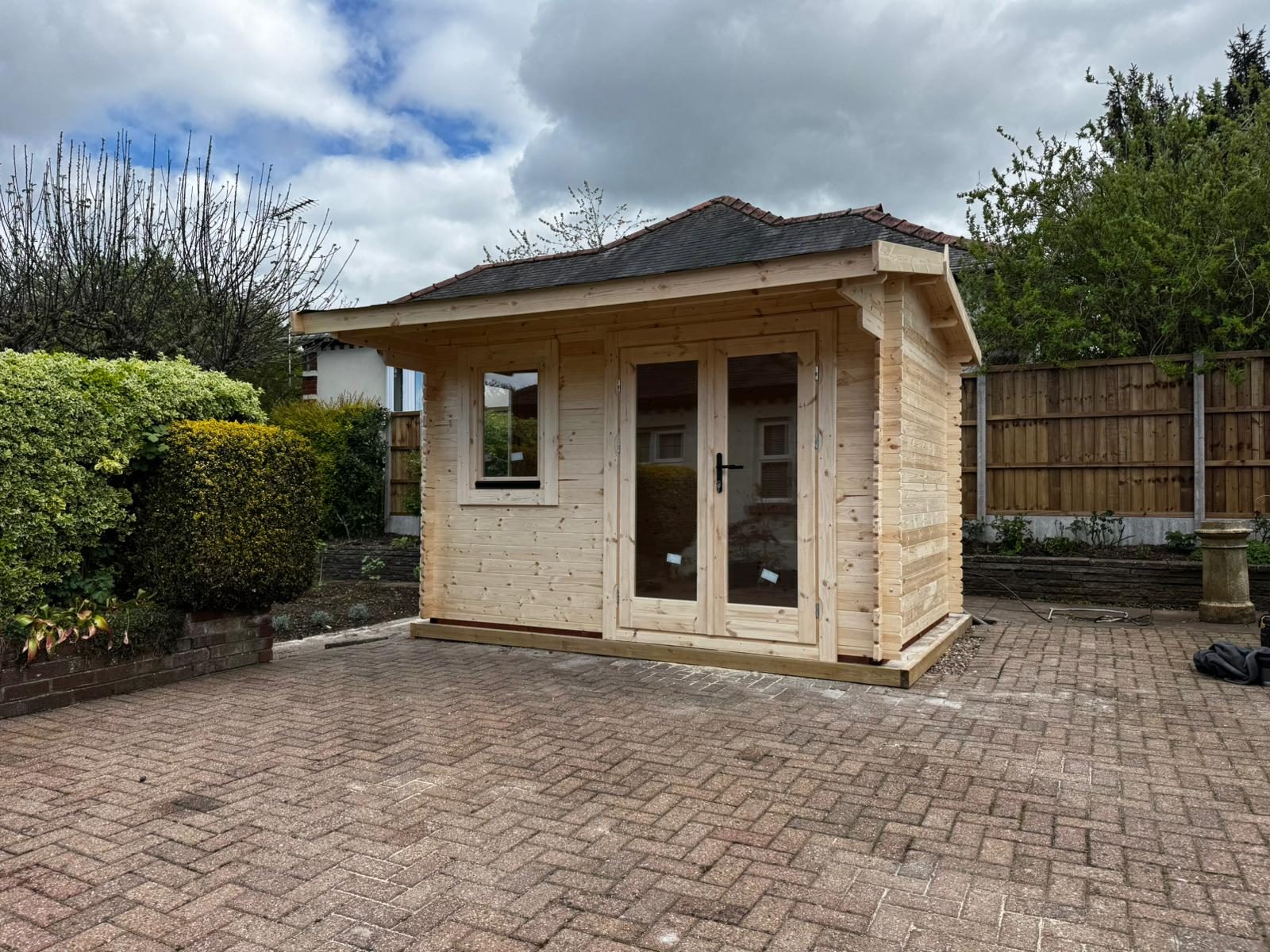
Hip roofs slope on all four sides, meeting at a ridge that is shorter than the building length. This creates a more compact profile than an apex roof and distributes wind loading more evenly.
Applications: Larger residential cabins, glulam houses, and structures where a lower, more proportionate profile is preferred. Hip roofs suit larger footprint buildings where an apex profile would create an excessively tall ridge.
Technical considerations: The hip construction uses more complex timber framing with hip rafters and jack rafters. This adds to manufacturing cost but reduces overall building height for a given footprint. Wind resistance is improved due to the aerodynamic profile, making hip roofs suitable for exposed sites.
Roofing Materials
Eurodita cabin kits include tongue-and-groove timber roof boards as standard. The choice of final roofing material is typically specified by the dealer or end customer:
Bitumen shingles: The most common choice for garden buildings. Available in multiple colours and profiles. 15-25 year life expectancy. Simple installation over timber boards with breathable membrane.
Metal sheet roofing: Lightweight, durable, and available in profiled or standing-seam configurations. 40+ year life expectancy. Provides excellent water shedding and low maintenance. Increasingly specified for modern and residential applications.
EPDM membrane: Required for flat and very low-pitch roofs. Single-piece installation eliminates seam leakage risk. 25-30 year life expectancy.
Concrete or clay tiles: Occasionally specified for residential log houses where local planning requires traditional roofing materials. Requires engineered roof structure to support the additional weight.
Insulation and Ventilation
Roof insulation requirements depend on intended use. Unheated storage buildings need no roof insulation. Garden offices typically require 100mm mineral wool or equivalent. Permanent residential structures need 200mm-300mm insulation to meet building regulation U-value requirements.
Ventilation above the insulation prevents moisture accumulation in the roof structure. A minimum 25mm ventilation gap between insulation and roofing underlay is recommended, with eaves and ridge ventilation to maintain airflow.
Frequently Asked Questions
Which roof type is most popular for log cabins across European markets?
The apex (gable) roof is the most popular configuration, accounting for the majority of Eurodita’s production. Its traditional profile, efficient snow-load handling, and versatility make it the default choice for most dealer orders across our 38-country network.
Can dealers order cabins with custom roof specifications?
Yes. Eurodita manufactures all four primary roof types and can produce custom pitches, overhang dimensions, and hybrid configurations to meet specific planning or design requirements. Partner dealers have full access to bespoke roof specification through our design team.
What roofing materials are compatible with Eurodita log cabin roof systems?
Eurodita roof structures are compatible with felt, bitumen shingles, metal sheet roofing, EPDM rubber membranes (for flat roofs), and clay or concrete tiles where structural loading permits. The choice depends on the roof pitch, local building standards, and the end client’s aesthetic preference.
How do different roof types affect planning permission for log cabins?
Roof type directly affects overall building height, which is a critical factor in permitted development and planning applications. Pent and flat roof designs achieve lower profiles, making them suitable for boundary installations where height restrictions apply.
What roof insulation options are available for year-round use cabins?
For cabins intended for year-round use, Eurodita offers insulated roof panels with mineral wool or rigid board insulation. Glulam residential structures include full roof insulation packages engineered to meet national building regulations for thermal performance.