
Bespoke and glulam projects
A bespoke timber building starts from a brief, not from a catalogue page. When an architect is involved, the brief is usually a drawing, and the factory has to turn it into something that can be machined, priced and shipped as a kit. Eurodita, a timber building manufacturer in Lithuania manufacturing timber buildings since 1994, works this way with dealers, developers and architects who have a defined project.
This guide sets out what a factory brief should contain, what comes back, and where the line runs between the manufacturing scope and the local scope.
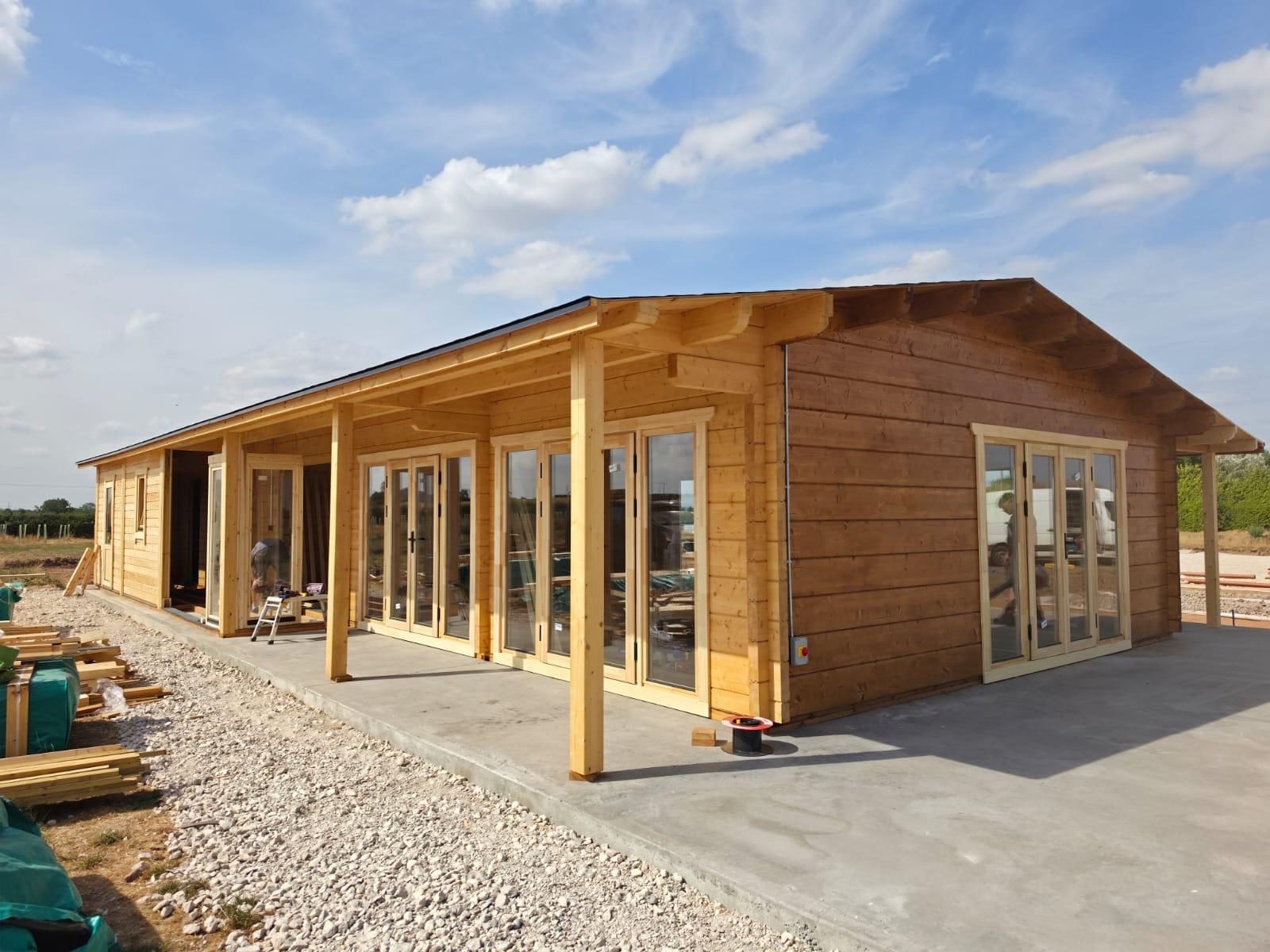
At a glance
What a factory brief should contain
A brief that covers these points can be reviewed without a clarification round:
- the drawings or sketch, with external dimensions and any terrace as a separate figure;
- the wall family and profile if already chosen: solid, twin-skin or glulam;
- the joinery: IV45, IV68 or triple-glazed IV92 windows and doors, timber sliding or bifold doors, or aluminium sliding systems;
- the roof geometry;
- the intended use and the destination country;
- who handles the local approval route, and whether structural calculations are required for the site;
- the quantity and the delivery basis to be priced.
Every dimension Eurodita states is external. Wall profiles are written thickness first and log height second: the solid profiles are 19x100, 28x100, 34x100, 44x130, 58x130 and 70x130 mm, and the glulam profiles are 70x130, 88x260, 135x260, 180x260 and 220x260 mm, with dovetail corners on the 88 to 220 mm profiles. For one-off bespoke work the solid range starts at 28 mm. The reference is on wall profiles.
What comes back with the quotation
Bespoke, glulam and modified projects are calculated individually in the Eurodita design and estimation system, an internal tool used by the Eurodita team on real enquiries. Once the brief is qualified, the partner receives:
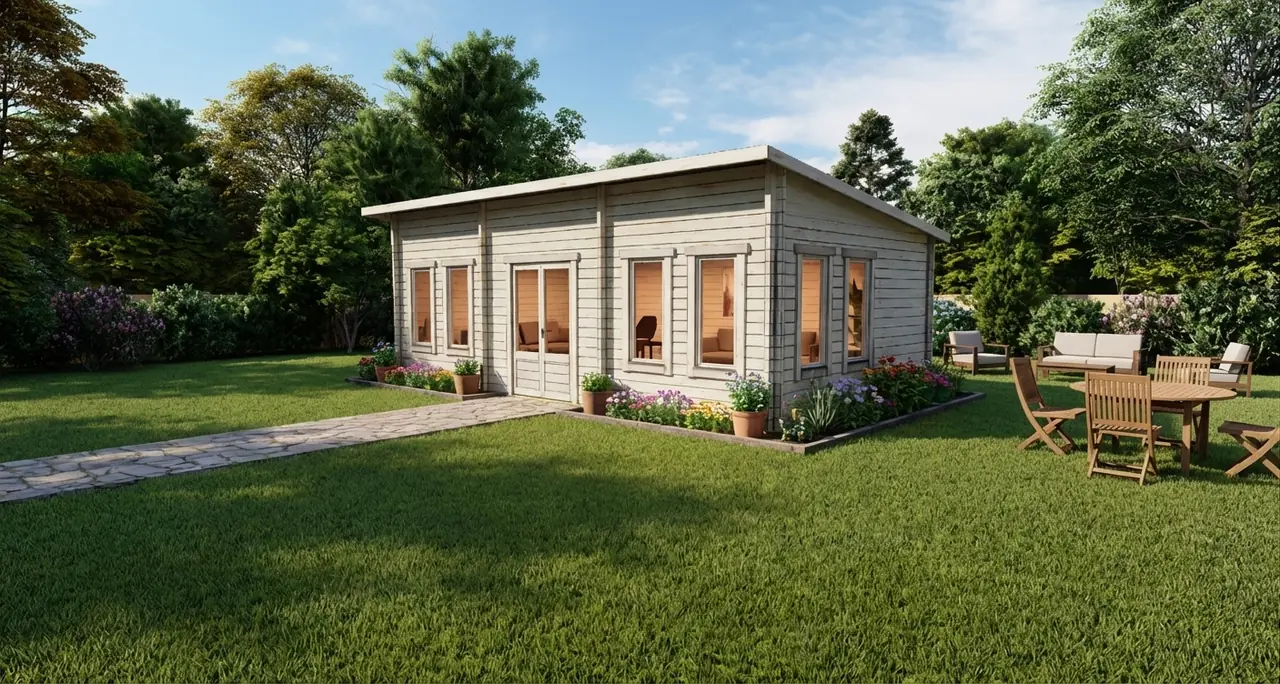
- 3D visual renders;
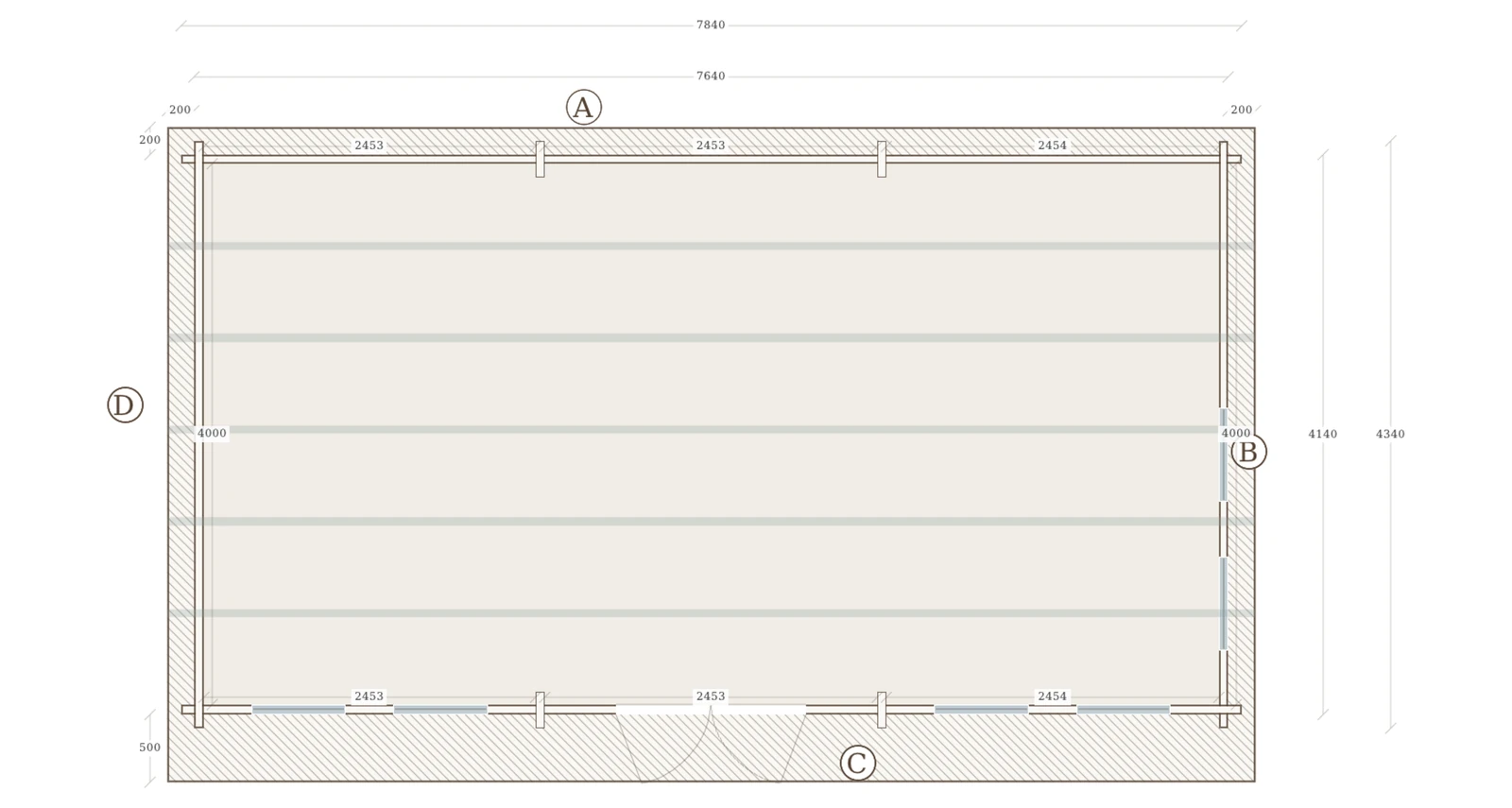
- 2D CAD floor-plan drawings;
- side and elevation drawings with dimensions;
- the technical project specification;
- the window and door schedule;
- the commercial quotation, in EUR, excluding VAT and delivery, EXW Eurodita factory by default.
The package can be issued as a branded PDF under the partner's identity where agreed. The buyer approves the drawings, specification, quotation and written terms before manufacturing starts.
What stays with the architect and the local team
Eurodita manufactures the timber building kit and its joinery. Structural calculations, where a project needs them, are carried out by external engineering specialists, with Eurodita drawings, CAD and technical data as input. Planning, building control, architect approval and site acceptance stay with the buyer, the architect or the local project team.
A wall thickness on its own establishes no thermal, fire, acoustic or structural performance for a finished building. Preliminary U-values of the timber wall element alone are published for the 28 to 220 mm profiles on the wall profiles page; they are not a figure for a finished building and not a compliance result. The designer calculates the wall as built against the rules of the destination country.
Installation is agreed per project. Foundations and utilities are provided locally, and turnkey delivery is not part of the standard supply.
How a dealer fits in
Where a dealer brings the architect and the customer, the dealer keeps the customer relationship and sets its own price. Quotations, drawings and project documentation can carry the dealer's brand where agreed for the order; legal, manufacturing and compliance documents keep the information they are required to carry. The 58 and 70 mm ranges, bespoke work and glulam projects can be single projects, quoted individually.
Frequently asked questions
Can Eurodita manufacture from an architect's drawings?
A bespoke order starts from the buyer's brief, which can be a sketch or an architect's drawings. Eurodita reviews what can be manufactured in solid log, twin-skin or glulam and returns a proposal with 2D CAD drawings, a 3D visual, the specification, the window and door schedule and a written quotation.
Who carries out the structural calculations?
Structural calculations, where a project needs them, are carried out by external specialist partners, with Eurodita drawings, CAD and technical data as input.
Who is responsible for planning and building control approval?
Planning, building control, architect approval and site acceptance stay with the buyer, the architect or the local project team. Eurodita provides the drawings, the specification and the technical data it holds.
Can the drawings carry the dealer's brand?
Quotations, drawings and project documentation can carry the partner's brand where agreed for the order. Legal, manufacturing and compliance documents keep the information they are required to carry.
How to prepare an enquiry
Send the drawings, the wall system if known, the joinery, the intended use, the destination country and the quantity. Say who handles the local approvals and whether structural calculations are needed.
Eurodita replies with a written assessment and, where the project fits, a quotation with drawings. Factory visits in Lithuania are welcome by arrangement for partners with a project under discussion.