
Assembly of a log cabin kit
A Eurodita building leaves the factory as a flat-packed kit and is assembled on site. Assembly is by the buyer's own builder or local crew from the order drawings, unless installation is agreed for the project. Eurodita, a timber building manufacturer in Lithuania manufacturing timber buildings since 1994, sets out here what the crew receives and what the dealer should have settled before the kit arrives.
This is not an assembly manual. The assembly drawings and the assembly guide that ship with the order are the instructions for that building.
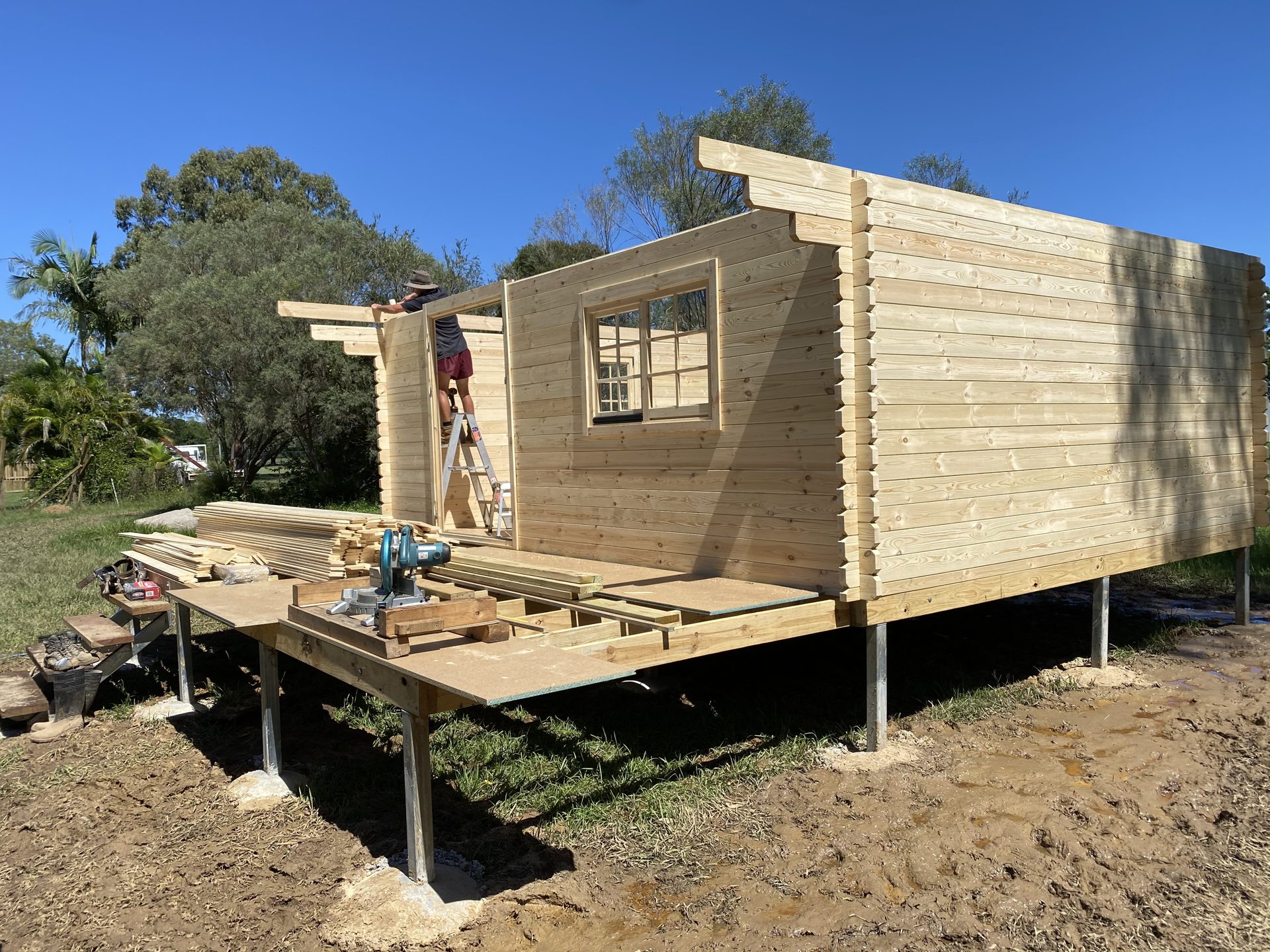
At a glance
What arrives on site
Kits are flat-packed. Wall logs are cut on Hundegger CNC lines from kiln-dried Nordic spruce and pine to the order drawings, with joints, corners and openings machined in. The kit carries the floor bearers, impregnated as standard, and the floorboards; the roof structure and the roof boards as drawn; the timber windows and doors; and, on solid log and twin-skin kits, the storm brace and anchor set, whose fitting is part of assembly.
Unloading at the destination is the buyer's or the site's responsibility: a forklift, telehandler, crane or other suitable equipment and safe access are provided on site. On arrival, the delivery is checked against the packing list and the order drawings before assembly begins; any difference is reported with the document reference and the item concerned.
The sequence in photographs
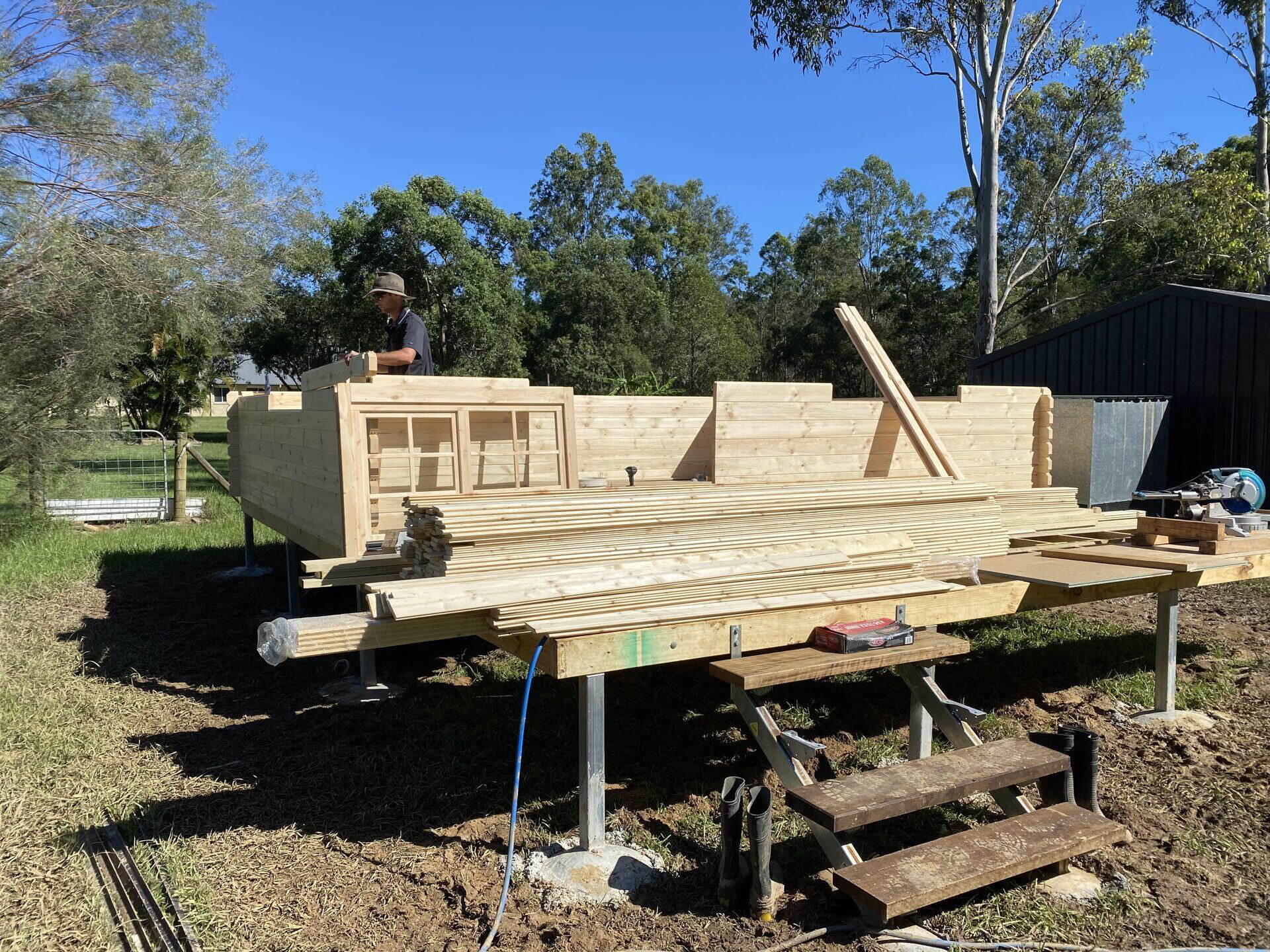
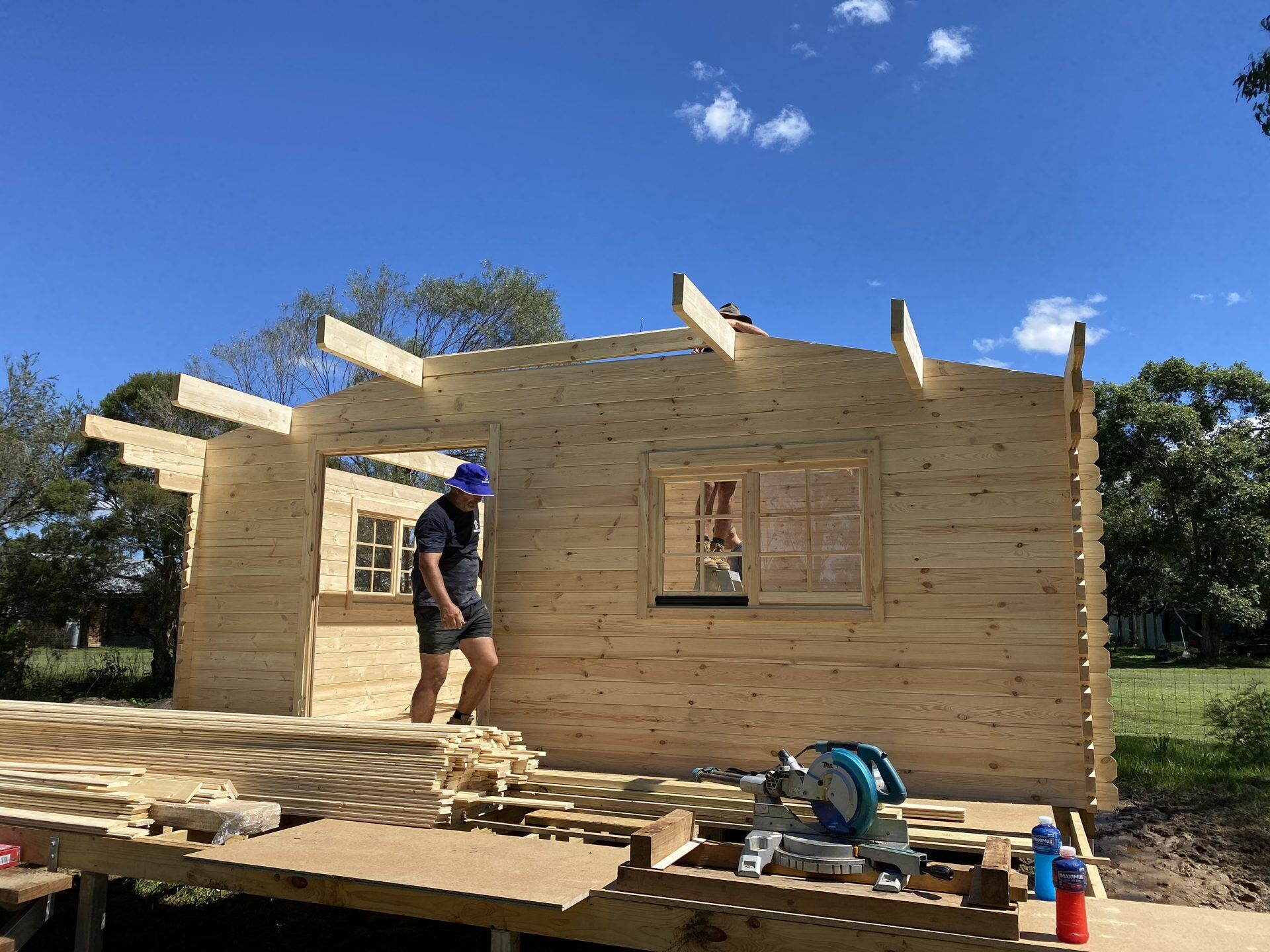
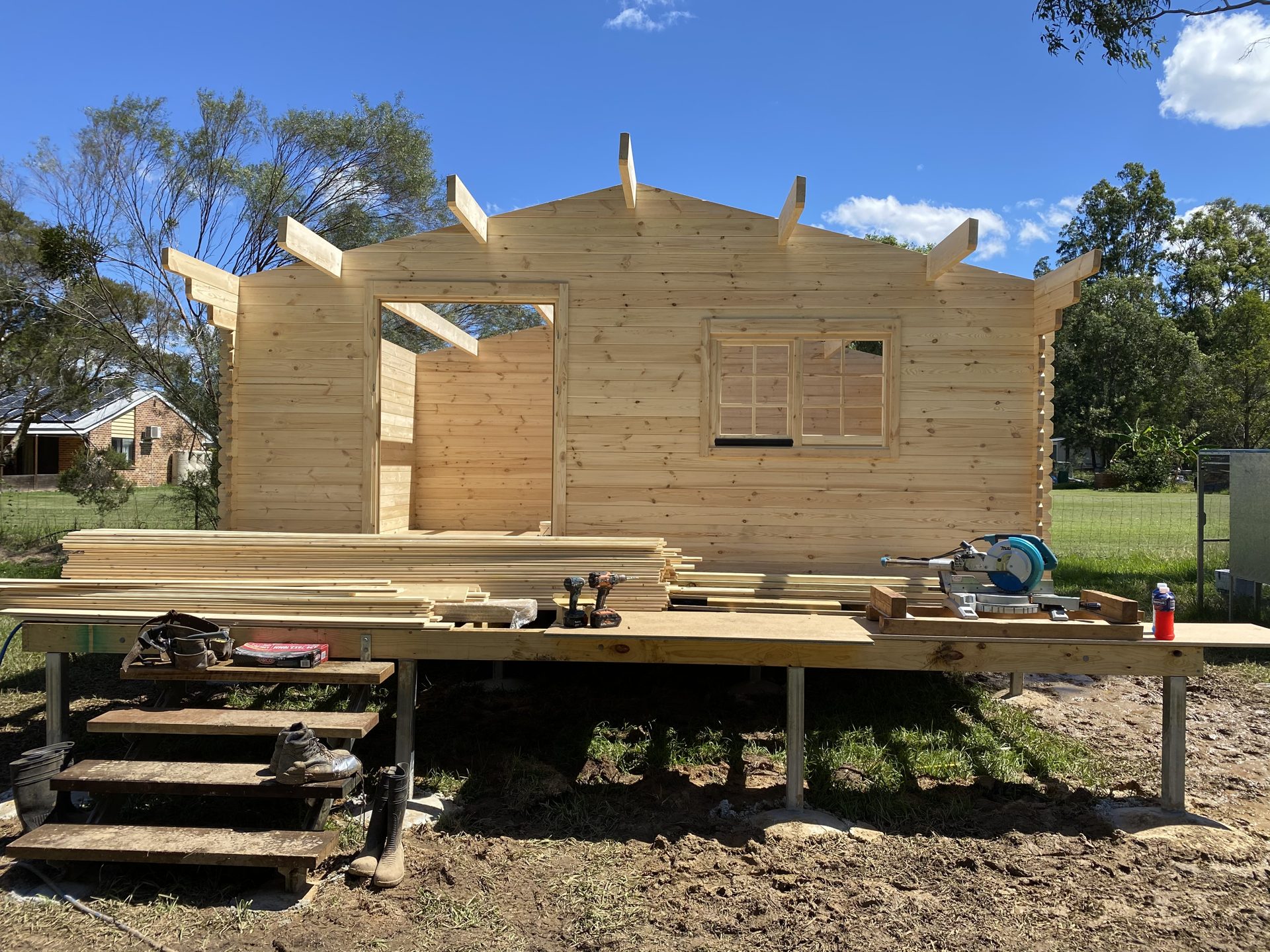
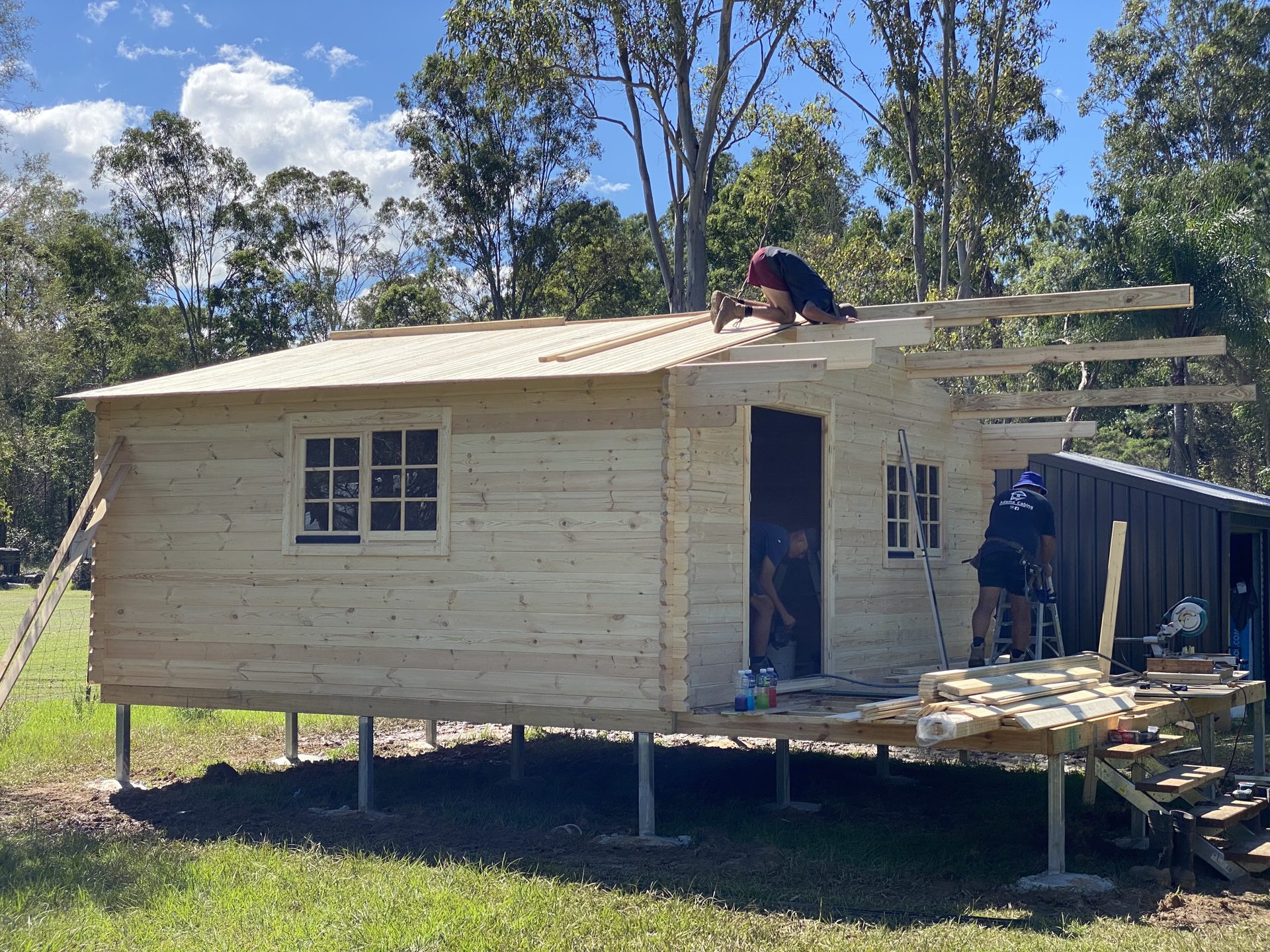
These photographs come from a delivered order: a solid log cabin kit going up on a pier base. They are shown as a visual reference only; the order drawings and the assembly guide of a building are its instructions.
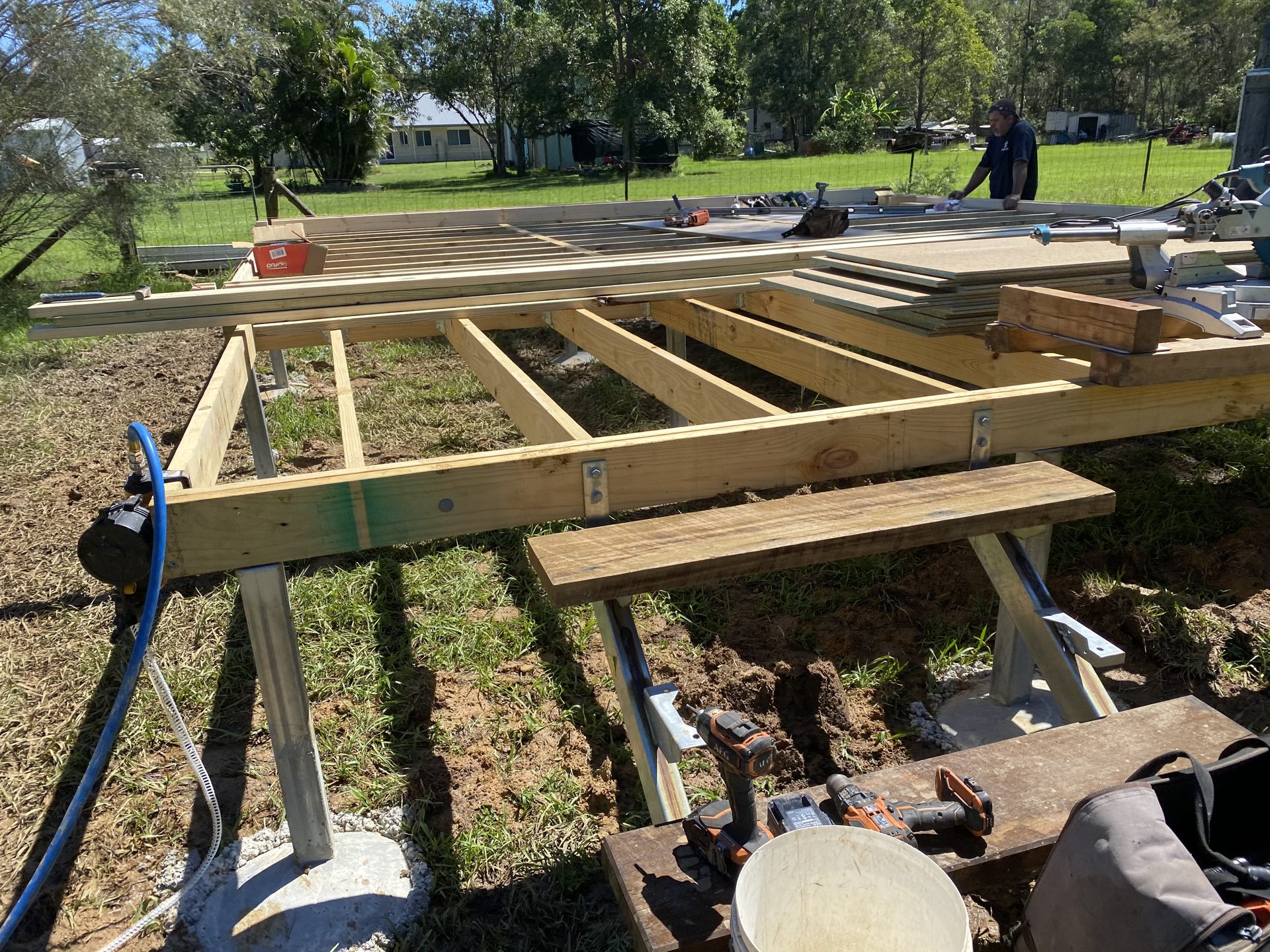
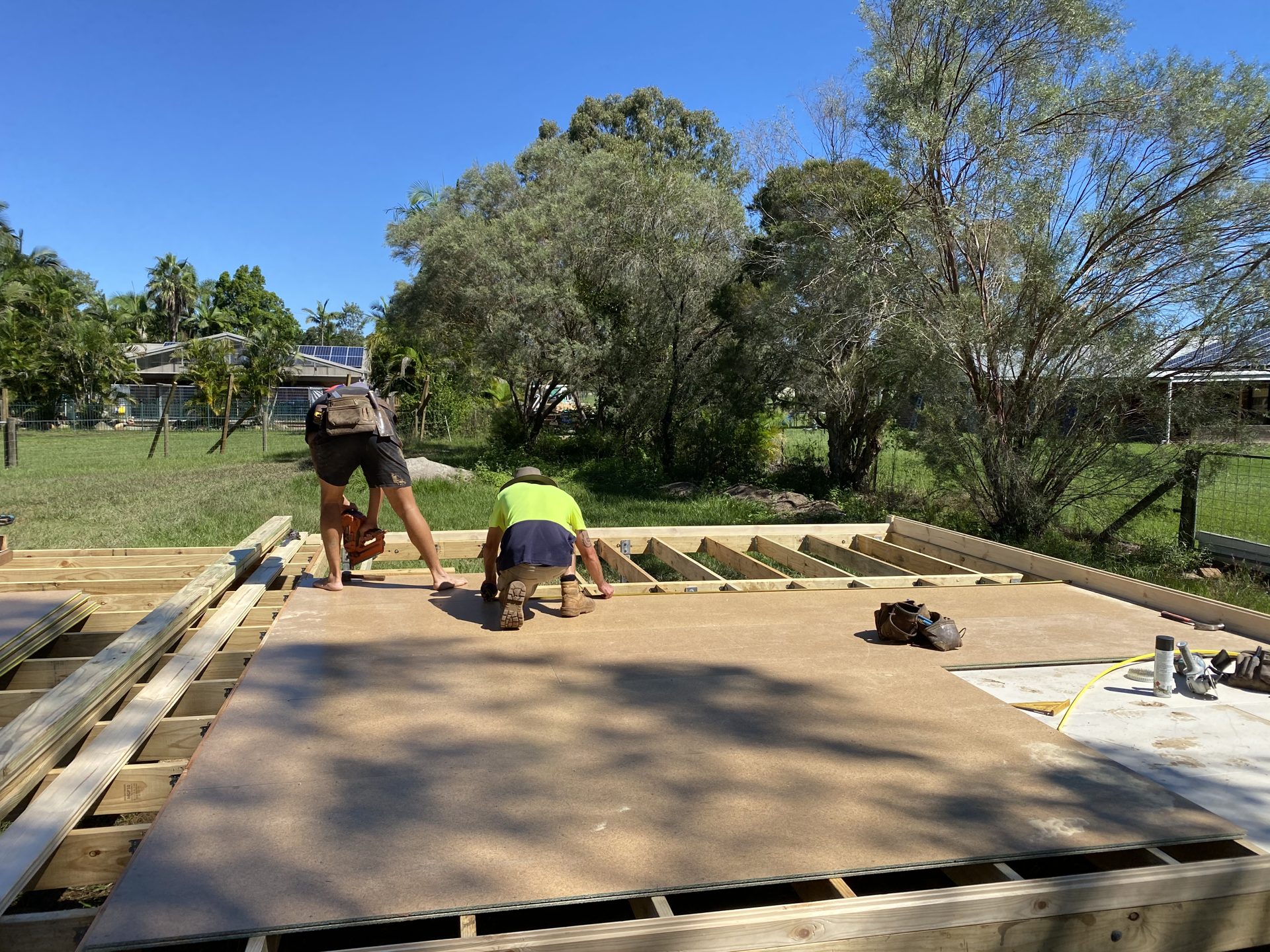
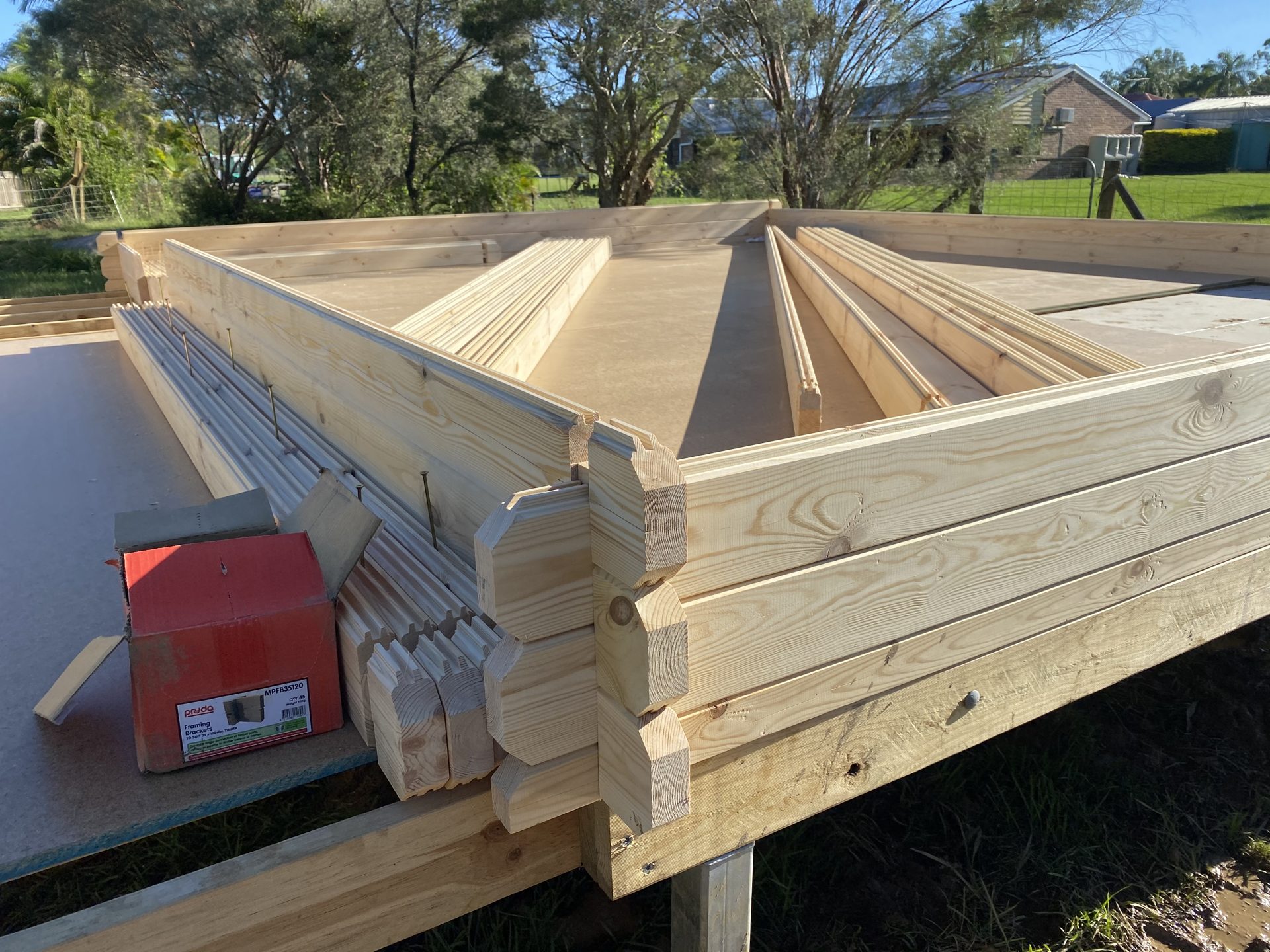
What the dealer settles before the kit arrives
- The base is built to the external footprint on the order drawings and is finished before delivery.
- Unloading equipment and safe access are arranged.
- The crew has the assembly drawings and the assembly guide for the order; documentation in the partner's language, under the partner's brand, is agreed per order.
- Who supplies and fits what the kit does not carry: roof covering, insulation, finish, services.
- Whether installation is to be agreed for the project.
What remains site work
The kit is a manufacturing scope, not a site scope. The base, the roof covering where it is not in the order, the insulation, the electrical, plumbing and gas systems and the interior fit-out are provided locally. Wall logs are untreated by default, so the protective finish is applied on site unless factory painting was ordered; factory painting is an option with limited capacity.
Installation is agreed per project, and turnkey delivery is not part of the standard supply.
Frequently asked questions
Who assembles a Eurodita log cabin kit?
Assembly is by the buyer's own builder or local crew from the order drawings, unless installation is agreed for the project.
Does the kit come with assembly instructions?
The kit ships with the assembly drawings and the assembly guide for the order, and with the packing list. Documentation in the partner's language, under the partner's brand, is agreed per order.
Does the crew have to cut the wall logs on site?
Wall logs are cut on Hundegger CNC lines to the order drawings, with joints, corners and openings machined in, so the crew on site lays courses rather than cutting timber.
What should be checked when the kit arrives?
The delivery is checked against the packing list and the order drawings before assembly begins. Any difference is reported with the document reference and the item concerned.
How to prepare an enquiry
Send the model or drawing reference, the external dimensions, the wall written in full, the destination country and the unloading equipment available on site. Say whether installation should be discussed for the project and in which language the assembly documents are needed.
Eurodita replies with a written quotation and specification. The component families of a kit are on what is in a Eurodita kit, and the base is covered in the guide to log cabin foundations.