
Wall construction for dealers
A single-skin log cabin has one machined solid log per wall course. A twin-skin cabin has two equal solid log skins per course with a cavity between them. Eurodita, a timber building manufacturer in Lithuania manufacturing timber buildings since 1994, makes both, and this guide sets out the difference for a dealer who has to explain it to a customer.
The comparison stops at structure and scope. Neither wall carries a performance figure for a finished building, because a wall build-up on its own does not establish one.

At a glance
How the two walls are built
Take two cabins of the same stated external size, one single-skin and one twin-skin. The footprint is identical, because every dimension Eurodita states is external; what differs is the wall.
| Item | Single-skin cabin | Twin-skin cabin |
|---|---|---|
| Structure | One machined solid log per wall course | Two equal solid log skins per course with a cavity between them |
| Wall thickness | 19, 28, 34, 44, 58 or 70 mm solid | 138, 166, 188 or 216 mm in total, from the four build-ups |
| Internal floor area | Stated external size less the log thickness on each side | Stated external size less the total wall thickness on each side |
| What Eurodita supplies | Flat-packed kit of machined logs, floor and roof components and joinery | Flat-packed kit of machined logs for both skins, floor and roof components and joinery, prepared for insulation |
| What the buyer adds in the wall | Finish and treatment as chosen | Insulation material and the insulation system, bought and fitted locally |
The skins of a twin-skin wall are the 44x130 mm and 58x130 mm solid profiles from the standard wall family, so a twin-skin wall is built from the same machined logs as a single-skin cabin in those thicknesses.
The four twin-skin build-ups
Eurodita manufactures four build-ups and no others. The total wall thickness is the sum of the three figures.
| Build-up (mm) | Outer skin | Cavity | Inner skin | Total wall thickness |
|---|---|---|---|---|
| 44-50-44 | 44 mm | 50 mm | 44 mm | 138 mm |
| 44-100-44 | 44 mm | 100 mm | 44 mm | 188 mm |
| 58-50-58 | 58 mm | 50 mm | 58 mm | 166 mm |
| 58-100-58 | 58 mm | 100 mm | 58 mm | 216 mm |
Intermediate or larger build-ups, such as a 60 mm cavity or 70 mm skins, are not offered. The reference page is twin-skin wall build-ups.
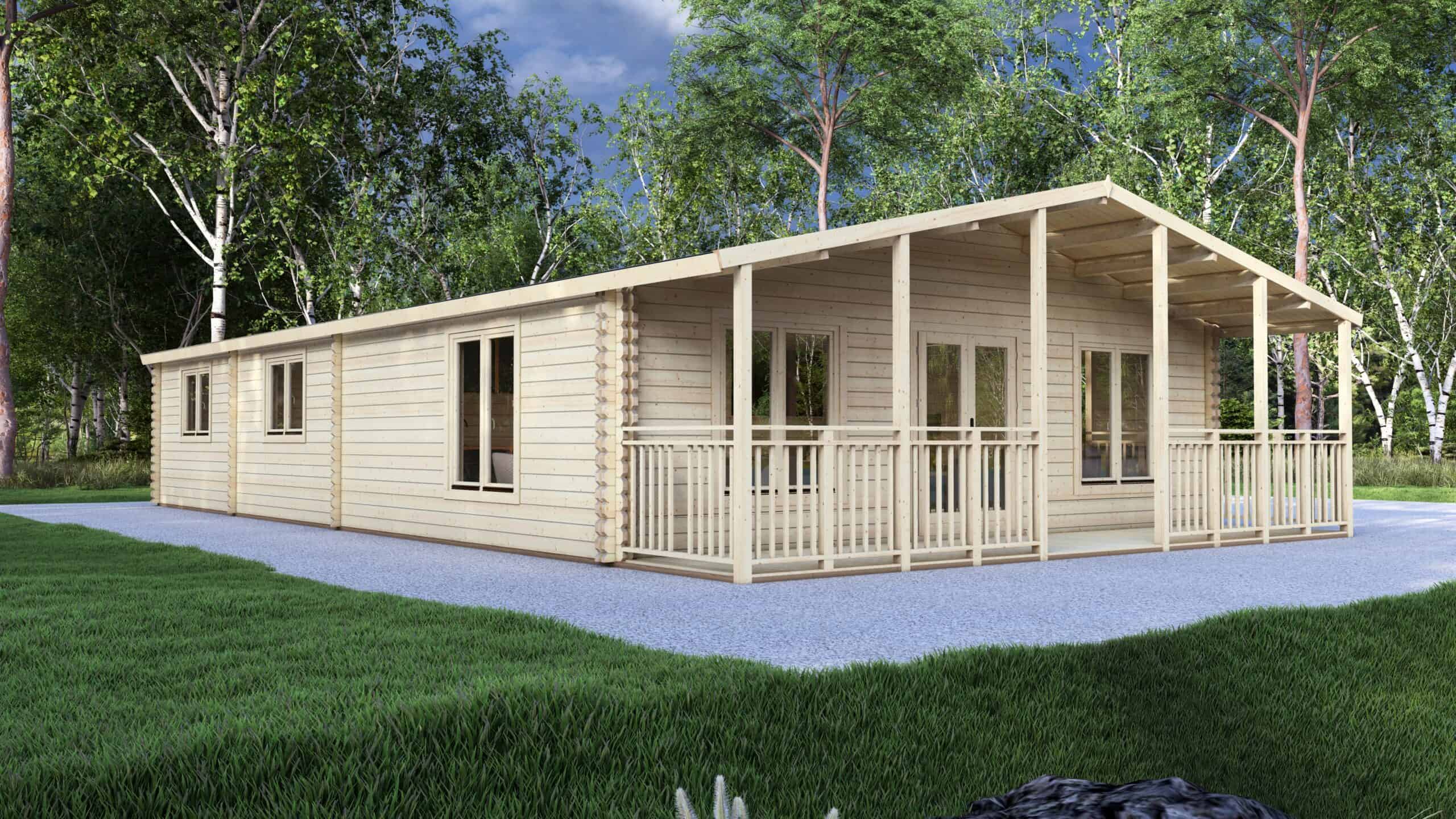
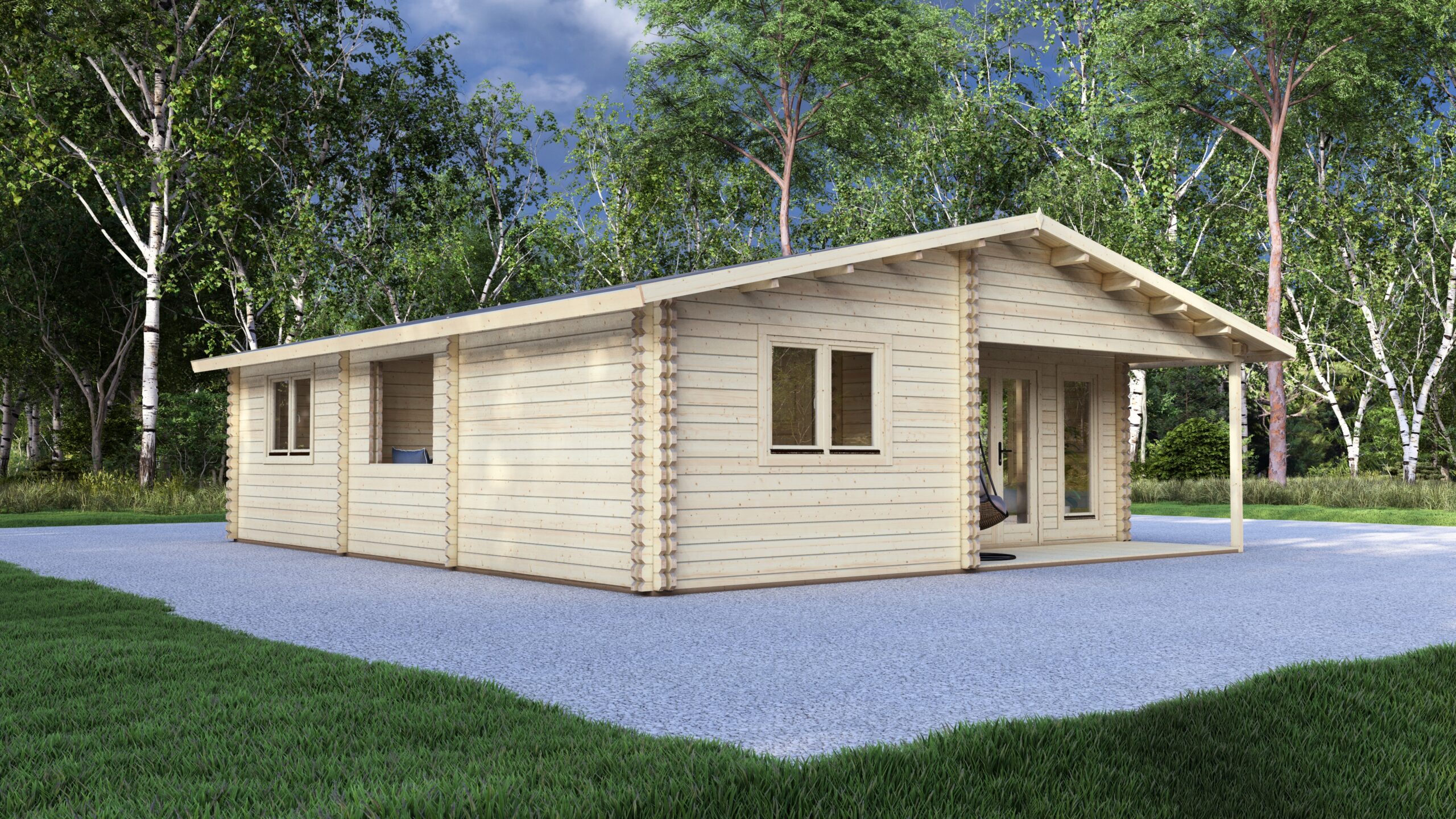
What a wall does not tell you
No U-value, R-value or thermal performance figure is published for any twin-skin build-up, and a total wall thickness is not a thermal performance figure. For single-skin solid log walls, preliminary U-values of the timber wall element alone are published for the profiles from 28 to 70 mm on wall profiles; they are not a figure for a finished building and not a compliance result.
A cavity dimension is not an insulation specification: 100 mm describes the void, not what goes in it. Building control, architect approval, planning and site acceptance stay with the buyer, dealer or local project team.
Which wall for which project
Wall type and thickness are chosen per project, by budget and by what is technically possible. A solid log model can be made in any of the 28, 34, 44, 58 and 70 mm profiles; the 19 mm profile is used only on the models catalogued with it. Twin-skin is ordered where the buyer intends to insulate the walls and wants the cavity built into the log structure. The recurring project types are garden offices, annexes, holiday lets and residential log cabins.
The commercial shape follows the wall family. The 19 to 44 mm standard ranges are volume-driven, so a build-up with 44 mm skins on a standard model is normally discussed as a programme quantity; the 58 mm profiles and bespoke designs can be single projects, and a pilot unit is accepted practice. There is no single fixed minimum order, and the quotation states what applies.
Frequently asked questions
What is the difference between a twin-skin and a single-skin log cabin?
A single-skin cabin has one machined solid log per wall course. A twin-skin cabin has two equal solid log skins per course with a cavity between them, and the cavity takes insulation that is bought and fitted locally.
Which twin-skin build-ups does Eurodita make?
Four: 44-50-44, 44-100-44, 58-50-58 and 58-100-58 mm, written outer skin, cavity, inner skin. The total wall thickness is 138, 188, 166 and 216 mm respectively.
Is the insulation of a twin-skin wall supplied with the kit?
Eurodita supplies the timber structure prepared for insulation and does not normally supply the insulation material; a project scope can say otherwise. Insulation is selected and bought locally, because national requirements differ.
Is there a U-value for a twin-skin wall?
No U-value is published for any twin-skin build-up. Where a project needs a figure, it comes from the insulation system and the engineering of the project, not from the wall dimensions.
How to prepare an enquiry
Send the model or drawing reference, the wall written in full (for example 44x130 mm solid, or 58-100-58 mm twin-skin), the external dimensions, the joinery, the finish, the destination country and the quantity. Say who supplies the insulation locally.
Eurodita replies with a written quotation in EUR, excluding VAT and delivery, EXW Eurodita factory by default. Installation is agreed per project; foundations and utilities are provided locally.