
Case Study: UK Garden Building Retailer Scales to 200+ Units/Year
- Home
- Case Study: UK Garden Building Retailer Scales to 200+ Units/Year

Executive Summary
This case study examines how a UK-based garden building retailer transformed its business through a private-label manufacturing partnership with UAB Eurodita, a B2B timber structure manufacturer founded in 1994 in Lithuania. Over a three-year period, the retailer expanded its product range by 340%, reduced lead times by 65%, and achieved 180% revenue growth while maintaining full brand ownership across all products sold.
The partnership model described here illustrates how small-to-medium retailers in the garden building sector can compete effectively against larger national chains by leveraging an established European manufacturing partner. The retailer, which began with a single showroom and five product lines, now operates three locations and offers 22 distinct garden building models under its own brand.
Background and Challenge
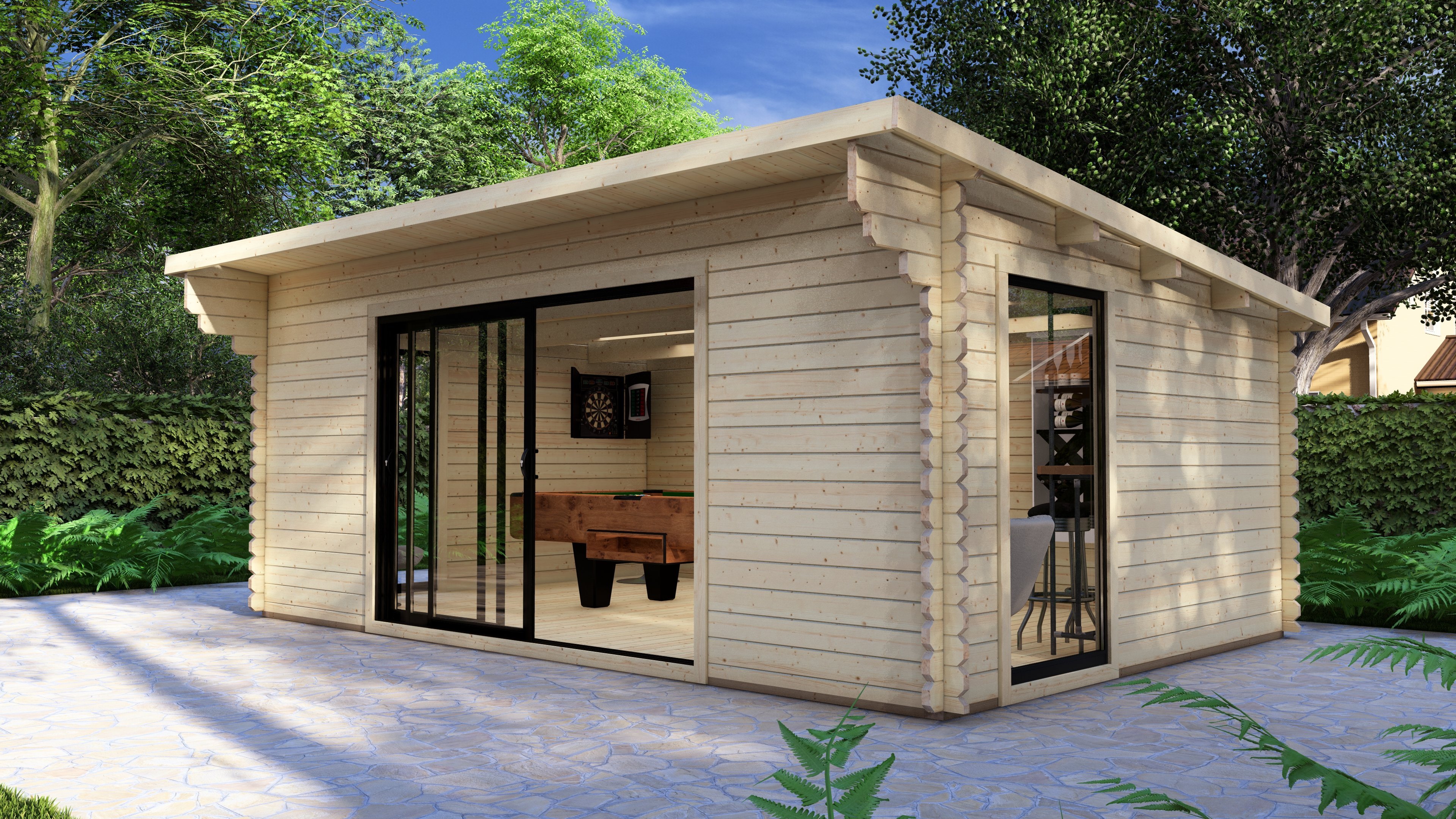
The retailer in question had operated in the garden building sector for approximately six years prior to engaging with Eurodita. Based in the south of England, the company served a regional market comprising homebuilders, landscaping contractors, and property developers seeking timber garden offices, log cabins, and ancillary garden structures.
Despite steady demand, several structural constraints limited the company’s growth trajectory:
- Limited product range: The retailer relied on a local workshop producing just five standard models. This narrow catalogue made it difficult to serve varied commercial client requirements.
- Inconsistent quality across batches: The local supplier used mixed-origin timber, resulting in noticeable variations in timber colour, moisture content, and dimensional accuracy.
- Extended lead times: Production timelines averaged 8 to 12 weeks, with seasonal peaks pushing delivery further. These delays resulted in lost orders.
- Competitive disadvantage: Larger national retailers offered 30 to 50 product lines with shorter delivery windows and professional marketing collateral.
- No custom design capability: The local workshop lacked CNC machining or CAD capacity.
The quality inconsistencies were particularly problematic when serving trade clients who placed repeat orders. Timber sourced from different origins exhibited different responses to UK climate conditions, with some batches showing premature movement or surface checking within months of installation. This undermined the retailer’s reputation and increased the cost of after-sales support. The warranty liability alone was consuming approximately 8% of annual revenue.
The cumulative effect was a business plateaued at approximately 55 units per year, with limited capacity to grow without a fundamental supply chain change.
The Search for a Manufacturing Partner
The retailer’s management conducted a six-month evaluation of potential manufacturing partners across the Baltic states, Scandinavia, and Central Europe.
The core requirements were as follows:
- Private-label capability: See timber garden offices: private-label B2B manufacturing.
- Consistent Nordic timber quality: Kiln-dried northern European spruce with controlled moisture content (12–14%).
- Flexible order quantities: Initial trial of 10 to 25 units, with framework to scale.
- Production timeline of 4 to 6 weeks.
- Full technical documentation: Assembly guides, technical product data and conformity documentation where applicable.
The evaluation process included factory visits to two of the three shortlisted manufacturers. The assessment team examined production facilities, quality control procedures, timber storage and kiln-drying processes, and the precision of CNC machining equipment. Environmental certifications and chain-of-custody documentation were verified. References from existing partner companies in comparable markets were contacted regarding delivery reliability, product quality, and partner management responsiveness.
Three manufacturers were shortlisted. Eurodita processes 150,000 m³ of timber annually.

Implementation with Eurodita
The onboarding process followed a structured sequence. Eurodita’s partner onboarding guide describes this process.
Phase 1: Consultation and Range Selection (Weeks 1-3)
A dedicated partner manager was assigned. The retailer’s range was reviewed against Eurodita’s catalogue of log cabins and garden buildings. Twelve models were identified.
Phase 2: Sample Order and Quality Assessment (Weeks 4-8)
Three sample units were ordered and assessed. All units met specification with dimensional tolerances within 2mm.
Phase 3: Branding and Packaging (Weeks 9-11)
Eurodita’s design team produced branded materials under the retailer’s trade name. All manufacturing references were removed.
Phase 4: First Production Run (Weeks 12-16)
Twenty-five units across eight models. Production completed in 4.5 weeks. Assembly-ready flat-pack format reduced transport costs by approximately 60%.
Phase 5: Scaling to Quarterly Orders (Months 6-12)
Order volumes increased progressively: 25 units in Q1, 35 in Q2, 42 in Q3, and 55 in Q4. By year two, quarterly orders averaged 50 to 60 units.
The transition from local sourcing to the Eurodita partnership was managed carefully to avoid disrupting existing customer commitments. The retailer maintained parallel supply arrangements during the first six months, fulfilling existing orders through the local workshop while building stock from Eurodita’s first two production runs. This overlap period allowed the installation teams to familiarise themselves with the new specifications before the local supply was discontinued.
Results and Growth Metrics
The partnership produced measurable improvements over three years. All figures are percentages or relative values.
| Metric | Before | After 3 Years | Change |
|---|---|---|---|
| Product range | 5 models | 22 models | +340% |
| Lead time | 10 weeks | 3.5 weeks | -65% |
| Revenue | Baseline | 2.8x | +180% |
| Satisfaction | 76% | 92% | +16 pts |
| Gross margin | Baseline | 1.4x | +40% |
| Showrooms | 1 | 3 | +200% |
| Units sold | ~55 | 200+ | +264% |
The retailer’s dealer margin and business model benefited from lower per-unit costs at scale, reduced waste from precision CNC machining, and elimination of quality-related rework.
The customer satisfaction improvement from 76% to 92% was measured through post-installation surveys conducted 30 days after completion. The primary drivers were consistent timber quality, precise component machining that simplified assembly, and comprehensive documentation. Notably, warranty claims dropped from 12% of installations to under 3% within the first 18 months of the partnership.
Revenue growth was driven by expanded product range, faster fulfilment, and the ability to serve new market segments including commercial clients requiring garden buildings for workspace, retail, and hospitality.

Key Success Factors
Six factors were most critical to the partnership’s success:
1. Dedicated Partner Manager
A single point of contact who coordinated production scheduling, quality control, and logistics, allowing the retailer’s team to focus on sales.
The partner manager also served as a conduit for market intelligence, sharing insights from other European markets regarding product trends, regulatory changes, and emerging customer preferences. This helped the retailer anticipate demand shifts and adjust its product range proactively. The relationship extended beyond transactional ordering to become a strategic partnership informing business planning and product development decisions.
2. Bespoke 3D Visualisation
3D renders and technical drawings became central to the customer-facing sales process, enabling customisation previews before ordering.
3. Assembly-Ready Flat-Pack Shipping
Precision-machined flat-pack kits reduced shipping costs, simplified warehousing, and enabled faster assembly with fewer errors.
4. Consistent Nordic Spruce Quality
Eurodita processes 150,000 m³ of timber annually. The retailer reported 78% fewer quality complaints within 12 months.
5. Private-Label Agreement with IP Protection
All customer-facing materials remained the retailer’s intellectual property. Eurodita does not market products under the retailer’s brand.
6. Scalable Order Structure
Starting with 25 units and scaling incrementally removed capital risk and allowed validation at each stage.
Lessons Learned
The retailer’s experience yielded several practical insights for other garden building dealers.
Start with a Core Range and Expand Based on Demand Data
The retailer began with 12 models and added six more in year two based on actual sales data, minimising the risk of stocking slow-moving products.
Invest in Showroom Displays
Physical display models increased conversion rates by approximately 3x. The company opened two additional locations. Detailed guidance is available in the showroom and sales setup guide.
Offer Installation as a Value-Added Service
Professional installation increased average order value by 25% to 30%. Four installation crews were trained using Eurodita’s technical documentation.
Use Manufacturer Documentation to Build Trust
Detailed technical specifications and destination-market conformity documentation increased buyer confidence, serving as a key differentiator against competitors.
Plan for Seasonal Demand Patterns
Larger production orders placed in Q4 and Q1 built buffer stock ahead of the March-September peak. Eurodita’s scheduling provided priority slots for established partners.
The retailer’s experience also highlighted the importance of maintaining adequate stock levels for best-selling models. During the second year, an unexpected surge in demand for garden offices caught the business with insufficient stock. The resulting four-week wait cost an estimated 15 to 20 lost sales. Following this, the retailer established a minimum stockholding policy for its top five models, funded by the improved margins from the Eurodita partnership.
Conclusion
This case study demonstrates a repeatable model for garden building retailers seeking to scale beyond local manufacturing constraints. The combination of a reliable B2B manufacturing partner, private-label brand equity preservation, and structured scaling enabled growth from 55 to over 200 units per year within three years.
The critical enablers were consistent product quality, flexible order quantities, comprehensive technical documentation, and dedicated partner management. Retailers should plan for phased implementation with validation at each stage.
UAB Eurodita has operated as a B2B timber structure manufacturer since 1994, serving partners across Europe, the UK, North America, Australia, Japan, and the Middle East. Eurodita manufactures 1,800–2,000 bespoke timber structures per year. Glulam production is separate and additional. Eurodita processes 150,000 m³ of timber annually.
Eurodita Manufacturing
Frequently Asked Questions
How long does it take to establish a private-label partnership with Eurodita?
The typical onboarding timeline from initial consultation to first production delivery is 12 to 16 weeks. This includes product range selection (2-3 weeks), sample order and quality assessment (4-5 weeks), branding and packaging setup (2-3 weeks), and the first production run (4-5 weeks). Established partners can place subsequent orders with timelines of 3.5 to 6 weeks.
What order scope quantities does Eurodita require for private-label arrangements?
Eurodita accommodates flexible order quantities. Trial orders can begin at 10 to 25 units. As partnerships mature, most dealers transition to quarterly ordering cycles aligned to sales forecasts and warehousing capacity.
Can dealers request custom designs outside the standard catalogue?
Yes. Partners can request modifications to existing models or commission entirely new designs through Eurodita’s in-house design team using CNC-compatible CAD systems.
What documentation does Eurodita provide with private-label products?
Each product is delivered with step-by-step assembly guides, technical product data, material specifications, destination-market documentation, and maintenance guidance. All documentation is produced under the partner’s brand name with no reference to the manufacturing origin.
How does the quality of private-label products compare with Eurodita’s standard range?
Private-label products are manufactured to identical specifications using the same northern European spruce stock, Hundegger CNC machining systems, and quality control protocols. The only differences are cosmetic: packaging, documentation, and labelling are produced under the partner’s brand identity.
What shipping and logistics arrangements are available for UK-based partners?
Products are shipped as assembly-ready flat-pack kits in standard shipping containers from Lithuania to UK ports. Partners can choose between full container loads (FCL) or less-than-container-load (LCL) groupage. Transit time from production completion to UK delivery is typically 5 to 10 working days.
Build a similar success story
Join our network of successful garden building retailers across Europe and the UK.